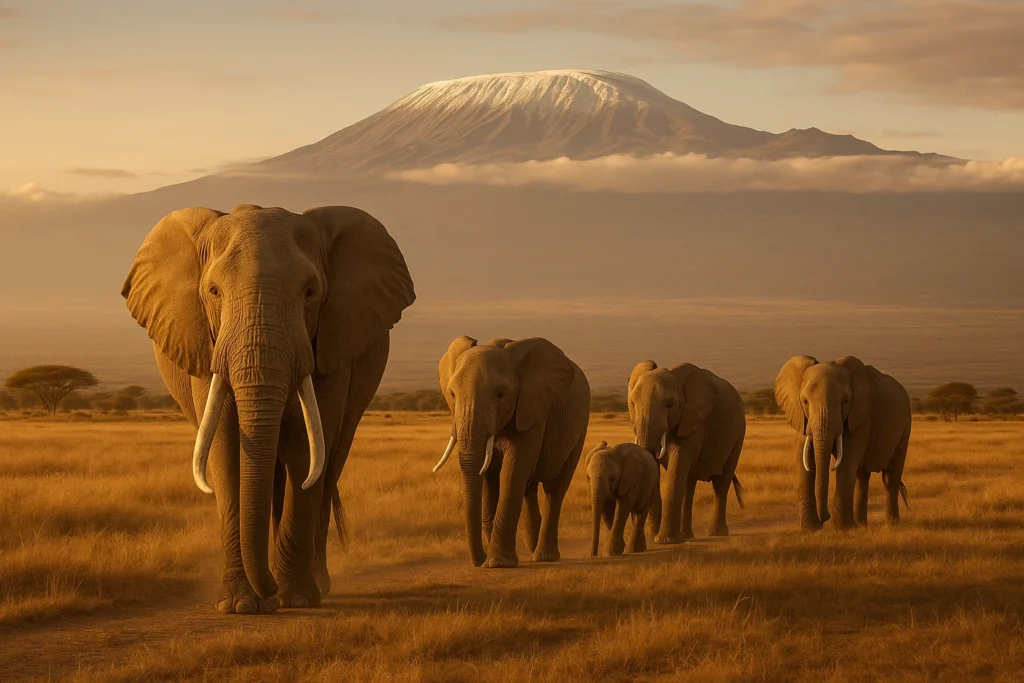
Amboseli National Park in Kenya is not only a stunning landscape of open plains and iconic Kilimanjaro views — it’s also one of the most important sites for elephant conservation in Africa. Over decades, it has evolved from a vulnerable ecosystem into a model of scientific research, community cooperation, and cross-border protection. This is the story of how Amboseli became a conservation success.
Historical background: where it all began
Birth of long-term elephant research
In 1972, renowned researcher Cynthia Moss launched the Amboseli Elephant Research Project (AERP), setting the foundation for the most comprehensive elephant monitoring program in the world. Unlike short-term studies, AERP tracks elephants over their entire lifespans, documenting births, deaths, social bonds, and movements across generations.
Protected area status and local collaboration
Amboseli was declared a national park in 1974, adding legal protection to its core. But conservation efforts extended beyond park borders. Collaborations with Maasai communities and landowners led to agreements that preserved corridors, reduced conflict, and ensured that local people benefited from elephant-based tourism.
What makes Amboseli unique in elephant conservation
Decades of individual tracking
AERP has identified and monitored over 3,000 individual elephants. Researchers know them by name, family group, and social rank. This data has helped uncover insights into elephant intelligence, matriarchal leadership, reproductive patterns, and mortality trends.
Open landscapes and high visibility
Amboseli’s flat terrain and seasonal swamps make it ideal for both scientific observation and tourism. Elephants are easy to locate and study, and their interactions can be seen from a respectful distance without disturbance.
Integration with community-led conservation
Local Maasai communities play a key role. Through eco-tourism, conservancies, and land-use planning, many locals have become stakeholders in elephant protection. Programs like Big Life Foundation and Amboseli Trust for Elephants support coexistence efforts, anti-poaching patrols, and education.
Conservation wins: what’s been achieved
Population recovery
During the poaching crisis of the 1970s and 80s, Amboseli’s elephants suffered steep declines. But thanks to Kenya’s ivory ban, better patrols, and community partnerships, the population has stabilized. Current estimates suggest around 2,000 elephants use the Amboseli ecosystem.
International influence
The success of Amboseli’s conservation model has influenced elephant protection strategies across Africa. Insights from Amboseli data have informed global discussions on tusk size genetics, social learning, and migration corridors.
Policy and land use integration
Efforts in Amboseli have helped shape Kenyan wildlife policy, particularly in recognizing the importance of landscapes outside protected park boundaries. Wildlife corridors and group ranch agreements now factor into conservation planning.
Challenges that remain
- Cross-border risks: Some elephants roam into Tanzania, where trophy hunting is legal. Iconic “super tuskers” have been lost this way, sparking international concern.
- Habitat fragmentation: Growing human populations and land subdivision threaten migratory routes.
- Climate stress: Droughts and shifting rainfall patterns impact water sources and food availability.
- Human-elephant conflict: Crop raids and property damage continue to test community tolerance.
Lessons from Amboseli’s conservation story
- Science matters: Long-term, detailed data is invaluable. It reveals patterns and solutions that short studies can’t.
- Communities are key: Conservation is stronger when locals benefit from and lead the protection of wildlife.
- Protect individuals, not just numbers: Older matriarchs and super tuskers carry critical knowledge and genes.
- Conservation is dynamic: Ecosystems, politics, and communities evolve. Ongoing adaptation is essential.
Conclusion
Amboseli’s role in elephant conservation is a shining example of how research, local involvement, and policy can come together to create lasting impact. From the darkest days of poaching to the present recovery, it offers hope not only for elephants but for conservationists worldwide.
Want to witness this success story firsthand? Amboseli offers more than great views — it offers living proof that conservation works when science and community walk together.
FAQs
Approximately 2,000 elephants currently inhabit or migrate through Amboseli and surrounding lands.
It is the longest-running elephant study in Africa, tracking individuals since 1972 to understand behavior, reproduction, and survival.
Yes, they have rebounded since past declines, though growth depends on rainfall, habitat, and protection efforts.
They help monitor, protect, and co-manage lands through conservancies and benefit-sharing tourism models.
Not usually, but many guides and lodges share insights from the project and can identify known elephants.
In Kenya, elephants are protected. But when they cross into Tanzania, some risk remains due to legal hunting.