Planning a self-drive safari in Kruger National Park is one of the most rewarding ways to experience South Africa’s iconic wildlife. But to make the most of your adventure, it’s essential to understand the realities of car rental, fuel availability, and road conditions inside the park. Here’s everything you need to know before you hit the road.
Car hire: choosing the right vehicle
Do you need a 4×4?
The short answer: no, not for most routes. Kruger’s main roads are well-maintained and tarred, making them accessible even with a standard sedan. However, many visitors recommend renting a vehicle with higher ground clearance. Why?
- Better visibility for spotting wildlife.
- More comfortable on gravel roads.
- Greater flexibility to explore secondary routes.
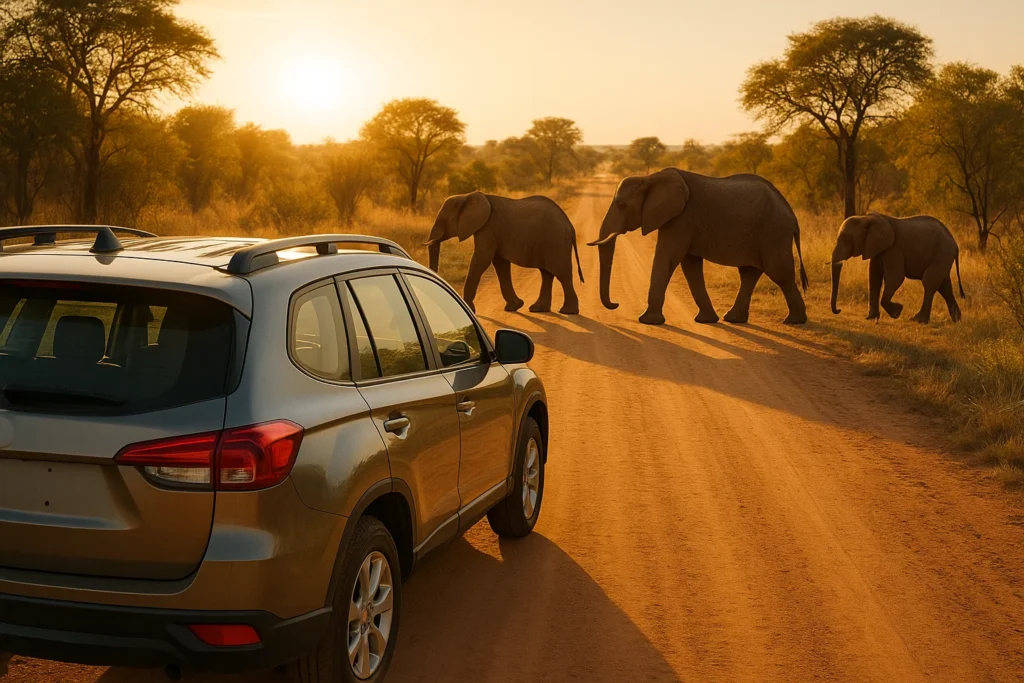
SUVs and crossovers strike a good balance between comfort and practicality.
Rental tips and requirements
- Licence: A valid driver’s licence is mandatory. If your licence isn’t in English, an International Driving Permit (IDP) is highly recommended.
- Insurance: Verify that your policy covers damage from gravel roads, tyres, windscreens, and potential wildlife incidents.
- Mileage: Opt for unlimited mileage, as daily drives in Kruger can quickly add up.
- Extras: GPS, a second spare tyre, and a portable cooler are useful additions.
Where to rent
Most travellers collect their rental cars in Johannesburg or Nelspruit before driving to Kruger. Just ensure you confirm your route and drop-off policy—one-way rentals may incur extra fees.
Fuel availability and planning
Are there fuel stations in the park?
Yes. Kruger is well-equipped with fuel stations located at major rest camps such as Skukuza, Letaba, Satara, and Shingwedzi. These stations operate during normal business hours and accept card payments.
Refuelling strategy
- Top up before entering: Start your journey with a full tank.
- Refuel at rest camps: Don’t wait until you’re low on fuel—fill up when you stop at camps.
- Plan for detours: Wildlife sightings and road closures can extend your planned route.
Fuel costs
Expect to pay similar rates to those outside the park. A 4-day trip covering around 1,600 km may cost approximately ZAR 2,000–2,500 in fuel, depending on vehicle efficiency and detours.
Road conditions inside Kruger National Park
Road types
- Tarred roads (H-routes): These are the main arteries of the park, in good condition and suitable for all vehicles.
- Gravel roads (S-routes): These offer excellent wildlife viewing but can be bumpy, corrugated, or slippery after rain.
Most visitors drive a mix of both to enhance their game-viewing chances. Always drive slowly on gravel roads to avoid tyre damage and improve your chances of spotting animals.
Safety and driving behaviour
- Drive slowly: The speed limit is 50 km/h on tarred roads and 40 km/h on gravel roads. But the best sightings happen when you’re crawling along at 20–30 km/h.
- Watch for animals: Wildlife often crosses roads unexpectedly. Stay alert, especially near waterholes and dense bush.
- Stick to the rules: Stay inside your vehicle unless at designated get-out points. Avoid driving at night unless you’re on a guided night drive.
Seasonal considerations
During the rainy season (November to March), gravel roads can become muddy and challenging. Always check road conditions at the gate or your camp before heading out.
Tips for a successful self-drive safari
- Start early: Wildlife is most active during early mornings and late afternoons.
- Stay hydrated and stocked: Bring snacks and water. Some drives can last hours.
- Map your route: Use the park’s official map or GPS to plan your day based on gates, picnic spots, and rest camps.
- Be flexible: Nature is unpredictable—stay open to detours and surprise sightings.
- Respect gate times: Each gate has specific opening and closing hours. Exiting late can result in fines.
Conclusion
Self-driving through Kruger National Park is one of the best ways to witness Africa’s iconic wildlife in its natural habitat. With the right vehicle, a solid understanding of fuel logistics, and a cautious approach to road conditions, you’re all set for an unforgettable journey. Explore more tips and safari planning advice across our blog to make your trip even more seamless and spectacular.
Frequently Asked Questions (FAQs)
While a sedan is adequate for main roads, an SUV provides better visibility and comfort, especially on gravel roads.
Yes, but it’s best to refuel when you stop at camps to avoid unnecessary risk.
You’ll need to change it yourself or call park services. Always carry a spare and check your rental’s emergency policy.
It helps, but printed park maps are excellent and provided at the gates. A GPS or offline map app adds convenience.
Only guided night drives are allowed. Self-driving after gate hours is prohibited.
Tar roads remain passable, but gravel roads may close or become difficult to navigate. Check daily road updates at camps.
Johannesburg offers more options and lower prices, but local rentals near Kruger (e.g., Nelspruit) are convenient and save time.
Dry season (May to September) offers the best visibility and road conditions.