If you’re planning a safari to Botswana’s Okavango Delta, it’s important to be informed about malaria risk in the region. While the Delta is a breathtaking destination teeming with wildlife and natural beauty, it is also located in a zone where malaria is present. Here’s what you need to know to travel safely and confidently.
Yes, the Okavango Delta is a malaria zone
The Okavango Delta lies in northern Botswana, where malaria transmission is possible, particularly during certain times of the year. International health authorities including the CDC, UK NHS, and local travel clinics all list the Delta as a region with active malaria risk.
Key facts:
- Risk is seasonal: Highest during the rainy season (November to April).
- Dry season (May to October): Risk is lower but not eliminated.
- Travelers are advised to take preventive measures year-round.
Malaria risk by season
Rainy/green season (November to April)
- Increased mosquito activity due to rainfall and standing water.
- Higher transmission risk, particularly in remote or low-lying floodplain areas.
- Lodges typically offer mosquito nets and repellents, but medical prevention is strongly recommended.
Dry season (May to October)
- Mosquito populations decline, lowering the risk of transmission.
- Cooler temperatures and fewer breeding grounds.
- Still considered a moderate-risk area; precautions advised.
What malaria prevention steps should you take?
1. Consult your doctor or travel clinic
- Seek advice 4–6 weeks before your trip.
- Common antimalarial medications for Botswana include Malarone, doxycycline, or mefloquine.
2. Prevent mosquito bites
- Wear long sleeves and pants during dawn and dusk.
- Use insect repellents with DEET or picaridin.
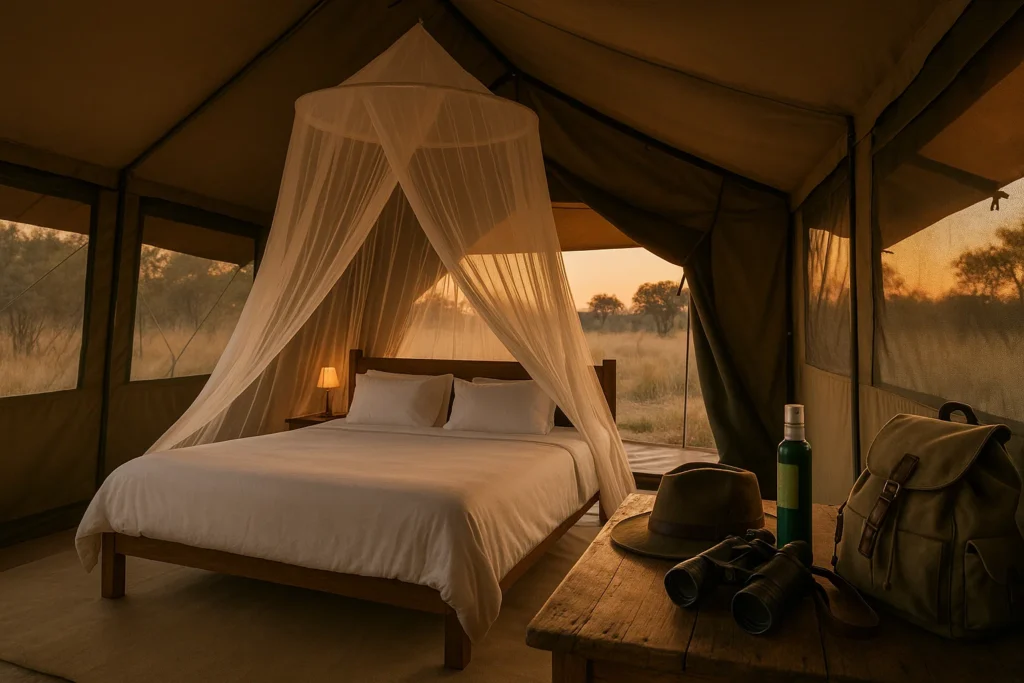
- Sleep under mosquito nets (provided by most lodges).
- Choose accommodation with screened windows or air-conditioning when possible.
3. Know the symptoms
- Malaria symptoms may include fever, chills, headache, and body aches.
- Symptoms can appear up to 30 days after exposure.
- Seek immediate medical attention if symptoms occur during or after your trip.
Who is at higher risk?
- Children and elderly travelers
- Pregnant women
- Immunocompromised individuals
These groups should take extra care with malaria prevention or consider alternative travel times (dry season) when mosquito activity is reduced.
Is malaria risk a reason to skip the Okavango?
Not at all. Thousands of visitors safely enjoy the Okavango Delta each year by following health recommendations. With smart preparation and the right medication, your trip can be both safe and unforgettable.
Conclusion
The Okavango Delta is indeed a malaria zone, but with proper medical advice and simple precautions, the risk can be effectively managed. Whether you’re planning a luxury lodge stay or a mobile camping safari, make malaria prevention part of your travel planning. It’s a small step toward ensuring your safari is memorable for all the right reasons.
FAQs
No, malaria is primarily a concern in the north, including the Okavango Delta. Southern areas have much lower risk.
Yes, even for short trips, malaria prophylaxis is advised if you’re visiting the Okavango.
While high-end lodges offer better mosquito protection, they do not eliminate the risk. Medical prevention is still recommended.
Yes, although the risk is lower, it’s not zero. Dry season travel still warrants precautions.
Seek immediate medical attention. Most lodges can arrange emergency evacuations and access to private clinics in Maun or Johannesburg.