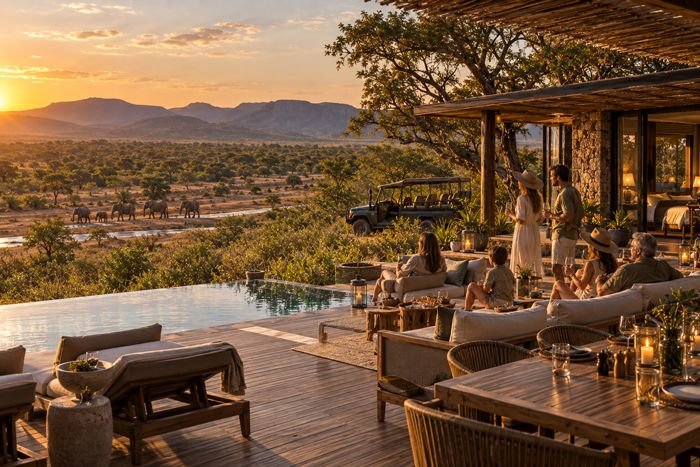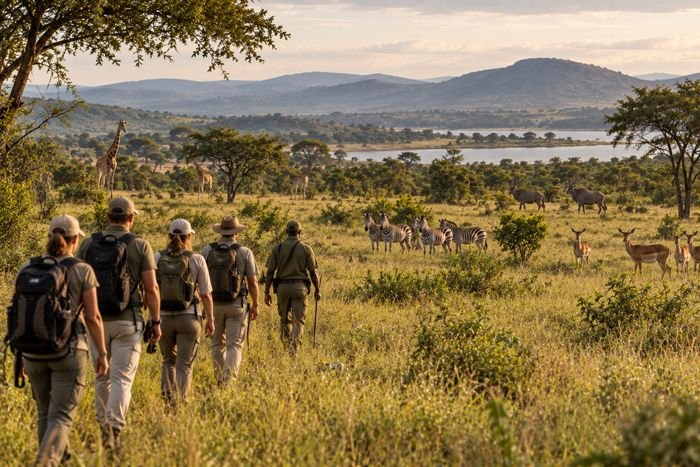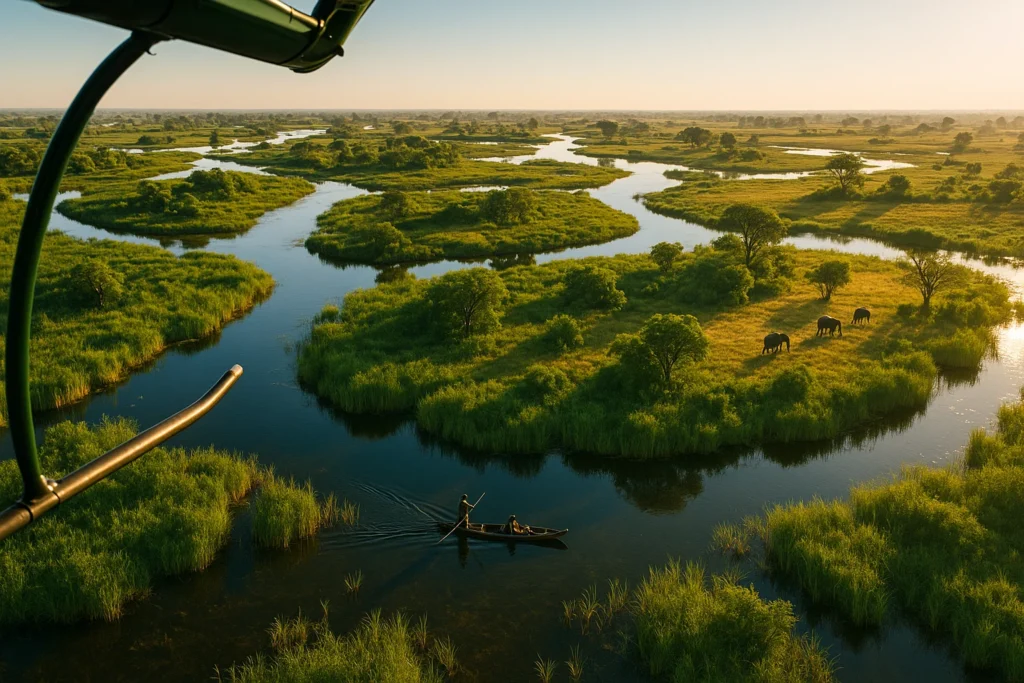
The Okavango Delta is a dream destination for photographers. Its ever-changing mosaic of waterways, floodplains, islands, and wildlife-rich terrain offers countless photographic opportunities—from close-up portraits to sweeping aerial shots. In this guide, we explore how to capture the Delta’s magic from land, water, and air, with practical tips and inspiration for every style of photographer.
Why the Okavango is a photographer’s paradise
Botswana’s Okavango Delta combines dramatic landscapes with exceptional biodiversity. Photographers are drawn to:
- Dynamic environments: From lush green floodplains to arid islands, the scenery transforms with the seasons.
- Variety of subjects: Iconic animals like elephants, lions, hippos, and birds in flight.
- Unique light: Early morning mists and golden sunsets reflect beautifully on water.
- Distinct perspectives: Capture scenes from vehicle, canoe, or helicopter.
Land photography: classic safari scenes
Best for: Wildlife action, portraits, landscapes
- Game drives: Ideal for photographing big game like elephants, predators, and antelope.
- Golden hours: Early morning and late afternoon offer the best light and active wildlife.
- Wide vs telephoto: Use telephoto lenses (200–400mm) for close-ups; wide-angle for landscapes and environmental context.
Tips:
- Use bean bags or vehicle mounts instead of tripods.
- Anticipate animal behavior to capture interaction moments.
- Shoot in RAW for better control in post-processing.
Water photography: mokoro and boat safaris
Best for: Low-angle wildlife shots, reflections, tranquil moments
- Mokoro safaris: Offer a silent, water-level view perfect for shooting reed frogs, herons, and hippos.
- Boat cruises: Cover more ground and allow for dynamic water-based compositions.
Tips:
- Waterproof your gear with dry bags or rain covers.
- Be patient: wait for animals to enter frame or for the light to shift.
- Use reflections and symmetry creatively in compositions.
Aerial photography: bird’s-eye views of the Delta
Best for: Abstract patterns, vast landscapes, dramatic light
- Helicopter or light aircraft flights reveal the true scale of the Delta.
- Early morning or sunset flights produce beautiful golden tones and shadows.
Tips:
- Use fast shutter speeds (1/1000s or faster) to avoid motion blur.
- Opt for a wide lens to capture panoramic views.
- Confirm open-window options for clearer shots.
Seasonal considerations for photographers
- Dry season (May–October): Great for wildlife sightings, crisp visibility, and water channels full for mokoro trips.
- Green season (November–April): Lush backdrops, dramatic skies, and excellent birdlife, though some areas may be harder to access.
Gear checklist
- DSLR or mirrorless camera body
- Telephoto lens (100–400mm or similar)
- Wide-angle lens (16–35mm)
- Spare batteries and memory cards
- Dry bag or waterproof camera case
- Lens cloths and cleaning kit
- Polarizing filter for water and sky shots
Ethical photography tips
- Do not disturb wildlife for a shot.
- Avoid flash, especially at night or near sensitive species.
- Respect local communities and ask before taking portraits.
- Choose operators that promote sustainable tourism.
Conclusion
Whether you’re shooting from the back of a game vehicle, the bow of a mokoro, or the sky above the Delta, photographing the Okavango is a rewarding and endlessly creative experience. With its rich textures, abundant wildlife, and immersive light, the Delta offers something for every photographic eye. Explore more on our blog for gear guides, seasonal calendars, and safari camp recommendations designed for photographers.
FAQs
Not necessarily. Even a quality smartphone or bridge camera can capture great moments with the right light and framing.
Drones are restricted in most areas. Check with your lodge or operator before bringing one.
Yes, some operators offer photo safaris with guides who are experienced photographers.
Charter flights often have strict weight limits. Pack smart, and use lightweight protective gear.
May to October offers ideal conditions for wildlife. November to March is best for birding and landscapes.