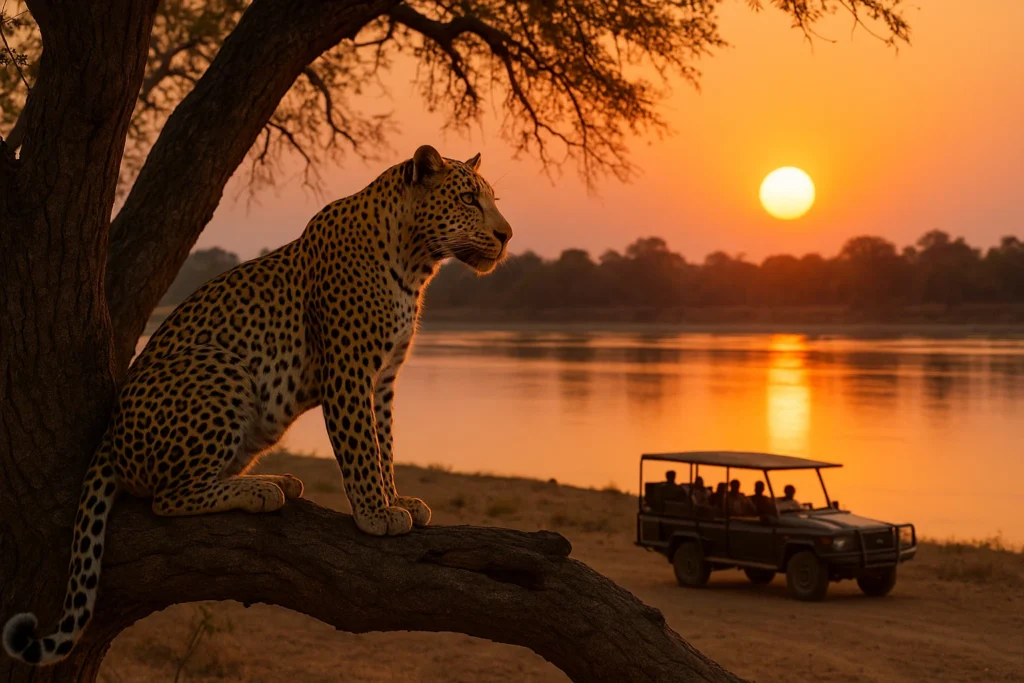
South Luangwa National Park in eastern Zambia is often called the “Leopard Capital of Africa” — and for good reason. The park boasts one of the highest densities of leopards on the continent, making it a dream destination for big cat enthusiasts and wildlife photographers alike.
Why South Luangwa is Ideal for Leopard Sightings
Several factors contribute to the park’s reputation:
- High prey density: The Luangwa River and its oxbow lagoons attract antelope, baboons, and other prey species.
- Varied terrain: From mopane woodland to riverine forests, the landscape provides ideal cover for ambush hunters like leopards.
- Expert guiding: Decades of guiding tradition mean top-tier trackers who know where and how to find elusive cats.
- Night drives permitted: Unlike many parks, South Luangwa allows night game drives, increasing chances of seeing nocturnal predators.
When and Where to Spot Leopards
Best time of year:
- Dry season (June to October): Sparse vegetation and concentrated water sources make sightings easier.
- Green season (November to March): Lush and dramatic, but leopards are harder to spot due to dense foliage.
Best areas in the park:
- Along the Luangwa River and tributaries
- Remote southern sectors for exclusive encounters
- Near established camps with regular leopard territories
Day and Night Game Drives
Morning drives: Excellent for spotting leopard tracks and catching them at dawn after a night of hunting.
Night drives: Leopards are primarily nocturnal, so spotlight safaris offer unmatched chances to observe them hunting or resting.
What to expect:
- Leopards lounging in sausage trees
- Females with cubs in dry riverbeds
- Kills hoisted into branches away from scavengers
- Intimate moments of grooming, calling, or stalking
Tips for Photographing Leopards
- Golden hour magic: Aim for early morning or late afternoon light.
- Use a telephoto lens (300mm+): Leopards often stay at a distance.
- Stay ready: Moments happen fast; leopards are unpredictable.
- Be quiet: Respect their space for a natural sighting.
Many lodges in South Luangwa cater to photographers, offering bean bags, custom vehicle setups, and knowledgeable guides.
Walking Safaris and Leopard Encounters
While walking safaris focus more on smaller details and tracks, it’s not uncommon to encounter leopard signs — or even catch a glimpse of the cat itself. Always guided by an armed scout, walking safaris offer a thrilling new way to appreciate the stealth and solitude of leopards.
Lodge Recommendations for Leopard Enthusiasts
- Kaingo Camp: Known for big cat sightings and photographic hides
- Tafika Camp: Situated in prime leopard territory
- Flatdogs Camp: Offers affordable luxury near high-activity zones
- Chikunto Safari Lodge: Located in a scenic leopard corridor
These lodges offer excellent access to high-leopard-density areas and experienced guiding teams.
Conclusion
Leopard sightings are never guaranteed, but South Luangwa National Park gives you some of the best odds in all of Africa. Whether you’re a seasoned safari-goer or first-timer, tracking these elusive cats in their natural habitat is a privilege you won’t forget. With expert guides, night drives, and breathtaking landscapes, South Luangwa truly earns its title as the Leopard Capital of Africa.
FAQs
Yes, it’s one of the best parks in Africa to see leopards due to high density and experienced guides.
Yes, especially in the early morning or late afternoon. Night drives increase your chances further.
Many believe so due to the density, terrain, and allowance for night drives.
Yes, many lodges offer customized itineraries or guides with big cat tracking expertise.
They are wild predators but typically shy and avoid humans. Guides ensure safe, respectful viewing.