The Okavango Delta in Botswana is one of Africa’s most iconic safari destinations — a pristine wetland teeming with wildlife, seasonal floodplains, and remote camps only accessible by boat or light aircraft. One of the most important choices you’ll make when planning your safari is whether to explore this wilderness by self-drive or opt for a fly-in safari.
Each approach offers a distinct experience, and the best option depends on your travel style, budget, and desired level of adventure. This guide breaks down the pros, cons, and ideal scenarios for each to help you make the right choice.
Why the Okavango Delta is Unique
Unlike many other safari regions, the Okavango Delta is shaped by seasonal floods that arrive from Angola and transform the landscape between May and September. This water-based ecosystem supports large populations of elephants, hippos, predators, and birds.
The Delta is divided into:
- Moremi Game Reserve: Partially accessible by vehicle, excellent for self-drive.
- Private concessions: Often only reachable by air, offering exclusive and remote safari experiences.
Access and logistics vary depending on where you’re going in the Delta — and that’s where your mode of travel becomes key.
Self-Drive Safari: Freedom and Flexibility
Self-driving through Botswana appeals to adventurous travelers looking to explore independently. Most begin in Maun, renting a 4×4 vehicle equipped with camping gear or lodge accommodations.
Pros of Self-Drive Safaris
- Complete independence to choose your routes and timing
- Budget flexibility, especially if camping or staying in public campsites
- Immersive overland experience for seasoned safari-goers
- Ideal for exploring Moremi, Khwai, Savuti, and Chobe
Cons of Self-Drive Safaris
- Navigation and driving challenges, especially in sandy or flooded terrain
- Limited access to central or remote areas of the Delta
- Less guided insight compared to professional guides
- Permits and logistics must be arranged in advance (park fees, route planning)
Self-drive is best suited for travelers with prior off-road driving experience, comfort with remote travel, and a desire for flexible exploration.
Fly-In Safari: Seamless and Scenic Access
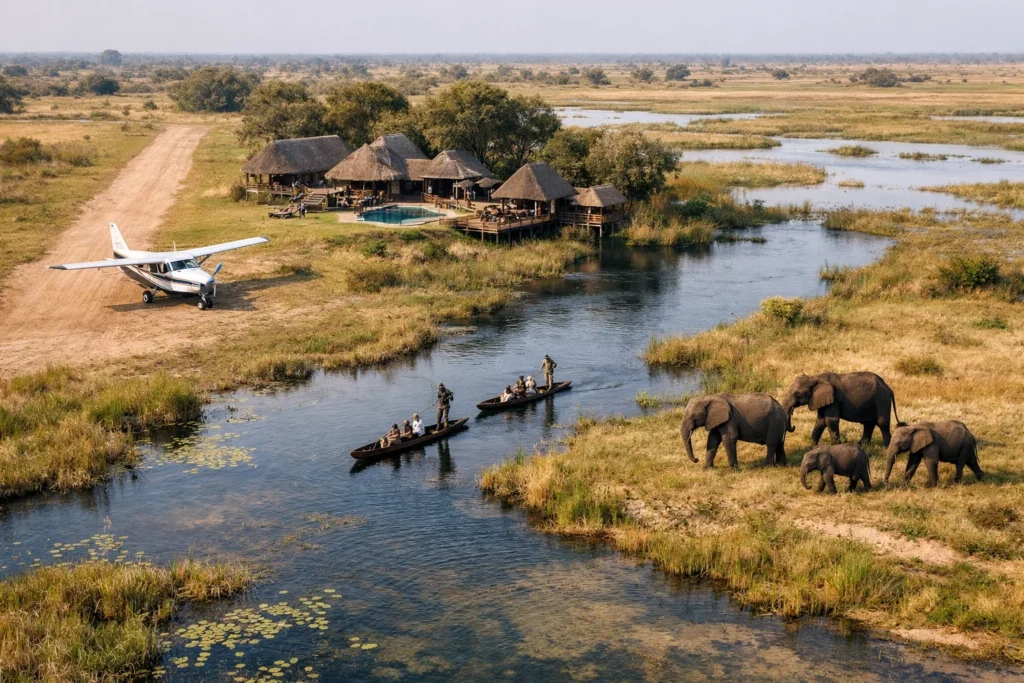
Fly-in safaris involve short charter flights from Maun or Kasane to airstrips in the heart of the Delta. These trips are typically organized by lodges and include transfers, game drives, meals, and activities.
Pros of Fly-In Safaris
- Access to exclusive private concessions with top-tier wildlife viewing
- Time-saving and hassle-free connections between regions
- Incredible aerial views of the Delta’s unique waterways
- Guided expertise for in-depth wildlife tracking and interpretation
Cons of Fly-In Safaris
- Higher cost, particularly for luxury lodges and flights
- Fixed itineraries with less spontaneity
- Baggage limits on light aircraft may restrict camera gear or clothing
This option is perfect for first-time visitors, photographers, or those seeking luxury and ease in remote wilderness settings.
Hybrid Safari: The Best of Both Worlds
Many travelers opt for a hybrid itinerary, combining self-drive in accessible regions (like Moremi and Chobe) with fly-in access to central Delta lodges. This strategy maximizes both value and experience:
- Drive to Maun or Savuti, then fly into the inner Delta
- Explore diverse ecosystems by road and air
- Enjoy the freedom of road travel with the comfort of fly-in lodges
This combination is ideal for those wanting a varied, well-rounded safari without committing to one mode.
Seasonal Considerations
Your choice may also depend on the time of year:
- May to October (dry season): Best for self-drive due to firm roads and easier wildlife viewing.
- November to April (wet season): Better for fly-in, as heavy rains make driving difficult and some routes impassable.
Fly-in lodges also offer water-based activities like mokoro trips and boat safaris when channels are full.
Cost Comparison
| Category | Self-Drive | Fly-In |
|---|---|---|
| Avg. Daily Cost | Lower if camping; moderate in lodges | Higher, includes full board + flights |
| Access | Limited to road-accessible areas | Access to remote, exclusive camps |
| Flexibility | High | Moderate (pre-set itineraries) |
| Wildlife Guiding | DIY or optional guides | Included professional guiding |
Conclusion
The Okavango Delta offers unforgettable safari experiences, whether you explore by 4×4 or light aircraft.
- Self-drive is perfect for adventurous travelers comfortable navigating Botswana’s wilderness and seeking a cost-effective, flexible journey.
- Fly-in safaris cater to those looking for remote luxury, expert guiding, and maximum wildlife immersion with minimal logistics.
- Hybrid safaris combine the thrill of overland travel with the serenity and exclusivity of fly-in lodges.
Whichever route you choose, planning ahead and understanding the logistics will ensure a smooth, spectacular safari in one of Africa’s last great wild spaces.
Frequently Asked Questions
Only certain parts, like Moremi Game Reserve, are accessible by road. Many inner Delta lodges require fly-in transfers.
Yes, but it requires preparation, a 4×4 vehicle, and awareness of wildlife, weather, and terrain.
For many travelers, the convenience, remoteness, and quality of guiding make them well worth it.
May to September during the Delta flood season offers top water-based and game viewing experiences.
Yes, 4×4 rentals are available, often with full camping setups and emergency support.