Experiencing Africa’s wilderness after dark is one of the most thrilling parts of a safari. Night game drives take you into the heart of predator territory when nocturnal animals are most active — but it’s natural to wonder: Are they safe? What actually happens on a night drive? In this guide, we’ll cover safety, behavior expectations, wildlife activity, equipment used, and how to make the most of your nighttime safari experience.
What Are Night Game Drives?
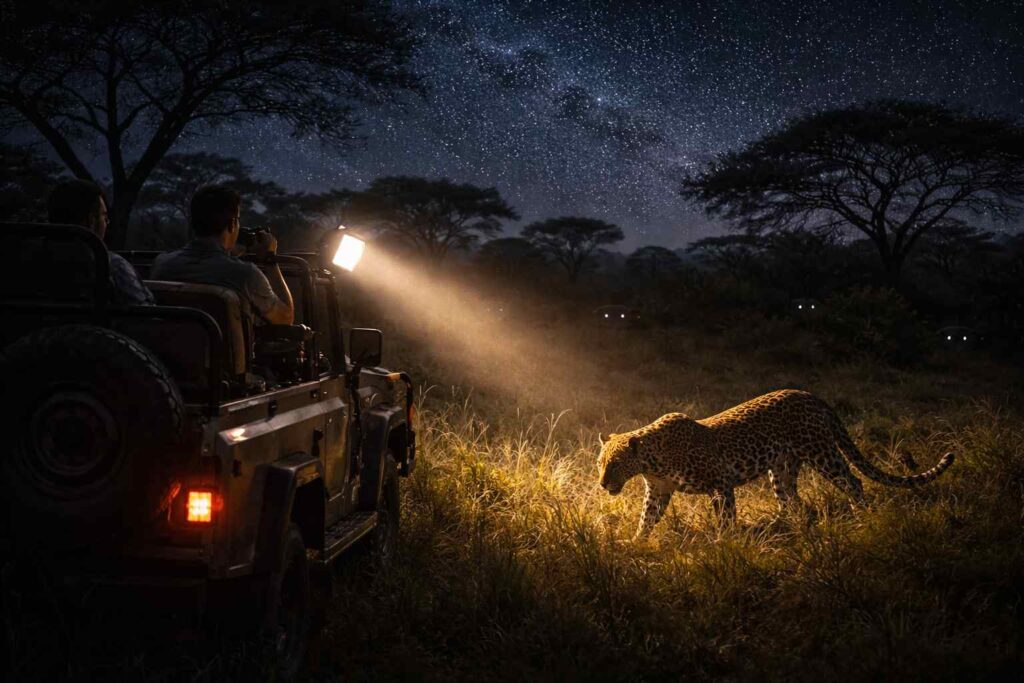
Unlike standard daytime game drives, night game drives take place after sunset, typically between dusk and late evening. Safaris after dark are led by expert guides and rangers who use spotlights and specialised lighting to locate nocturnal animals that rest or hide during the day. They’re offered in many national parks and reserves across Africa, including Kenya, Tanzania, South Africa, Zambia, and Rwanda.
Why Safari After Dark?
Many iconic African animals are crepuscular (most active at dawn and dusk) or nocturnal (active at night). A night game drive lets you see behaviors and species you’d likely miss on a daytime safari — from leopards prowling silently to porcupines grazing on fallen fruit.
Here are some experiences you can expect:
Nocturnal Predators
- Leopard stalking prey in low light
- Lion patrols and territorial behavior
- Hyenas howling and scavenging
- Genets and civets slipping through grasslands
Smaller Creatures That Shine at Night
- Aardvark or pangolin foraging
- Porcupine and bush baby movement
- A dazzling variety of nocturnal birds and insects
Unique Sights and Sounds
The flashlight beams trace grave features in the dark, eyes reflect from bushes, and the sounds of the night — insects, frogs, lions calling — add depth and atmosphere you won’t hear during the day.
Are Night Game Drives Safe?
Yes — when conducted by experienced guides and within park regulations. Safety is the number one priority on any safari, day or night. Here’s why night game drives are considered safe and how operators ensure your well‑being:
Professional Guides and Rangers
Night drives are always led by trained guides with intimate knowledge of animal behavior and the local terrain. They understand how to read wildlife signs and navigate safely in darkness.
Controlled Lighting
Guides use spotlights and infrared lights that allow them to scan areas without startling animals unnecessarily. These lights help spot eye shine and movement without disturbing wildlife.
Enclosed or Modified Safari Vehicles
Vehicles for night game drives are designed for safety and visibility:
- Elevated seats for better lookout
- Spotlights and flashlights mounted securely
- Quiet engines and minimal disruption to animals
Adherence to Park Rules
Many parks have strict protocols for after‑dark safaris to protect visitors:
- Travel only on approved tracks
- No off‑road driving
- Minimum and maximum vehicle group sizes
- Guides maintain constant communication with base camp
Guides will also brief guests on safety rules, such as staying seated, avoiding sudden movements, speaking quietly, and keeping arms inside the vehicle.
Safety Tips for Visitors
To enjoy your night game drive safely and comfortably, here are practical tips:
1. Listen Carefully
Follow your guide’s instructions at all times — especially when viewing animals up close. Night safari animals may be large and unpredictable, and your guide’s expertise is essential.
2. Stay Inside the Vehicle
Even though it’s tempting to lean out for photos, keep your arms and legs inside the vehicle to avoid startling animals or risking injury.
3. Dress Appropriately
Nights can be cooler after sunset, even in the tropics:
- Layers or lightweight jacket
- Closed shoes
- Hat or scarf if it cools down
4. Minimise Noise
Keep voices low and movements gentle so as not to disrupt wildlife or interfere with tracking.
5. Bring a Reliable Flashlight
Your guide will have spotlights, but a small personal flashlight can be useful for moving around camp before and after the drive.
What Animals Are Most Often Seen at Night?
Night game drives can reveal a completely different suite of species than daytime safaris:
Predators
- Lions — often more relaxed at night, moving or vocalizing
- Leopards — elusive but active after dark
- Spotted hyena — social and vocal
- African wild dog — (season and location dependent)
Nocturnal Mammals
- Bush babies jumping through treetops
- Porcupines, echidnas, and other nocturnal grazers
- Genets and civets quietly hunting smaller prey
Birds
- Owls and nightjars calling overhead
- Night herons near wetland edges after dark
Night Drives vs. Other Safari Activities
Night game drives offer a unique complement to sunrise and sunset drives. Here’s how they stack up:
| Safari Activity | Main Attraction | Best For |
|---|---|---|
| Daytime Game Drive | Big herds, visible landscapes | General wildlife viewing |
| Sunrise/Sunset Drive | Golden light, predator action | Photography, behavior observation |
| Night Game Drive | Nocturnal wildlife, rare behaviors | Predators after dark, small mammals |
Each has its value, but night drives unlock a world of wildlife unseen in daylight.
Areas Where Night Drives Are Commonly Offered
Night game drives are available in several respected safari regions, subject to park rules:
- South Luangwa National Park (Zambia): Celebrated for its excellent night safari offerings and nocturnal sightings.
- Akagera National Park (Rwanda): Guided safaris reveal nocturnal hippos and predators after dark.
- Select areas of South Africa’s reserves: In private reserves adjacent to Kruger, night drives are popular and often allow closer nocturnal encounters.
- Kenya & Tanzania: Some private reserves and lodges host night drives under strict park rules.
Always check with your safari operator about specific park regulations and vehicle types.
Are Night Game Drives Worth It?
Absolutely — if you’re curious about the hidden life of the bush.
Night game drives provide experiences that daytime safaris cannot replicate: quiet predator stalking, secretive nocturnal species, and an atmosphere of mystery and discovery as the sun sets and the wilderness comes alive under the stars.
For many travelers, these are the moments that transform a safari from “very good” to truly unforgettable.
Conclusion
Yes — night game drives can be safe, thrilling, and deeply rewarding when guided by experienced professionals and conducted within park guidelines. With excellent safety protocols, knowledgeable guides, and the right mindset, venturing out after dark on safari opens up a whole new dimension of wildlife behavior and nocturnal discovery.
From the stealth of leopards to the eerie calls of nightjars, a night drive isn’t just a game drive — it’s a window into a world that most visitors never see. So if your safari itinerary offers an evening safari under the stars, consider it one of the most exciting ways to experience Africa’s wild heart.
FAQs
When led by trained guides and within regulated reserve areas, they are considered safe. Strict safety protocols help avoid risky encounters.
Leopards, lions, hyenas, bush babies, civets, owls, nightjars, and more. Some species are more active after dark.
Not in all. They are available in select parks and private reserves where permitted by wildlife authorities.
A small personal flashlight is useful but always follow guide instructions — they’ll lead the spotlight.
Yes — a good camera with low‑light capability and a guide’s help makes great night shots possible.
Policies vary; check with your operator — some limit night safaris to older children.
In wet seasons it’s possible. Guides are experienced in adjusting plans.
Yes — nocturnal insects are more active after dark, so repellents are recommended.