When you embark on a safari in Africa’s wilderness — whether by vehicle or on foot — the safety systems behind your experience are far deeper and more structured than most travelers realize. Behind every smooth wildlife sighting is a network of training, strategy, animal behaviour knowledge, communication and precautionary planning designed to keep both you and the animals safe.
Safari guides and rangers are the ones on the front lines of this safety framework, and their protocols are essential to turning a wild environment into an inspiring adventure without unnecessary risk.
Who Are the Guides and Rangers?
Though the roles sometimes overlap in conversation, they are distinct professions with complementary purposes:
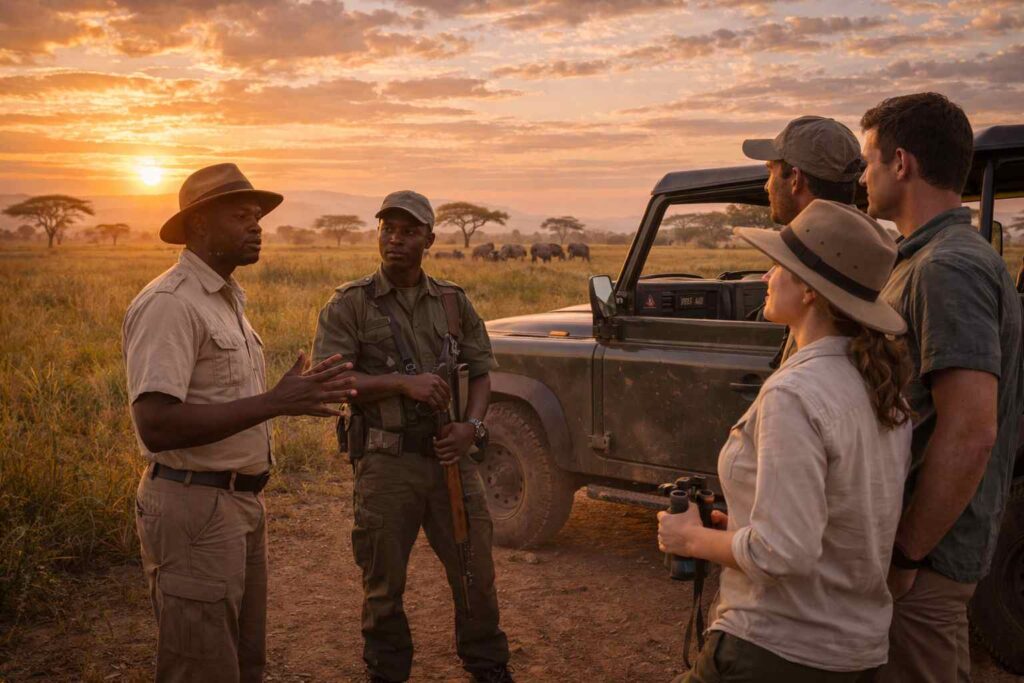
- Safari guides lead visitors on game drives and walking safaris, interpret wildlife behaviour, and manage daily interactions between guests and the environment.
- Game rangers often work in conservation enforcement, anti‑poaching patrols, habitat protection, and broader reserve safety — sometimes going beyond tourism to protect wildlife year‑round.
Together, they ensure not only that your experience is memorable but that it’s safe, respectful, and sustainable.
Extensive Training and Preparation
1. Animal Behaviour Expertise
Guides and rangers are trained to read wildlife cues and interpret subtle signs of comfort or stress in animals. They watch body language, posture, tail movements, vocalizations, and other “give‑aways” that indicate whether an animal is relaxed, alert, or potentially dangerous. That knowledge helps them decide how close a vehicle can get safely, when to reposition and when to leave an encounter altogether.
2. First Aid and Emergency Protocols
Safari guides are typically trained in first aid and emergency response, prepared to handle injuries, heat or dehydration, or other health issues before professional help arrives. This training is crucial in remote regions where response times might otherwise be long.
3. Navigation and Terrain Mastery
Guides know the topography of reserves, animal hotspots, hidden obstacles, and safe tracks. Their navigation expertise keeps vehicles and walking groups on the safest routes, avoiding areas where animals may be startled or where vehicles may get stuck.
Protocols That Keep You Safe
4. Daily Safety Briefings
Before every game drive or walking safari, guides provide a safety briefing: what to expect, how to behave, where you can and cannot go, and what to do in case of an unexpected encounter. These briefings are not cosmetic — they are rooted in risk minimization and wildlife behaviour science.
5. Strict Adherence to Park Rules
Rangers and guides enforce and respect all park regulations, including:
- Staying inside the vehicle unless in designated areas
- Keeping windows and doors closed near animals
- Approaching wildlife only from safe angles
- Observing speed limits on safari tracks
These rules exist because they prevent disturbances to wildlife and reduce risk to guests.
6. Herd Formation on Walking Safaris
When walking, guides use strategic formations — such as single file — and constant scanning of surroundings to keep the group safe from unseen predators or dangerous terrain. Human noise is minimized and communication is often non‑verbal to avoid startling animals.
On‑the‑Ground Safety Techniques
7. Vehicle Positioning for Safety and Respect
Guides know how to position vehicles so guests have great views without disrupting animal behaviour. The right angle — often taking into account wind direction, sightlines, and escape paths — minimizes the chance of sudden animal reactions.
8. Distance Management
Even if an animal appears calm, guides maintain safe distances — especially with large mammals like elephants, buffalo and big cats. Their experience teaches them when distance must be increased and when a slow, quiet approach is tolerable.
9. Quiet Communication
Guides often use low voices or hand signals, especially during walking safaris. Sudden loud noises can provoke wildlife or send them into flight — which can be dangerous for both animals and guests.
Responding to Unexpected Encounters
Rangers and guides are trained in how to react when wildlife behaviour suddenly changes. They can:
- Direct the vehicle to a safer viewing distance
- Signal guests to remain calm and still
- Decide the best path to exit an area without escalating risk
Their focus is always on managing the situation without stressing the animal or exposing guests to danger. Staying calm and following their instructions is key to a safe safari experience.
Conservation and Safety Go Hand in Hand
In many parks, rangers are also involved in anti‑poaching patrols, habitat monitoring, and wildlife health assessments. Their presence and work make parks safer for animals and tourists alike, ensuring that protected areas remain thriving, healthy ecosystems where wildlife behaviour is predictable and respectful.
Why These Protocols Matter
Getting close to wildlife without disrupting them requires knowledge, patience and respect — and that’s precisely what trained guides bring to every safari. Their background in ecology, animal behaviour, bushcraft, first aid and navigation isn’t just about adding detail to a game drive — it’s about reducing risk and maximizing safety. Safaris aren’t only about seeing animals; they’re about doing so in a way that respects nature and protects you.
Conclusion
The next time you find yourself scanning a lion’s mane through the golden haze of an African sunrise, remember that your guide’s role reaches far beyond narration. Trained protocols, constant vigilance, and deep knowledge of animal behaviour and park terrain work behind the scenes to keep you safe in the bush.
From careful distance management and safety briefings to expert navigation and emergency readiness, safari guides and rangers are the invisible safety network that makes every wildlife encounter possible — without unnecessary risk. Your awe‑inspiring moments are built on their expertise.
FAQs
Guides are trained in wildlife behaviour, first aid, bush navigation, and safe driving techniques.
In many Big 5 regions, guides on foot carry arms only as a last‑resort safety tool; their first line of defence is knowledge and avoidance.
Yes — many rangers monitor parks around the clock, protecting wildlife and ensuring safe conditions.
Not perfectly, but they are skilled at reading signs that most visitors would miss.
Absolutely — their safety protocols are designed for your protection.
Guides are trained in emergency protocols, including first aid and coordinated responses with park rangers.
Yes — their training includes understanding common habitats and risk zones for various species.
They can be if not led by expertly trained guides who manage group formation, movement and animal avoidance.