Bush flights — the light aircraft links that connect safari lodges, airstrips, and remote wilderness areas — are a common and convenient way to travel in Africa’s safari regions. But if you’ve never flown in a small plane before, you might wonder: Are bush flights safe? What should I expect? What precautions matter?
This guide walks you through the essentials: how bush flights work, safety records, what to expect on board, how operators manage risk, and practical tips for calm, confident travel.
What Is a Bush Flight?
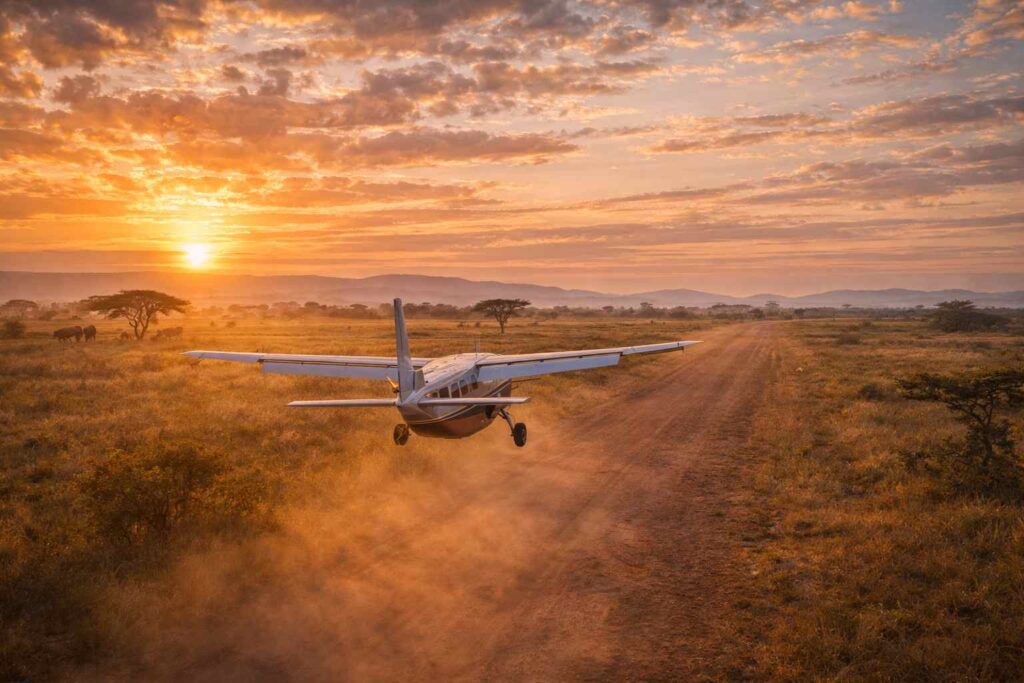
Bush flights (also called light aircraft transfers, charter flights, or safari flights) are short‑haul flights usually operated by small planes seating between about 4 and 15 passengers. They connect major airports or hubs (like Nairobi, Johannesburg, or Kilimanjaro) with remote airstrips near safari lodges and national parks — places that are often inaccessible by commercial airlines or challenging roads.
Unlike commercial jets, bush planes land on unpaved strips, grass runways, or cleared savannah flats — which is part of what travelers find adventurous about them.
Are Bush Flights Safe?
Yes — Light Aircraft Transfers Are Generally Very Safe
While the image of a light plane landing in the wilderness sounds adventurous, bush flights are statistically safe. Reputable operators follow strict aviation safety regulations, routine maintenance, and trained pilots — many with extensive experience flying in varied conditions.
Safety protocols followed by quality operators include:
✔ Planes are maintained to international standards
✔ Pilots hold valid commercial licences with bush flying experience
✔ Daily pre‑flight aircraft safety checks are mandatory
✔ Weight limits and load balances are strictly controlled
✔ Flights are scheduled around daylight and weather windows
✔ Communications with ground teams are constant
Altogether, this means that accidents are rare and most bush flight experiences are smooth and uneventful.
Why Bush Flights Are Used on Safari
Bush flights solve two big travel challenges on safari:
1. Accessibility
Many remarkable safari regions are far from major airports and traditional transportation routes — think remote corners of Botswana, Tanzania, Zambia or Kenya’s Masai Mara. Bush flights make these places reachable in hours instead of days by road.
2. Time Efficiency
Safari trips often involve multiple destinations — camps, lodges, national parks — and bush flights let you link them quickly so you spend more time with wildlife and less time in transit.
What to Expect Onboard
Bush flights are very different from a jet airliner, but that’s part of the experience. Here’s what travelers commonly encounter:
Small, Light Aircraft
Expect aircraft like Cessna Caravans, Britten‑Norman Islanders, or similar models. They’re robust machines suited to short runways and frequent take‑offs and landings.
Limited Cabin Space
Seats are closer together than on jets, and luggage is often stored in a rear compartment. Pack essentials like medication, cameras, and valuables in your carry‑on.
Short Flight Times
Most bush flights range from 20 minutes to a couple of hours, depending on distance.
Stunning Views
Flying low over landscapes means spectacular aerial views, with rivers, plains, forests, and wildlife patterns visible like a nature documentary — a big part of the safari charm.
Pilot Communication
Pilots often provide commentary about the landscape or upcoming landing, and they coordinate closely with ground teams at remote airstrips.
Safety Protocols Specific to Bush Flying
Bush flights have safety measures built into every stage of the journey:
Pre‑Flight Briefings
Before boarding, staff usually explain weight limits, baggage rules, seat belt use, and emergency procedures.
Weight & Balance Controls
Small planes must follow precise weight and balance calculations to maintain stability — so crews monitor passenger and luggage distribution carefully.
Weather‑Condition Decisions
Bush pilots monitor weather closely and will adjust departure times or routes to avoid storms, high winds, or reduced visibility.
Daylight Operations
Most bush flights operate only in daylight hours to support safe take‑offs and landings on non‑instrument runways.
Common Myths vs. Realities
Myth: Bush flights are dangerous because they’re small
Reality: Size does not equal risk. These planes are designed for short runways and frequent take‑offs and landings and are maintained to high safety standards.
Myth: Remote strips mean poor safety
Reality: Airstrips near safari camps are established, surveyed, and maintained precisely for regular small aircraft use.
Myth: Only very experienced pilots fly bush planes
Reality: All pilots must hold commercial licences and complete additional training specific to bush flying conditions — including takeoffs and landings on short or unpaved terrain.
Tips to Stay Safe and Comfortable
1. Book With Reputable Operators
Choose safari companies or air charter services with reliable safety records and transparent operations.
2. Pack Essentials in Carry‑On
Bring your medication, camera, phone charger, and any personal necessities in your cabin bag — luggage may be stored separately.
3. Check Weight Policies
Small aircraft have strict weight limits. Know the rules before packing to avoid surprises at check‑in.
4. Be Ready for Weather Delays
Because small planes are more sensitive to weather, departures may shift if conditions deteriorate. Build flexibility into your itinerary.
5. Follow Crew Instructions
Listen carefully during pre‑flight briefings and respect seating or baggage instructions.
When Not to Choose a Bush Flight
Bush flights are fantastic most of the time, but there are situations where an alternative may be more comfortable:
- You have severe motion sickness or anxiety about flying
- You’re travelling with very young children who struggle with smaller cabins
- You want to maximise floor space or carry larger gear (like big telescopes or tripods)
- Weather conditions are particularly unsettled in your travel window
In these cases, road transfers or longer overland legs can be planned as part of a cohesive safari itinerary.
Conclusion
Are bush flights safe? — Yes. When operated by reputable companies with trained pilots, proper maintenance, and strong safety protocols, bush flights are widely considered a safe, effective, and even memorable way to travel on safari.
Small planes open doors to remote parks and camps that major airlines can’t reach — offering not just convenience, but unique perspectives on Africa’s wild landscapes.
Like any travel experience, informed planning — choosing trusted operators, respecting weight limits, and building flexibility into your schedule — ensures you make the most of every mile you fly.
Whether it’s a short hop into the Masai Mara or a scenic flight across Botswana’s waterways, bush flights are both a practical tool and part of the safari adventure.
FAQs
No — when operated by reputable providers, bush flights are considered safe and follow strict aviation safety standards.
Not always — only those with nearby airstrips or charter service access. Lodges without strips typically require road transfers.
Delays are normal if conditions are unsafe. Operators will reschedule to ensure safety first.
Yes — travel insurance that covers small aircraft transfers is highly recommended.
Check luggage weight policies — bush flights often have strict limits, so carry essential gear in your cabin bag.
Most bush flights operate only in daylight for safety due to runway and visibility issues.
Some travellers may experience discomfort — ask about seating and plan accordingly with medication if needed.
Yes — but flights may be delayed if weather conditions make take‑off or landing unsafe.