Exploring the northern reaches of Kruger — from Mopani and Shingwedzi up to the remote Pafuri/Makuleke area — is a journey into a wild, quieter side of Africa. Far from the busy southern routes, this is where ancient baobabs stand sentinel, riverine forests whisper with birdsong, and elephants wander wide floodplains under open skies. If you yearn for solitude, biodiversity, and raw wilderness — the north offers its rewards in full.
In this guide you’ll find what makes northern Kruger special, how its landscapes and wildlife differ from more popular areas, and practical tips for exploring wisely.
Why go north: what sets northern Kruger apart
A smaller slice, immense biodiversity
- The entire park stretches roughly 350 km from north to south and about 60 km east to west.
- Yet the far‑north (especially around the Makuleke Contractual Park / Pafuri region) — though small in area — plays host to a remarkable portion of the park’s overall ecological diversity.
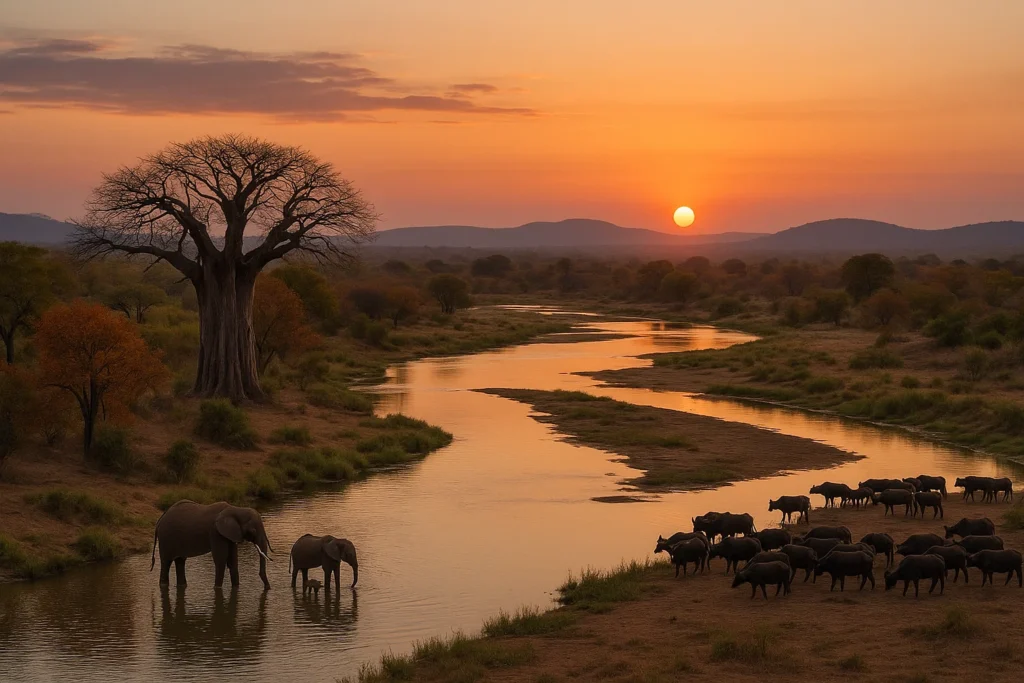
- Vegetation shifts dramatically: from mopane and acacia woodlands, to baobab‑dotted uplands, to lush riverine forest along the Luvuvhu River and other waterways.
Because of this ecological tapestry, the north is a haven for animals and birds that are less often seen in the busier south.
Peace, wilderness and solitude
- Northern Kruger is far less crowded — fewer vehicles, fewer people, more uninterrupted wilderness.
- This makes it ideal for walks, intimate safari experiences and an immersive connection with nature.
- Particularly the far‑north (Pafuri/Makuleke) is wild and remote — the true “backcountry” of Kruger, where the landscape feels ancient and untamed.
What you’ll see: wildlife, landscapes & magic moments
Rare species & rich birdlife
- While sightings of the “classic” Big Five are possible, northern Kruger is especially known for more elusive species: African wild dog, Roan antelope, Sable antelope and Sharpe’s grysbok.
- Birdwatchers are in for a treat: the north — especially Pafuri — registers hundreds of bird species, including rarities like Pel’s fishing owl.
Wild plains, rivers and riverine forest
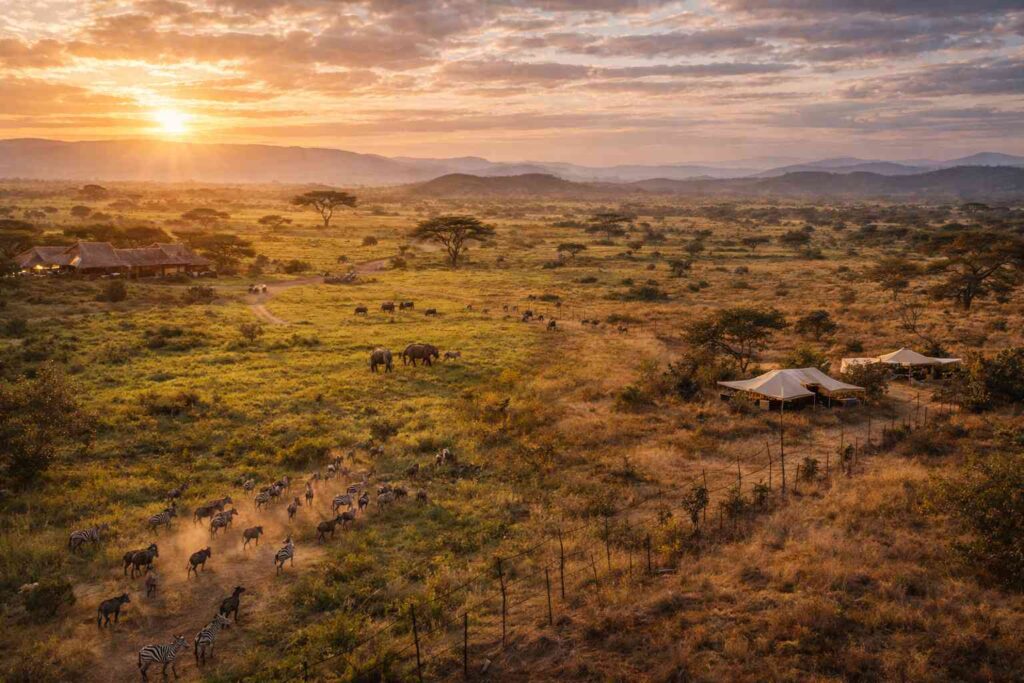
- The floodplains and riverine forests along the Luvuvhu and other rivers attract elephants, buffaloes, nyala, eland and bushbuck.
- In drier sandy areas (“sandveld”) further from rivers you might encounter roamers like eland — Africa’s largest antelope.
- The scenery offers dramatic contrasts: baobab‑studded hills, fever‑tree forests, mopane woodlands, winding rivers, and in the far north, geological features like Lanner Gorge.
A different kind of safari mood
- Because of the remoteness and fewer vehicles, every sighting — whether birds, antelope or elephant — feels more personal.
- Bush‑walks, guided bird walks or walking safaris are more common here than in crowded southern zones.
- The sense of wilderness is strong: silence broken only by the rustle of leaves, distant calls of animals, and the vastness of the landscape around you.
Suggested northern Kruger route: from Mopani to Pafuri
Here’s a rough self‑drive or guided route suggestion if you want to explore Kruger’s north in a single journey (4–7 days recommended):
- Begin at Mopani Rest Camp — good access point to the northern region, with amenities and easy entry. Explore mopane woodlands and Pioneer Dam.
- Head north toward Shingwedzi Rest Camp — a scenic drive through floodplains and forest. Great for late-afternoon elephant and buffalo sightings.
- From Shingwedzi to Pafuri/Makuleke — take quieter tracks to the wildest section: baobab hills, rare antelope, dense birdlife. Don’t miss Crooks Corner.
- Optional detour to Lanner Gorge — dramatic scenery and excellent hiking if permitted. Remote and rewarding.
This route offers a gradual transition from accessible landscapes to deep wilderness.
When to go: seasons & what to expect
- Dry season (April to September): Best wildlife viewing. Animals congregate at rivers and waterholes; vegetation is thinner.
- Wet season (October to March): Lush, green, and excellent for birdwatching. Harder to spot big game, but beautiful for photographers and nature lovers.
- Remote roads may be tricky after rains. Plan carefully and allow extra travel time.
What to expect — and what to be ok with leaving behind
| Expectation / Gain | Trade‑offs / What’s different than south |
|---|---|
| Solitude: fewer vehicles, more wilderness | Less guaranteed sightings of the Big Five |
| Rare species & excellent birding, landscapes | Camps are simpler; fewer luxury options |
| Bush walks, intimacy with nature | Roads can be rough; longer distances |
| Wild, varied scenery: baobabs, floodplains | Less open savannah, fewer predators per day |
Northern Kruger isn’t about the number of sightings — it’s about rare moments and raw nature.
Tips and advice for visiting the north
- Allow enough time. Minimum 4–5 days, ideally a full week.
- Be flexible and patient. Wildlife is less predictable. Early mornings and late afternoons are best.
- Stick near rivers. Water sources attract the most life.
- Join walks or guided drives. Especially useful for birding and rare species.
- Prepare for remoteness. Fewer facilities, but more authentic experiences.
Final thoughts
The northern reaches of Kruger National Park — from Mopani to Shingwedzi and the remote Pafuri/Makuleke wilderness — offer a safari experience for travellers who are seeking more than the “typical Big Five checklist.” Here you find solitude, rare species, wilderness walking, and a deep sense of being far from human footprints. It’s a different kind of safari: quieter, slower, richer in subtlety.
If you approach it with patience, respect and an eye for detail — the north can reveal a side of Kruger that few ever see.
Explore more safari guides, tips and itineraries on our blog.
FAQs
It’s possible, but less frequent than in southern zones. Expect rare species and birds rather than daily predator sightings.
Self‑driving is doable. Major routes are manageable, but guided walks and birding safaris enrich the experience.
Some are simpler, especially near Pafuri. But that adds to the wild charm and deeper immersion.
The dry season (April–September) offers clearer sightings. The wet season brings lush scenery and birdlife.
Only if you value wilderness and patience over checklists. For first‑timers wanting reliable Big Five sightings, southern areas may be better.