Lake Nakuru National Park, located in Kenya’s Great Rift Valley, is one of the country’s most iconic safari destinations. Known for its flamingo-filled shores, endangered rhino population, and dramatic escarpments, the park draws visitors from around the world. But before you arrive, it’s essential to understand the park’s entrance fees and key regulations to ensure a smooth and respectful visit.
This guide outlines the current pricing structure, payment procedures, and the most important rules every visitor should know.
Entrance fees for Lake Nakuru National Park (2025 rates)
The Kenya Wildlife Service (KWS) has established tiered pricing based on residency status:
Citizens of East African Community (EAC)
- Adults: KSH 860 per day
- Children/Students: KSH 215
This category includes nationals and legal residents of Kenya, Uganda, Tanzania, Rwanda, South Sudan, Burundi, and the Democratic Republic of Congo.
Foreign Residents (Living in Kenya)
- Adults: KSH 1,030
- Children/Students: KSH 515
Valid documentation such as a resident permit or work visa must be presented to qualify for these rates.
Non-Residents (International Tourists)
- Adults: USD 60
- Children/Students (ages 3–17): USD 35
These are flat rates for 24-hour park access.
Vehicle entry and additional charges
If you’re self-driving or joining a tour, the following vehicle entry fees apply:
| Vehicle Type | Fee (per day) |
|---|---|
| Saloon car (up to 6 seats) | KSH 300 |
| Minibus/Van (7–14 seats) | KSH 1,030 |
| Trucks/Buses | KSH 2,585–5,155 |
Additional activities like night game drives, camping, and filming attract extra fees. Night drives require prior authorization and KWS ranger accompaniment.
Park hours and entry duration
- Opening hours: 7:00 AM to 6:00 PM daily.
- Duration: Entry is valid for 24 hours from the time of check-in. Re-entry beyond this window requires payment of a new fee.
How to pay your fees
Park fees can be paid via several secure methods:
- M-Pesa (mobile money)
- Visa and Mastercard at park gates
- eCitizen portal (https://kws.ecitizen.go.ke/)
Payment confirmation is required at entry. If you’re on a guided tour, the operator usually includes park fees in your package.
Park rules every visitor must follow
To protect the park’s wildlife and preserve the experience for others, KWS enforces strict but reasonable rules:
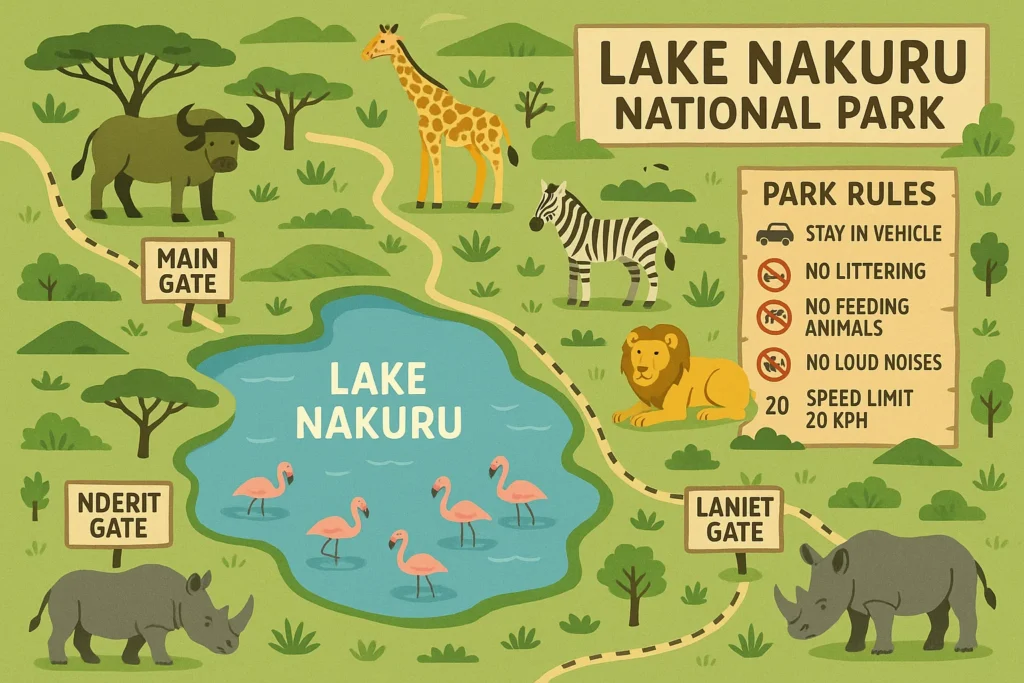
- Stay in your vehicle unless at designated areas (viewpoints, campsites).
- No walking safaris unless accompanied by an armed KWS ranger.
- No off-road driving — stick to designated tracks to protect vegetation and animal habitats.
- No littering — take all waste with you or dispose of it in provided bins.
- No feeding wildlife — this disrupts natural behavior and can be dangerous.
- No loud music or disruptive noise — it stresses the animals and spoils the safari ambiance.
- Drones are prohibited unless with special clearance from KWS.
Violations can result in fines or removal from the park.
Why rules matter: conservation and coexistence
Lake Nakuru is a fragile ecosystem. Its success as a conservation area for rhinos, lions, and hundreds of bird species depends on responsible tourism. Entrance fees fund:
- Ranger patrols to prevent poaching
- Rhino sanctuary operations
- Road maintenance and waste management
- Community development programs in surrounding areas
By following the rules and paying the appropriate fees, visitors contribute directly to the park’s sustainability.
Potential changes to fees
KWS has proposed updates to its fee structure starting in late 2025. The suggested changes include:
- Locals: up to KSH 1,500 per adult
- Non-residents: up to KSH 11,660 (≈ USD 100) per adult
These changes aim to better fund conservation while still maintaining affordable access for citizens. Confirm the latest rates before your visit via the official KWS website.
Conclusion
Understanding Lake Nakuru’s entrance fees and rules isn’t just about logistics—it’s about respecting one of Africa’s most valuable natural spaces. Whether you’re visiting for a few hours or spending the night in one of the nearby lodges, being informed ensures a more enjoyable and meaningful experience.
For more guides on park logistics, safari etiquette, and planning tips, explore the rest of our blog.
FAQs
No, but during peak seasons or public holidays, pre-payment via eCitizen is recommended.
No. Only Kenyan Shillings or card/mobile money payments are accepted.
Yes, it’s one of Kenya’s most popular day safari destinations from Nairobi.
You must pay an additional day’s entry fee.
No. Domestic animals are strictly prohibited.
Yes, certified guides can be hired at the gate or via tour operators.
Yes, if valid international student ID is presented.
Yes, but only in designated campsites with valid permits.
Only with written authorization from KWS.