South Africa’s Kruger National Park is one of the most iconic wildlife destinations on the continent. But Kruger is more than just a park — it plays a crucial role in a vast, interconnected conservation network that includes the Greater Kruger region and the Great Limpopo Transfrontier Park (GLTP). These expansive landscapes create one of Africa’s most significant ecological corridors, where animals roam freely across borders, and conservation efforts span countries and communities.
In this guide, we explore how Kruger fits into this greater transboundary landscape and why that matters for wildlife, ecosystems, and the future of African safaris.
What is Kruger National Park?
Established in 1926, Kruger National Park is South Africa’s oldest and largest national park. It covers nearly 19,500 km², stretching over 350 km from north to south and about 60 km east to west, across the Limpopo and Mpumalanga provinces.
Kruger is home to more than 500 bird species, 140 mammals, and over 100 reptiles, making it one of the richest wildlife destinations in Africa. It is famed for its Big 5 sightings, diverse habitats, and well-maintained road infrastructure that allows both self-drivers and guided safaris.
The Greater Kruger: expanding the wilderness
The term Greater Kruger refers to the extensive conservation area that includes Kruger National Park and the adjacent private game reserves and community conservancies along its western boundary. These reserves include:
- Sabi Sand Game Reserve
- Timbavati Private Nature Reserve
- Klaserie Private Nature Reserve
- Manyeleti Game Reserve
- MalaMala, Balule, Umbabat, and others
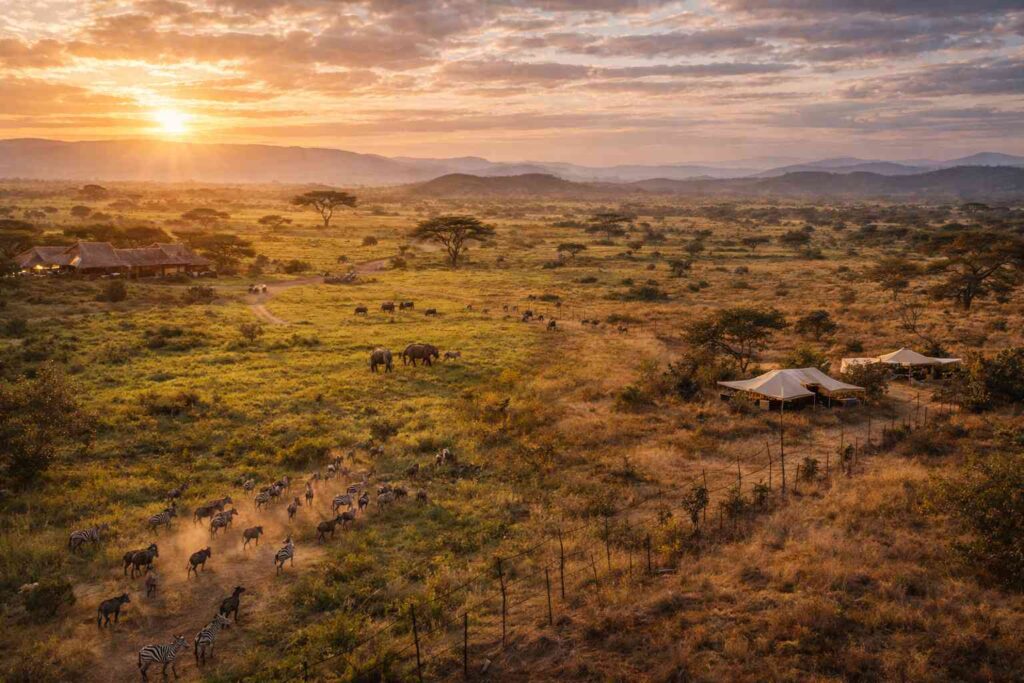
What makes this setup unique is that fences between Kruger and these private reserves have been removed, allowing wildlife to move freely. This results in a contiguous ecosystem of more than 22,000 km², where ecological processes function as they would in a fully wild environment.
These private reserves offer exclusive lodges, low-impact tourism, and intimate safari experiences while contributing to conservation and local economies. Importantly, they extend protected space for wide-ranging animals and relieve pressure on the core areas of the national park.
Kruger’s role in the Great Limpopo Transfrontier Park
Kruger also serves as the core South African component of the Great Limpopo Transfrontier Park (GLTP) — a landmark peace park that links:
- Kruger National Park (South Africa)
- Limpopo National Park (Mozambique)
- Gonarezhou National Park (Zimbabwe)
Together, these parks and their buffer zones form a 35,000+ km² transboundary conservation area where borders are softened for wildlife. The goal is to restore historic migration routes, allow natural processes to flow across nations, and foster cooperation between governments and local communities.
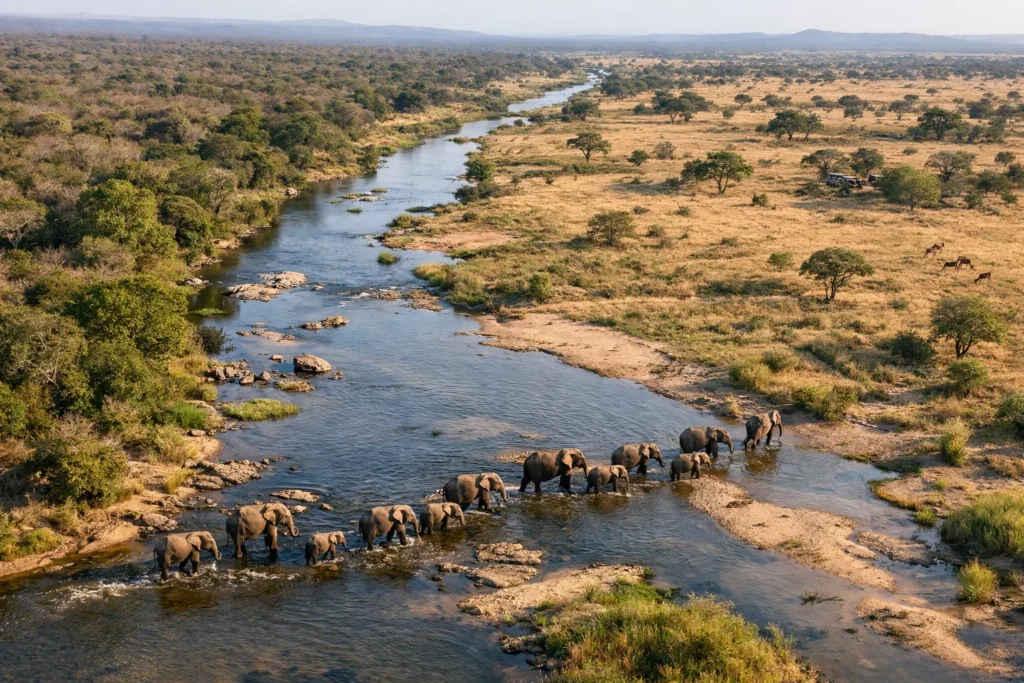
Elephants, wild dogs, lions, and other species that naturally range across large distances can now access a connected wilderness landscape, reducing human-wildlife conflict and strengthening populations.
The wider vision: Great Limpopo Transfrontier Conservation Area (GLTFCA)
Going beyond the parks themselves, the GLTFCA includes community lands, private reserves, and additional protected areas, creating a conservation region of more than 100,000 km². This broader initiative focuses on:
- Ecological integrity
- Community development
- Sustainable tourism
This landscape-scale approach recognizes that true conservation success involves not only wildlife protection but also people, land use, and livelihoods. By integrating local communities into planning and benefits, the GLTFCA model promotes long-term resilience and local stewardship.
Why this landscape connectivity matters
1. Free movement for wildlife
Large species like elephants and predators require vast ranges. Removing artificial barriers allows for healthier gene flow, seasonal migrations, and more balanced ecosystems.
2. Biodiversity protection
Connected habitats protect more species, especially those sensitive to fragmentation, and provide climate resilience through access to diverse ecological zones.
3. Collaborative conservation
Transfrontier parks foster cross-border collaboration among governments, NGOs, landowners, and local communities. Shared responsibility leads to shared success.
4. Tourism benefits
Visitors enjoy diverse safari options across multiple countries. From luxury lodges in Sabi Sand to wilderness trails in Gonarezhou, the region offers unmatched variety.
Challenges and future directions
While the vision is ambitious, challenges remain:
- Political and administrative coordination across borders
- Poaching and wildlife crime, especially in remote areas
- Balancing tourism growth with sustainability
- Ensuring fair community benefits
Ongoing partnerships, cross-border protocols, and international funding continue to support the expansion and integration of the transfrontier landscape. Kruger remains the keystone in this evolving system, both logistically and ecologically.
Conclusion
Kruger National Park is not just a standalone safari destination — it is the ecological heart of a much greater conservation vision. From the neighboring private reserves of the Greater Kruger to the cross-border reach of the Great Limpopo Transfrontier Park, this interconnected landscape represents the future of conservation in Africa.
By embracing transboundary cooperation, landscape-scale thinking, and community participation, the Greater Kruger region offers not only unforgettable safaris but also a blueprint for how wildlife and people can thrive together.
Continue exploring our blog to discover other conservation hotspots, safari planning tips, and off-the-beaten-path travel inspiration across Africa.
Frequently Asked Questions
Kruger is the national park; Greater Kruger includes Kruger plus adjacent private and community reserves where animals roam freely.
While wildlife can move freely, guest access between Kruger and private reserves is controlled; most are booked separately.
A conservation area that spans international borders and allows cross-border movement of wildlife, ecosystems, and collaboration.
Many fences have been removed between reserves and Kruger to create one continuous ecosystem.
Yes, but infrastructure varies; some areas (like Limpopo NP) are more remote and suited for adventurous travelers.