Planning a safari to the Okavango Delta means choosing not just where to go, but also when. With two distinct seasons—flood and dry—each offering unique benefits and trade-offs, your experience can vary significantly depending on the time of year. Here’s how to choose the best time to visit the Okavango Delta based on your travel style, wildlife interests, and budget.
Understanding the Okavango’s seasonal cycle
Unlike many ecosystems, the Okavango Delta floods during Botswana’s dry season. This happens because the waters originate in Angola and travel downstream, arriving months later to fill the Delta’s channels.
Key seasons:
- Dry season (May to October): Clear skies, minimal rain, and rising floodwaters from Angola.
- Wet season (November to April): Local rains green the Delta, creating lush landscapes with fewer visitors.
Dry season highlights (May to October)
Best for: Wildlife viewing, water activities, and accessibility
- Peak game viewing: Animals congregate around water sources, making sightings easier.
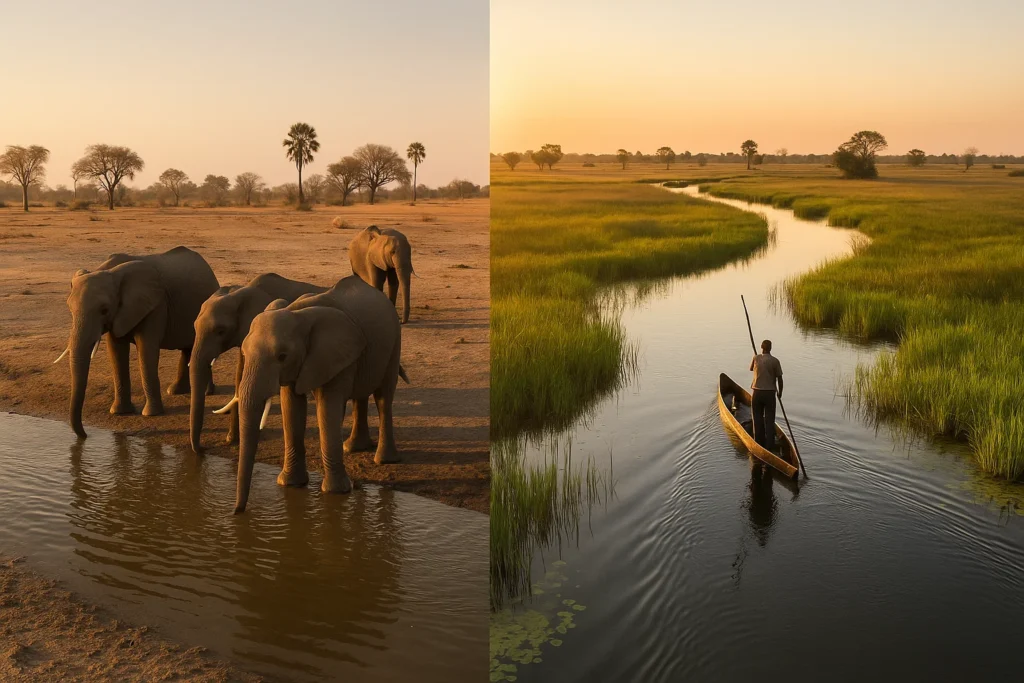
- Mokoro and boat safaris: Water levels are ideal for exploring flooded channels.
- Cool, clear weather: Comfortable temperatures for game drives and photography.
- Excellent visibility: Sparse vegetation improves wildlife spotting.
Considerations:
- High season pricing: Expect premium lodge rates and early bookings.
- Cold mornings: Especially in June and July, pack warm layers.
- Increasing heat: September and October can get hot and dry.
Flood season (Green season) highlights (November to April)
Best for: Lush scenery, birdwatching, and fewer crowds
- Scenic beauty: The Delta turns green with dramatic skies and vibrant flora.
- Birdwatching: Migratory species arrive, making it a birder’s paradise.
- Fewer tourists: More availability and quieter camps.
- Lower rates: Lodges may offer discounts or specials.
Considerations:
- Less predictable wildlife sightings: Animals are more spread out.
- Rain showers: Afternoon storms are common, but often short-lived.
- Some areas inaccessible: Road conditions and water levels may impact access.
Month-by-month quick guide
| Month | Highlights |
|---|---|
| May | Start of dry season; great mix of green landscapes and rising floodwaters. |
| June – August | Peak flood, best for mokoro trips and large wildlife sightings. |
| September – October | Exceptional predator activity; hot but dry; low vegetation. |
| November – December | Start of green season; dramatic skies; newborn animals. |
| January – March | Lushest scenery, top birding, fewer visitors. |
| April | Transition month; ideal for value and balanced conditions. |
How to choose your ideal time
- For classic safari & water adventures: June to August
- For predator sightings & dry landscapes: September to October
- For photography & birds: November to March
- For budget-conscious travellers: April or green season months
Tips for planning
- Book early for dry season travel.
- Pack layers for cool mornings and evenings.
- Choose camps with permanent water access if traveling in low-water months.
- Confirm which activities (mokoro, walking, boat) are offered during your visit.
Conclusion
There is no one-size-fits-all “best” time to visit the Okavango Delta—each season reveals a different side of this UNESCO World Heritage site. Whether you’re seeking predator action during the dry season or lush beauty and birdlife in the green season, understanding the Delta’s seasonal shifts will help you plan a more rewarding safari. Explore more of our blog for lodge recommendations and month-by-month guides to tailor your perfect Okavango experience.
FAQs
Yes, each season offers unique advantages, from peak wildlife viewing in the dry season to vibrant landscapes in the wet season.
Typically June to August, even though local rains happen earlier in the year.
Absolutely, especially for photographers, birdwatchers, and those seeking solitude and green scenery.
Rates are generally lower from November to April, with the most discounts during January to March.
Some water-based or walking safaris may be impacted by weather, but many lodges operate year-round.