For travelers seeking a lush, dramatic safari experience with fewer crowds, February in the Okavango Delta offers something truly special. As Botswana’s iconic wetland pulses with summer rains, the delta transforms into a green paradise where birds thrive, young wildlife roams, and stormy skies paint the horizon. While not the traditional dry-season peak, February reveals a side of the Okavango that’s vivid, alive, and full of unexpected magic.
Here’s what makes this time of year worth considering — from weather and water levels to wildlife activity and traveler perks.
What the Wet Season Means for the Delta
February sits in the heart of Botswana’s wet season, a time when local rains shape the delta’s ecosystem before the arrival of floodwaters from Angola in the months ahead.
Key dynamics in February:
- Rains fall locally, feeding lagoons, pans, and channels in real-time.
- Floodwaters from Angola haven’t yet reached full flow, so main channels are lower than in winter.
- Lush, green landscapes dominate, with tall grasses and vibrant vegetation.
While it may not be “flooded” in the iconic sense, the delta is still very much alive — especially in areas like Moremi and permanent water zones.
February Weather in the Okavango Delta
Expect warm, humid conditions, with:
- Daytime temperatures around 30–34°C (mid-80s to 90s °F)
- Afternoon thunderstorms that cool the air and enrich the sky
- High humidity, especially after rain, making mornings ideal for activities
Showers are usually short-lived and dramatic, often clearing quickly to reveal vibrant sunsets and golden post-rainlight — perfect for photography.
Water Levels: Not Yet at Peak, but Still Scenic
While many associate the Okavango with high water and mokoro safaris, February represents a transition phase:
- Local rainfall creates temporary pans and wet grasslands, perfect for birding.
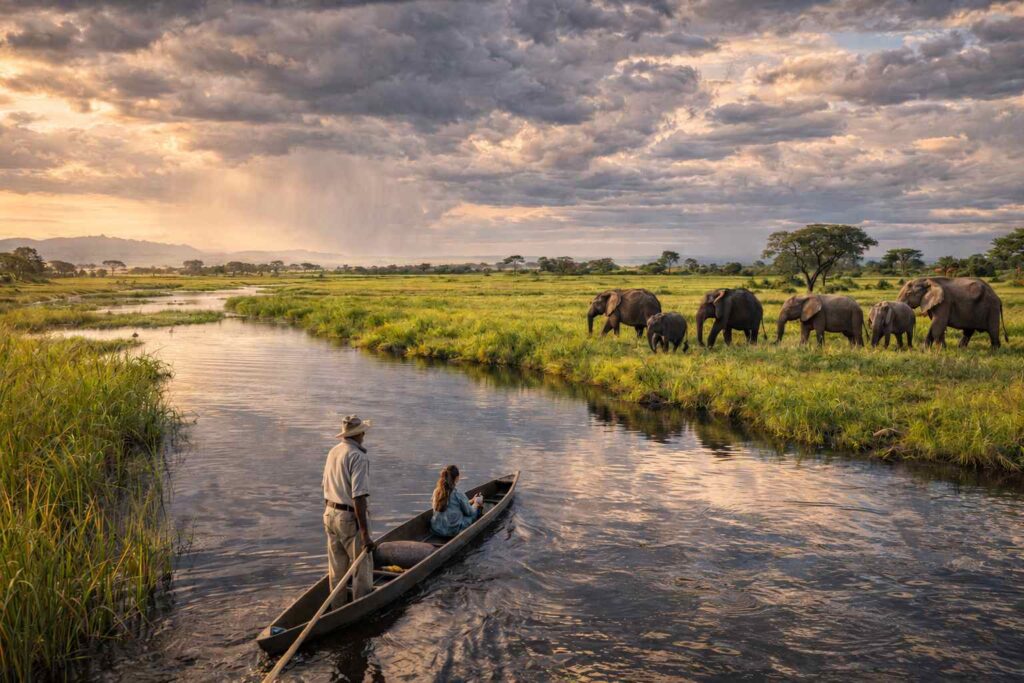
- Mokoro excursions may be limited depending on your location — some camps still offer them in permanent channels.
- The main flood pulse from Angola hasn’t yet arrived, meaning less inundation, but easier road access in drier parts.
For visitors, this means scenic drives through lush terrain and opportunities to explore on foot or by vehicle with less water-based restriction.
Wildlife in February: Young, Wild and Free
While the green season disperses animals across a wider area, February still offers rewarding sightings — especially for those who enjoy observing animal behavior in a less predictable, more natural setting.
What to look for:
- Newborn antelope, including impalas and lechwe, exploring the world for the first time
- Birds at their peak, with migratory species, nesting activity, and colorful plumage
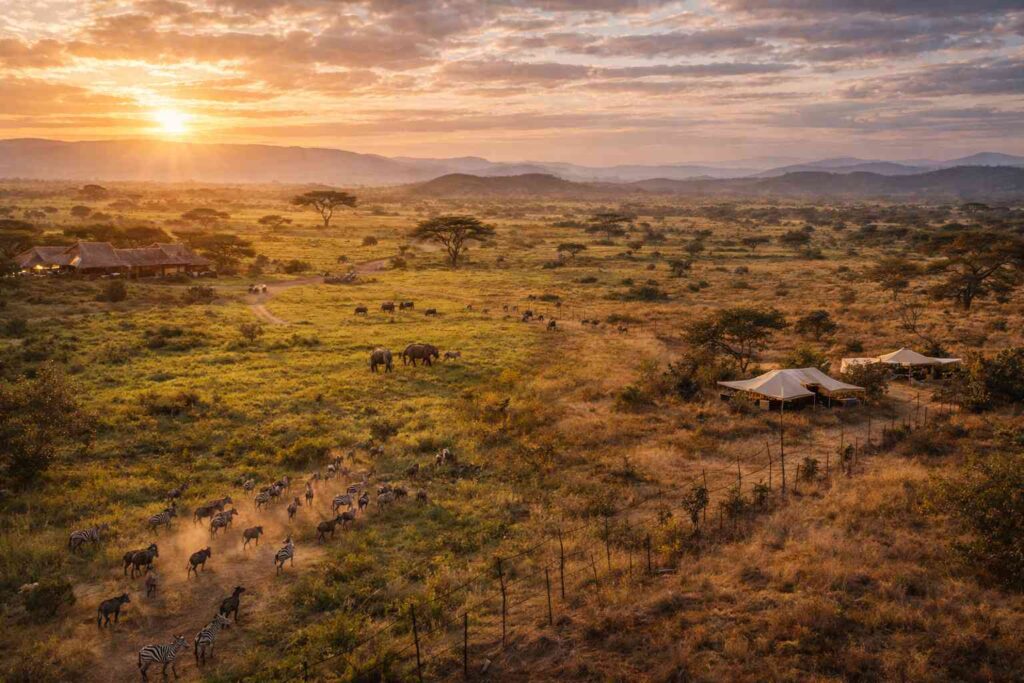
- Elephants, often seen in family groups near water
- Hippos and crocodiles in permanent lagoons and channels
- Predators, especially lions and leopards, still active and opportunistic
Game is more spread out, but the lush backdrop and unique behaviors — like mothers protecting calves or young predators learning to hunt — create intimate safari moments.
Birdwatching: A February Highlight
February is arguably the best birding month in the Okavango Delta:
- Seasonal pans and wetland edges teem with life
- Migratory species such as kingfishers, bee-eaters, and cuckoos are present
- Breeding activity is in full swing, with vibrant colors and aerial displays
For keen birders, the diversity and density of species make this time unbeatable.
Fewer Tourists, Better Rates
February is part of Botswana’s “green season”, which brings multiple travel advantages:
- Lower safari rates at luxury camps and lodges
- More availability, allowing you to choose prime camps or customize your itinerary
- Less crowded sightings, with more time to enjoy wildlife without vehicle traffic
This quieter period allows for a more personal, relaxed safari — whether you’re a couple, photographer, or first-timer.
Where to Stay in the Delta in February
Prioritize:
- Lodges near permanent water (to ensure mokoro or boat access)
- Camps in private concessions, offering flexible activities like walking safaris
- Birding-focused camps, if avian life is a priority
Top regions to consider:
- Moremi Game Reserve: Excellent all-season access and resident wildlife
- Khwai Concession: Varied habitats and good year-round predator activity
- Western Delta edges: Rich birdlife and fewer vehicles
Activities Available in February
Depending on lodge location and water levels:
- Game drives (morning and afternoon)
- Walking safaris, especially in drier sections
- Birdwatching, either from hides or boats
- Mokoro excursions, where water depth allows
- Photography tours, with dramatic cloudscapes and sunsets
Ask in advance about water-based activities, as availability varies by area.
Tips for Visiting in February
- Pack light, breathable clothing and include a rain jacket
- Bug spray is essential, especially after rains
- Use waterproof bags for gear and electronics
- Book with operators experienced in green season travel
- Embrace the adventure — from storms to shifting herds, this season is about spontaneity
Conclusion
A safari to the Okavango Delta in February isn’t just about animals — it’s about immersion. The green season brings life to the forefront: grasses rise, birds sing, young creatures stumble beside their mothers, and clouds billow over open floodplains. While it’s not the dry season’s classic game-viewing experience, February offers a wild, sensory-rich journey filled with quiet beauty and surprise.
For those who seek something less scripted and more soulful, this is Botswana at its most alive.
FAQs
Yes — for lush scenery, birds, and a quieter experience. Wildlife is more dispersed, but sightings can still be excellent with a good guide.
Possibly — it depends on your lodge location and water conditions. Choose camps near permanent water channels for the best chance.
Yes, February is in the wet season. Expect short, intense showers, mostly in the afternoons, with plenty of sunshine in between.
You’ll see elephants, hippos, antelope, predators, and abundant birdlife — plus newborns and rich behavioral moments.
Yes — February is part of the green season, and many lodges offer reduced rates and good availability.