While the Masai Mara is most famously associated with the dramatic river crossings of the Great Migration between July and October, February offers a very different kind of safari spectacle — one of birth, survival, and intense predator-prey interaction. This is calving season, when the plains come alive with newborn wildebeest, zebra, and antelope, and predators take full advantage of the seasonal abundance.
In this article, we’ll explore why February is a fantastic time to visit the Masai Mara, what you can expect from wildlife sightings and weather conditions, and how to plan the perfect safari during this unique time of year.
What is the calving season?
The calving season in the Serengeti-Masai Mara ecosystem typically runs from January to early March, as the Great Migration herds pause in the southern Serengeti and adjacent Mara regions to give birth.
During this time:
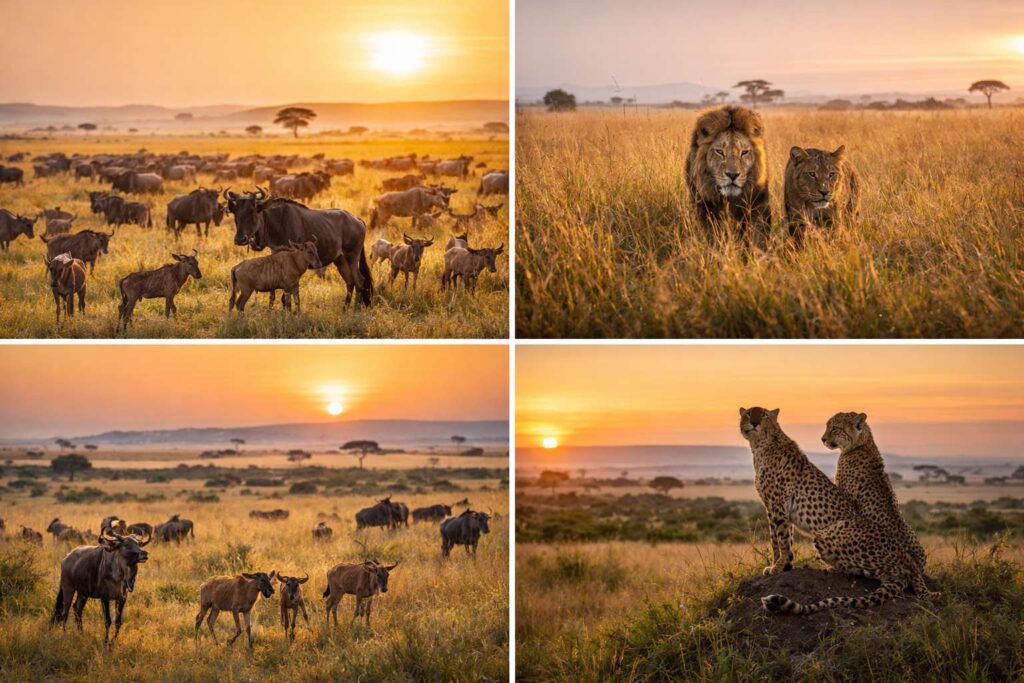
- Over 500,000 wildebeest calves are born within a few weeks
- Zebra and Thomson’s gazelle also give birth in large numbers
- Newborns face high predation from lions, cheetahs, hyenas, and jackals
February sits at the heart of this season, offering daily scenes of calves taking their first steps, mothers defending their young, and predators testing the edges of herds. It’s a time of drama, tenderness, and raw natural beauty — ideal for those who want deeper, behavioral insights into wildlife.
Why visit the Masai Mara in February?
1. Predator activity at its peak
With so many vulnerable young animals, predators are particularly active. Lions may be seen hunting in prides, while cheetahs and hyenas capitalize on isolated calves. If you’re interested in high-intensity predator-prey action, February is one of the best months for it.
2. Excellent photographic conditions
- Golden grasses and soft light provide stunning backdrops
- Open landscapes allow clear shots of animal interactions
- Fewer vehicles on drives allow cleaner photographic angles
3. Fewer crowds and better rates
February is outside the main tourist rush, meaning:
- More availability at top lodges and camps
- Often lower prices than peak migration months
- A more intimate safari experience, especially in private conservancies
4. Warm, mostly dry weather
February is part of Kenya’s short dry season, making it comfortable for:
- Morning and evening game drives
- Bush breakfasts and sundowners
- Balloon safaris over the savannah
Weather in the Masai Mara in February
- Temperature: 12–28°C (54–82°F)
- Rainfall: Light and sporadic — occasional afternoon showers
- Humidity: Moderate
- Visibility: Good, with thinning vegetation after the short rains
While rain is possible, it’s usually limited to short showers that rarely disrupt safari activities.
Wildlife highlights in February
Wildebeest and zebra calving
While most of the herds concentrate in southern Serengeti, portions of the Mara ecosystem still host significant calving activity, especially in conservancies and areas near the Kenya-Tanzania border.
Expect:
- Calves born within minutes — sometimes during your drive
- Hectic scenes as predators exploit weakened herds
- High concentrations of herbivores in short-grass plains
Big cats and predators
- Lions are territorial and hunt cooperatively
- Cheetahs thrive in open plains with isolated prey
- Hyenas and jackals patrol the periphery for easy kills
Guides often focus game drives around predator hot zones during this season.
Birdwatching
February is part of Kenya’s peak birding season, with:
- Migratory species still present
- Courtship displays and nesting behavior
- Lively wetland and savannah bird activity
Where to go in the Masai Mara in February
Masai Mara National Reserve
Offers iconic scenery, abundant predators, and access to core wildlife areas. Expect:
- Large resident prides of lions
- Leopard sightings in riverine forests
- Cheetahs on open plains
Private conservancies (e.g., Mara North, Olare Motorogi, Naboisho)
- Fewer vehicles and exclusive access
- Night drives and guided walks allowed
- Excellent conservation and community models
Pros and cons of visiting in February
| Pros | Cons |
|---|---|
| Peak calving season | Not the river crossing season |
| Excellent predator sightings | Some lodges closed or under maintenance |
| Fewer tourists | Vegetation can still be relatively lush |
| Comfortable weather | Wildlife may be more dispersed than in dry months |
Practical tips for a February safari
- Book early to secure lodges in prime locations
- Include both Masai Mara Reserve and a conservancy for variety
- Pack for mixed weather: light clothing + rain layer
- Bring binoculars and a good zoom lens
- Ask your guide about areas with recent predator activity
Conclusion
A Masai Mara safari in February offers a truly rewarding experience for those looking beyond the classic migration calendar. With calving season in full swing, the plains erupt in a drama of new life and predation — a rich tapestry of nature that reveals the survival challenges of the savannah.
Expect exceptional wildlife action, comfortable weather, and fewer crowds, all wrapped in the golden glow of East Africa’s short dry season. If your goal is immersive wildlife storytelling — from the birth of wildebeest to the hunt of the cheetah — February might just be the most meaningful time to go.
For expert safari planning and seasonal itineraries, explore more on our blog.
FAQs
Yes. While it’s not river crossing season, it’s the peak of the calving season, with incredible predator action and great weather.
Parts of the herds may be in southern Kenya, but the bulk of the migration is in the Serengeti. February is more about calving than movement.
Most are — especially in the central Mara and conservancies. Some may do maintenance, so booking ahead helps.
Generally warm and dry with occasional brief showers — ideal for game drives.
Yes — weather conditions are often suitable, and clear mornings make it a perfect time for scenic flights.
No. Compared to July–October, February sees fewer tourists, allowing for quieter sightings.
It’s not peak season, but early booking still ensures better lodge choices and guides.
Absolutely. Many migratory and resident species are active, making it one of the best birding months.