A safari in Botswana during January offers an experience unlike any other time of year. As the country enters its emerald season, the parched bush transforms into a lush, green wonderland, teeming with life, color, and drama. While many associate African safaris with the dry season, the green season — especially January — brings a special kind of magic to Botswana’s most iconic landscapes.
If you’re looking to avoid the crowds, witness baby animals taking their first steps, or explore photographic scenes framed by stormy skies and vibrant vegetation, a January safari in Botswana may be just what you’re looking for.
What is the emerald season?
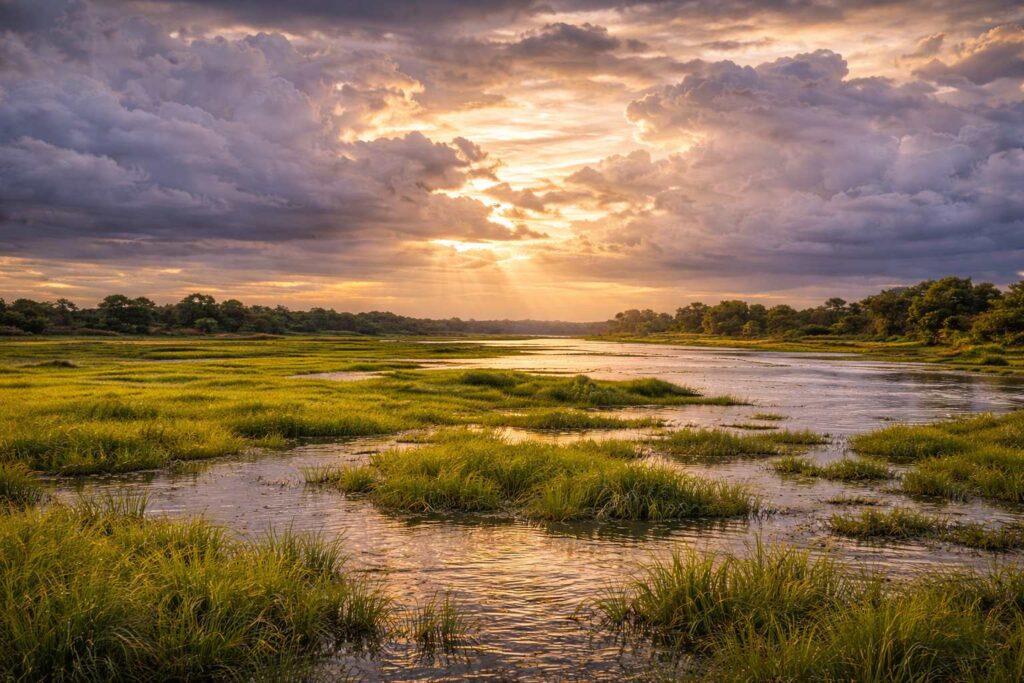
Botswana’s emerald season runs from November through March, coinciding with the region’s summer rains. In January, the landscape reaches its greenest point, as afternoon thunderstorms sweep through the Okavango Delta, Moremi, and the Kalahari.
This seasonal transformation offers:
- Fresh water pans and lush floodplains
- A burst of plant growth and blooming wildflowers
- Migratory birds in peak breeding plumage
- Abundant calving season for antelope and other herbivores
While the rains may bring occasional downpours, they’re usually short-lived and dramatic, with clear, beautiful mornings perfect for game viewing and photography.
January weather in Botswana
January is warm and wet, with daytime highs around 30–34°C (86–93°F) and humidity that builds toward dramatic thunderstorms in the afternoon. Evenings cool off pleasantly, and most rain falls in short, powerful bursts rather than all-day showers.
Expect:
- Clear mornings, ideal for game drives
- Dramatic cloud formations and sunsets
- Occasional road restrictions in remote areas due to mud
- Refreshing greenery that rejuvenates the entire ecosystem
Despite being part of the wet season, January is still an excellent time for safaris — if you know where to go and what to expect.
What wildlife can you see in January?
Calving season and predator action
January is prime time for newborn wildlife. Many herbivores — including impalas, zebras, wildebeest, and tsessebe — give birth at this time, taking advantage of the abundant food and water.
This, in turn, attracts predators like:
- Lions
- Leopards
- Wild dogs
- Hyenas
With fewer vehicles on the roads and animals more relaxed, you’ll often enjoy extended, intimate sightings without the crowding typical of peak season.
Birdwatching bonanza
Birders flock to Botswana in January. The emerald season brings:
- Migratory species from Europe and Asia
- Birds in vibrant breeding plumage
- Courtship displays, nesting activity, and feeding frenzies
Look out for:
- Carmine bee-eaters
- Kingfishers
- Whydahs
- Wattled cranes
- Raptors soaring on thermals
Aquatic and desert-adapted wildlife
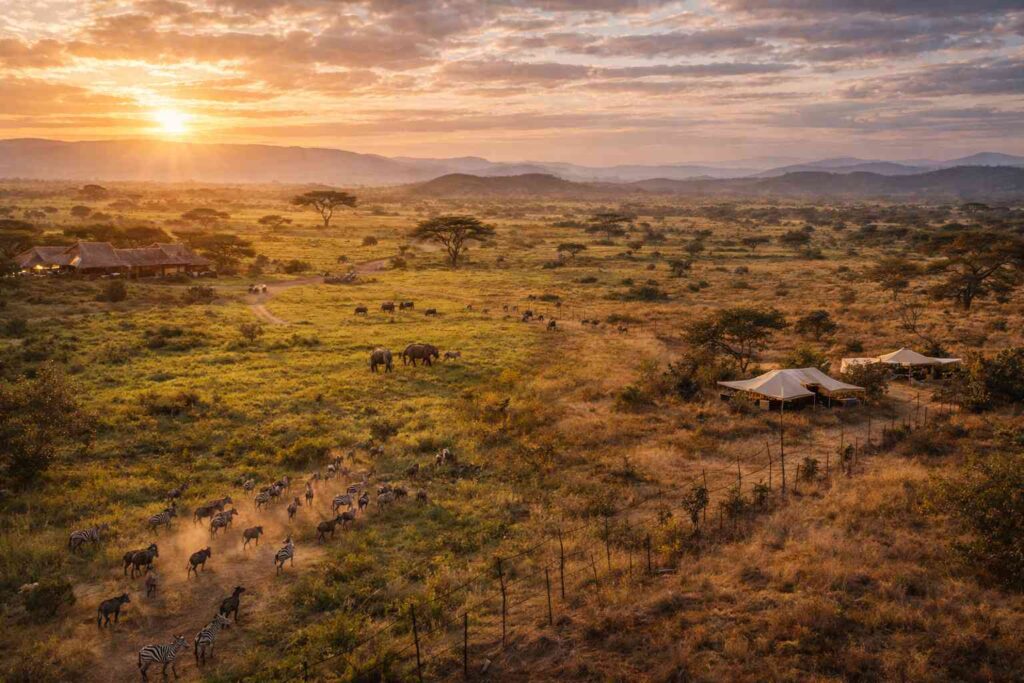
The Okavango Delta begins to swell, drawing elephants, buffalo, and hippos to the lagoons and marshes. Meanwhile, in the Central Kalahari and Makgadikgadi Pans, seasonal rains trigger the zebra migration — a lesser-known but incredible spectacle.
Best safari regions to visit in January
Okavango Delta
- A lush, watery paradise in January
- Excellent birding and predator sightings
- Game is more spread out but still abundant
- Some water-based activities (mokoro, boating) possible in private concessions
Moremi Game Reserve
- Varied landscapes of woodland, floodplains, and lagoons
- Strong leopard and wild dog populations
- Game viewing is rich, especially around permanent water
Central Kalahari Game Reserve
- Green grasses bring herbivores and their newborns
- Excellent predator sightings in Deception Valley
- Few tourists — remote and rewarding
Makgadikgadi Pans
- The zebra and wildebeest migration begins here
- Salt pans transform into temporary lakes
- Flamingos and other waterbirds arrive in large numbers
Advantages of a January safari in Botswana
Fewer tourists, better value
January falls in Botswana’s low tourism season, meaning:
- Lower lodge rates
- Exclusive sightings
- Flexible bookings and fewer crowds
Atmospheric photography
- Dramatic skies and lush vegetation
- Stormy backdrops and golden light
- Young animals and active birds
Photographers love January for its bold contrasts and rich textures.
A slower, more intimate safari
Without the pressure of crowds, your safari becomes slower-paced and more connected to nature. Guides have time to track animals thoroughly, and you’re more likely to have sightings to yourself.
Things to consider when traveling in January
Accessibility
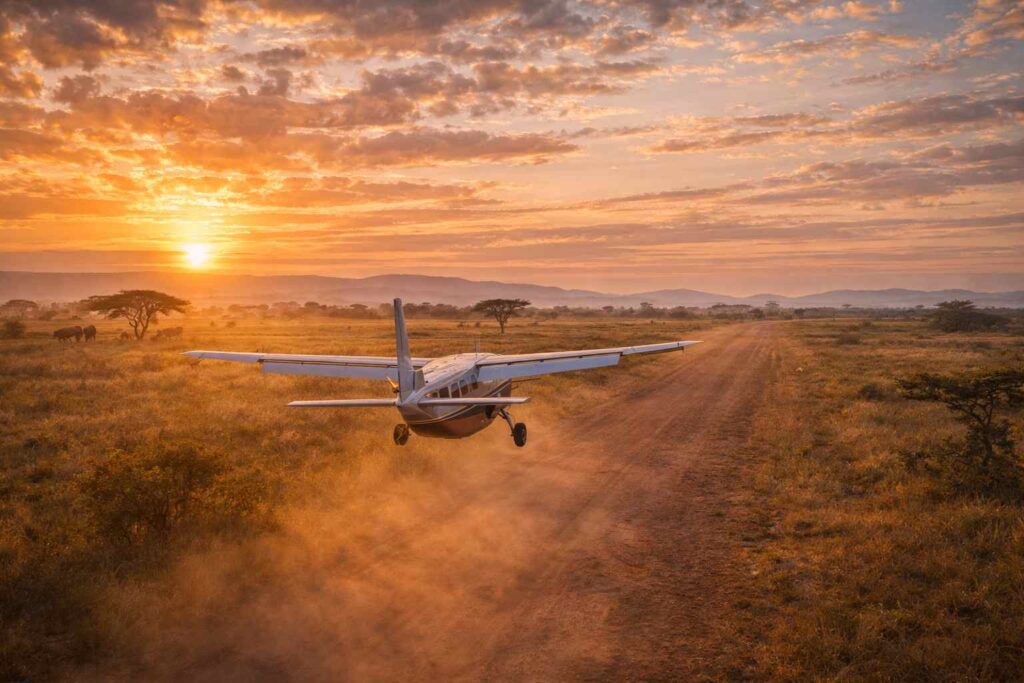
Some remote camps may close, and heavy rains can make certain tracks muddy or impassable. Fly-in safaris to private concessions and camps with year-round access are recommended.
Safari activities
While game drives remain the core of any safari, January may offer:
- Birding walks
- Mokoro (dugout canoe) rides in flooded regions
- Photography safaris
- Boating excursions where water levels allow
Some walking safaris may be limited due to vegetation density or wet conditions.
Packing list for January
- Lightweight, quick-dry clothing
- Waterproof jacket or poncho
- Breathable long-sleeve shirts and trousers (for sun and insects)
- Binoculars and waterproof camera gear
- Sun protection (hat, sunscreen)
- Insect repellent and malaria prophylaxis
Green vs dry season in Botswana
| Feature | Emerald Season (January) | Dry Season (June–October) |
|---|---|---|
| Landscape | Lush, green, dramatic skies | Dry, dusty, sparse vegetation |
| Wildlife | Newborns, active predators | Concentrated around water |
| Birdlife | Peak migratory & breeding | Moderate |
| Crowds | Very low | High, especially in top parks |
| Prices | Lower | Peak |
| Activities | Game drives, birding, boating | Game drives, walking, mokoro |
Conclusion
A January safari in Botswana during the emerald season is a rich, rewarding adventure. While it may not deliver the classic dry-season “tick-list” safari, it offers something deeper: lush beauty, intimate wildlife moments, dramatic skies, and the joy of being immersed in a landscape bursting with life. It’s a perfect time for adventurous travelers, birders, photographers, and second-time safari-goers who want a fresh perspective on Botswana’s wild soul.
Ready to explore the emerald season? Discover more travel tips and custom itineraries on our blog.
FAQs
Yes. Though wetter, it offers fewer crowds, beautiful scenery, and exceptional birding and baby animal sightings.
Absolutely. Predators remain active, and herbivores gather in green areas—especially in the Okavango and Kalahari.
Yes. January is within the malaria season, so prophylaxis and insect precautions are recommended.
Not all. Focus on year-round lodges in accessible areas like the Okavango Delta and private concessions.
Yes—Makgadikgadi Pans come alive with migrating zebras and wildebeest after rains in January.
In some private areas of the Delta, yes. Mokoro and boat trips may be available depending on flood levels.
It can be warm and humid, but safaris are scheduled during the cooler parts of the day with siestas in between.