Kruger National Park is a year‑round safari destination, but every month brings something slightly different to the bush — from concentrated game around waterholes in the dry season to lush landscapes, newborn animals, and spectacular birdlife during the rains. Understanding the seasonal rhythms of Kruger helps you plan your visit around the wildlife spectacle you most want to experience.
Below is a month‑by‑month guide to wildlife highlights in Kruger National Park, designed to help you choose the best time for the animals you want to see and the experiences you want to enjoy.
January – Lush Green Season & Newborns
January sits squarely in the wet summer season. Claimed by heavy rains, the bush is deeply green and vibrant. Many species give birth around this time, so you’ll see young impalas, wildebeests, zebras, and more. The lush vegetation also attracts magnificent migratory birds, which makes this a superb month for bird watchers.
What to see in January:
- Lots of baby animals learning to walk and graze
- Excellent birdlife and migratory species
- Hippos and crocodiles thriving in full rivers
February – Continued Rainy Season & Active Birding
Rain continues into February and temperatures are hot and humid. Game can be harder to spot in the thick vegetation, but birding peaks with migrants still abundant and resident species breeding. The rainy season fills pans and waterholes, giving you dramatic landscape shots if you’re into photography.
What to see in February:
- Dynamic bird activity (migrants and resurgent species)
- Large herds with newborns
- Waterbirds and lush riverine scenes
March – Wet Season Tapering Off
March marks the end of the rainy period, and while vegetation is still dense, game viewing slowly improves. Predator activity can be high as lions, leopards, and hyenas take advantage of prey mobility near lingering water sources.
What to see in March:
- Predators on the move
- Red‑billed oxpeckers and other birds endemic to the wet season
- Still‑green landscapes for photography
April – Shoulder Season With Vibrant Wildlife
April transitions toward the dry season, with decreasing rain and cooling temperatures. This can be one of the best months to visit: the bush begins to thin, making animals more visible, and wildlife movements pick up as water sources contract.
What to see in April:
- Pods of elephants moving toward permanent water
- Wildebeest and impala mating season
- Fewer crowds & pleasant weather
May – Start of the Dry Season
May marks the official start of Kruger’s dry season. The rains have ended and the bush begins to turn golden brown. Water becomes scarcer so animals concentrate around rivers and waterholes, improving game viewing dramatically.
What to see in May:
- Big 5 sightings near water
- Plains game enjoying residual greenery
- Excellent walking safaris as conditions cool
June – Peak Dry Season
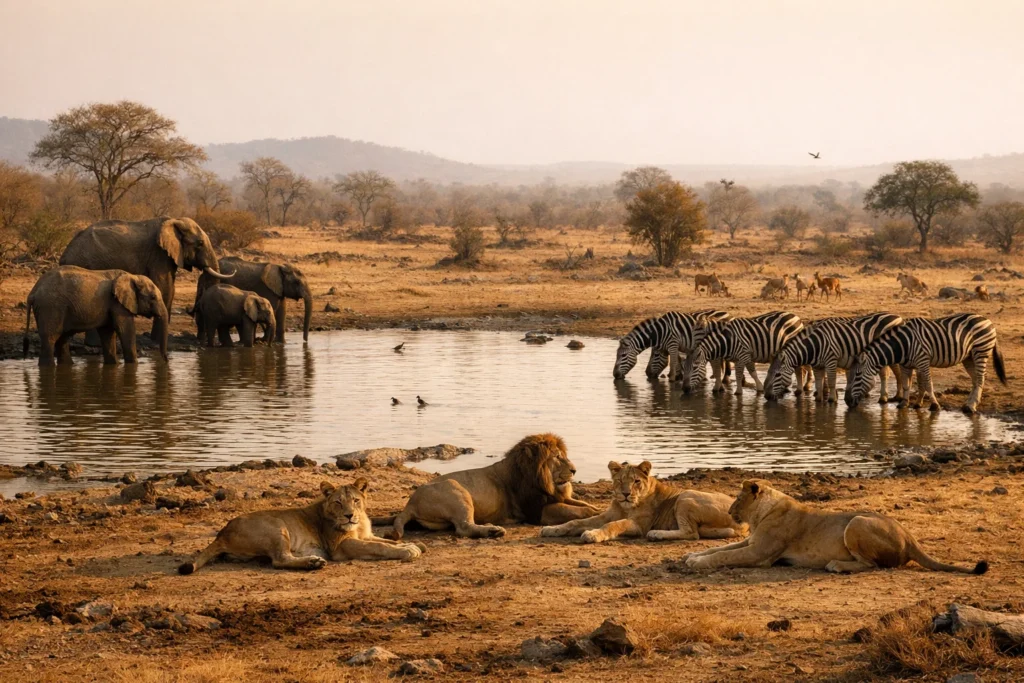
June is one of the most revered months for safari. Cool, dry conditions dominate and animals are easy to spot against the thinned vegetation. Game congregates around the remaining water sources — making predator and prey interactions more visible and predictable.
What to see in June:
- High predator visibility (lions, leopards, hyenas)
- Elephants clustering at permanent rivers
- Clear early‑morning and late‑afternoon game drives
July – Classic Safari Wildlife Viewing
July is often cited as the best single month for game viewing in Kruger. With consistently dry conditions and sparse vegetation, animals are funneled to predictable locations, offering unforgettable sightings of large herbivores and big cats.
What to see in July:
- Big cats stalking at waterholes
- Buffalo and zebra sightings in open plains
- Cheetah in the open grasslands
August – Still Dry & Excellent Viewing
August continues the dry season’s streak of excellent game viewing. Vegetation remains low, and the park’s central and southern regions — like around the Sabie and Crocodile rivers — come alive with wildlife activity.
What to see in August:
- Dense concentrations of herbivores
- Rhino and elephant sightings near permanent water
- Photogenic dusty plains and golden light
September – Transition With Big Concentrations
September signals late dry season conditions. It’s hotter and drier, and animal concentrations around limited waterholes are at some of their highest of the year. This makes spotting elusive predators more likely, while landscapes showcase classic dusty safari moods.
What to see in September:
- Strong predator–prey interactions
- Massive elephant herds
- Buffalos and zebras in large groups
October – Early Rain & Spring Highlights
October is a transitional month: the first showers arrive and vegetation begins greening up. While animals disperse more as water becomes available, wildlife is still highly visible before the bush gets thick. Birds begin courtship rituals, and antelopes give birth toward month’s end.
What to see in October:
- Spring bird activities
- Newborn impala and other antelope calves
- Dynamic predator behaviour as grasses remain thin
November – Green Season in Full Swing
Rain intensifies through November. The park transforms into a lush, green paradise, with excellent birding and abundant newborn wildlife. This is one of the best times for photography and for seeing wildlife behaviour in a more natural, verdant environment — even if animals are more spread out.
What to see in November:
- Lots of baby animals across species
- Migratory bird arrivals
- Lush landscapes for photography
December – Peak Wet Season & Vibrant Life
December brings the height of the rainy season. Warm, humid days and late afternoon thunderstorms are common. While game can be more challenging to locate in thick foliage, the park buzzes with new life, vibrant birds, and colourful plant growth.
What to see in December:
- Peak newborn season for plains game
- Spectacular bird diversity
- Green landscapes and dramatic skies
Seasonal Safari Planning Tips
- Dry season (May–September) is best for classic wildlife viewing, as animals cluster around set water sources and vegetation is sparse.
- Wet season (October–April) brings lush scenery, newborns, and superb birdwatching but more scattered wildlife.
- Shoulder months (April & October) offer great balance: fewer crowds, pleasant weather, and good visibility before or after peak conditions.
Conclusion
Kruger National Park’s wildlife spectacle changes beautifully throughout the year. From dramatic predator encounters and big game congregations in the dry months to lush scenery, bird migration, and newborn calves in the wet season, there’s never a bad time to visit — only different experiences to be had. Use this month‑by‑month guide to plan your Kruger safari based on the species and scenes you most want to capture.
Whether you’re aiming for big cats at dusk, herds at dwindling waterholes, or vibrant summer landscapes, understanding the seasonal rhythms will elevate your safari from memorable to extraordinary.
Frequently Asked Questions
June through September, during the dry season, offers excellent visibility for lions, leopards, and cheetahs near water sources.
January through March are ideal, with many migratory species present and breeding activity in full swing.
Yes, the green season offers stunning scenery, fewer crowds, baby animals, and exceptional birding opportunities.
July through September, as animals gather around shrinking water sources.
April, May, and November often see fewer visitors, making them ideal for quieter safaris with good sightings.