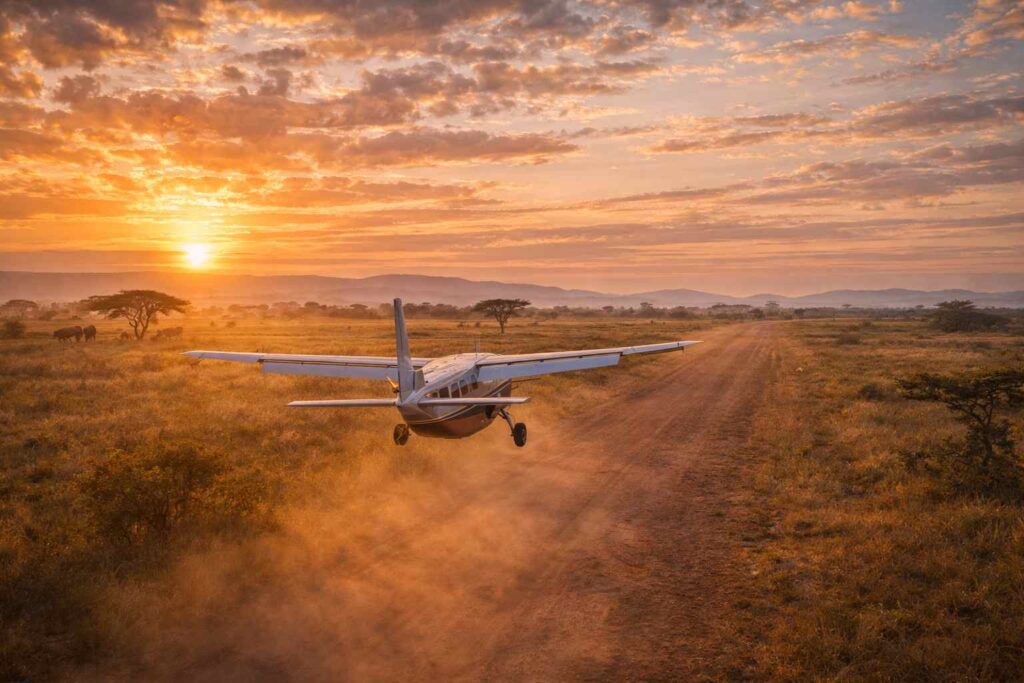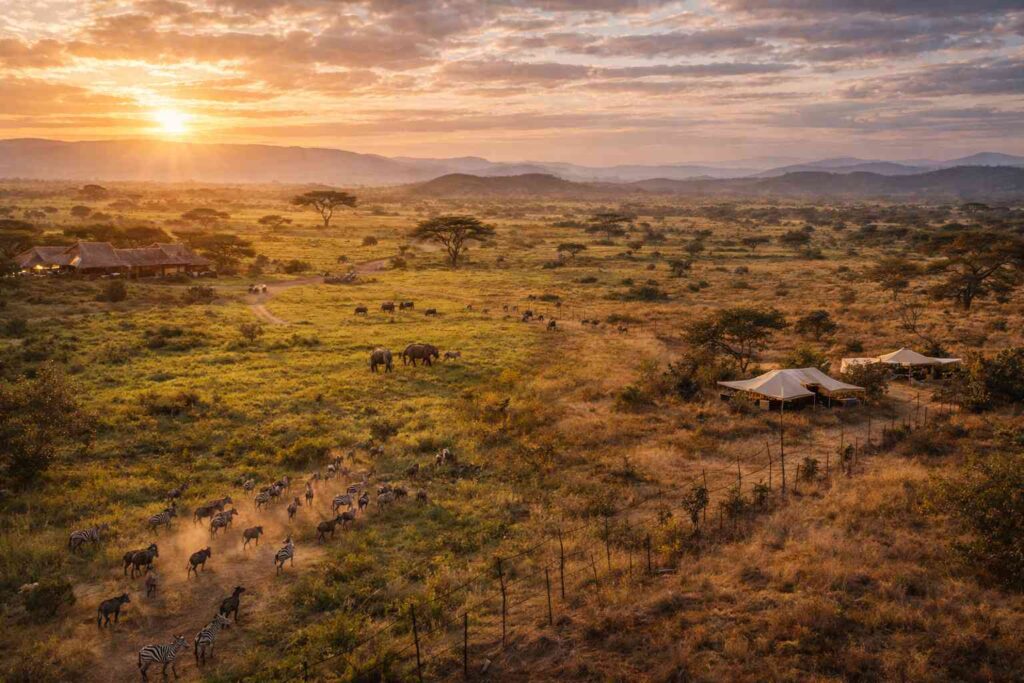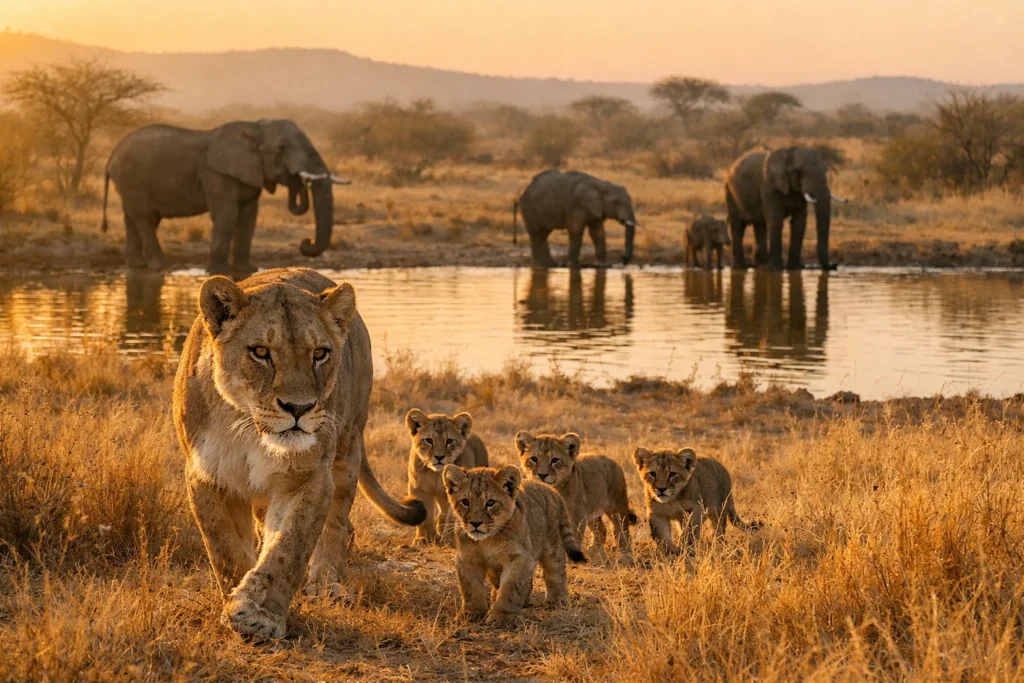
Madikwe Game Reserve in South Africa’s North West Province is one of the country’s premier safari destinations — home to an extraordinary array of wildlife across 75,000 hectares of bushveld and savannah. It’s a Big Five reserve with thriving populations of iconic mammals, rare species like African wild dog, and a rich birdlife that changes with the seasons.
Madikwe’s Wildlife Highlights
Madikwe supports over 60 mammal species and 300+ bird species. Its diverse ecosystems allow for spectacular game viewing throughout the year.
The Big Five
- Elephant: Commonly seen in large herds.
- Lion: Often spotted at dawn and dusk.
- Buffalo: Seen near waterholes and riverbeds.
- Rhino: Both black and white rhinos are present.
- Leopard: Elusive, but sightings are possible with experienced guides.
Other Notable Mammals
- African wild dog: Madikwe is one of the best places in South Africa to see this endangered predator.
- Cheetah: Sightings occur, particularly in open plains.
- Spotted and brown hyena: Frequently seen near kills or at dusk.
- Giraffe, zebra, wildebeest, and antelope species: Including kudu, impala, tsessebe, waterbuck, eland, and gemsbok.
Birdlife
Madikwe is a birdwatching hotspot, especially during the green season. Expect to see raptors, bee-eaters, kingfishers, and seasonal migrants.
Wildlife Viewing by Season
Dry Season (May to September)
This is considered the best time for game viewing:
- Sparse vegetation makes animals easier to spot.
- Wildlife concentrates around remaining waterholes.
- Morning and evening game drives offer ideal conditions.
- Excellent visibility for photographers.
Best sightings: Elephant herds, lions on the move, large herbivore gatherings, wild dog packs.
Green Season (October to April)
While bush is denser, the green season has its own appeal:
- Lush, vibrant landscapes.
- Many animals give birth during this period, especially antelope.
- Migratory birds arrive, enriching the avian diversity.
- Fewer tourists and good lodge rates.
Best sightings: Newborn animals, colorful birdlife, predators with young, playful antelope.
Seasonal Safari Highlights
| Season | Highlights | Key Wildlife |
|---|---|---|
| May – June | Start of dry season, cooling temperatures | Elephants, buffalo, early predator sightings |
| July – September | Peak game viewing, minimal vegetation | Big Five, wild dogs, easy tracking |
| October – December | Start of rains, calving season | Newborns, bird activity, predator hunts |
| January – March | Wet season peak, green landscapes | Migratory birds, baby animals, vibrant scenery |
| April | Transition to dry, mixed sightings | Variety of species active |
Safari Planning Tips
- Dry season offers the best visibility and highest concentration of animals.
- Green season is ideal for birders and photographers seeking color and baby animals.
- Morning and evening game drives yield the best chances for big cats and wild dogs.
- Book lodges early for high season (June – September).
Conclusion
Madikwe Game Reserve delivers exceptional wildlife experiences year-round. If you want predictability and prolific sightings, opt for the dry season (May to September). For beauty, fewer crowds, and the chance to witness new life, visit in the green season (October to April). No matter when you go, the diversity and richness of Madikwe’s wildlife will leave a lasting impression.
Frequently Asked Questions
Yes. Dry season offers clarity and contrast, while green season provides vibrant colors and dramatic light.
It’s possible, especially during the dry season with multiple game drives.
Madikwe is one of the best reserves to see them, particularly in cooler months.
October to March during the wet season and migratory period.
No long-distance migrations, but seasonal shifts affect their movement patterns.