When most travelers picture a Zambian safari, they imagine dry bush landscapes and wildlife clustered around shrinking waterholes. But those in the know head to the Luangwa Valley in January, during the vibrant green season, to witness a very different—and utterly magical—side of the African wilderness.
The green season, often overlooked, transforms the Luangwa into a lush, lively paradise. Bursting with fresh life, dramatic skies, and fewer crowds, January offers unique wildlife encounters and a safari experience rich in color and intimacy. Here’s why the Luangwa Valley in January deserves a spot on your travel calendar.
What is the green season in Zambia?
Zambia’s green season runs from November to April, coinciding with the region’s rainy season. While some may worry that rain dampens the safari experience, it actually brings the landscape to life. In January, the rains are typically short and dramatic—often in the late afternoon or evening—leaving most of the day clear for activities.
The effect on the landscape is striking:
- The dry, dusty plains of the dry season become a carpet of green.
- Wildflowers bloom and trees regain their canopies.
- The Luangwa River swells, revitalizing the floodplains and drawing wildlife to its edges.
It’s a season of renewal—for both nature and those who venture into it.
What makes the Luangwa Valley special in January?
1. Birth and new beginnings
January falls in the middle of calving season. Many antelope, including impala and puku, give birth during this time, and the valley teems with young animals taking their first steps. This surge in prey also attracts predators like lion, leopard, and wild dogs, making for dramatic and intimate wildlife encounters.
This is one of the best times to witness natural predator-prey interactions, as well as the tenderness of animal behavior often missed during the dry months.
2. Birdwatching paradise
If you’re a birder—or simply someone who enjoys the color and energy of birdlife—January is unbeatable. With migrant species arriving from the north and residents entering their breeding season, the Luangwa becomes a birding haven.
Expect to see:
- Carmine bee-eaters nesting in riverbanks
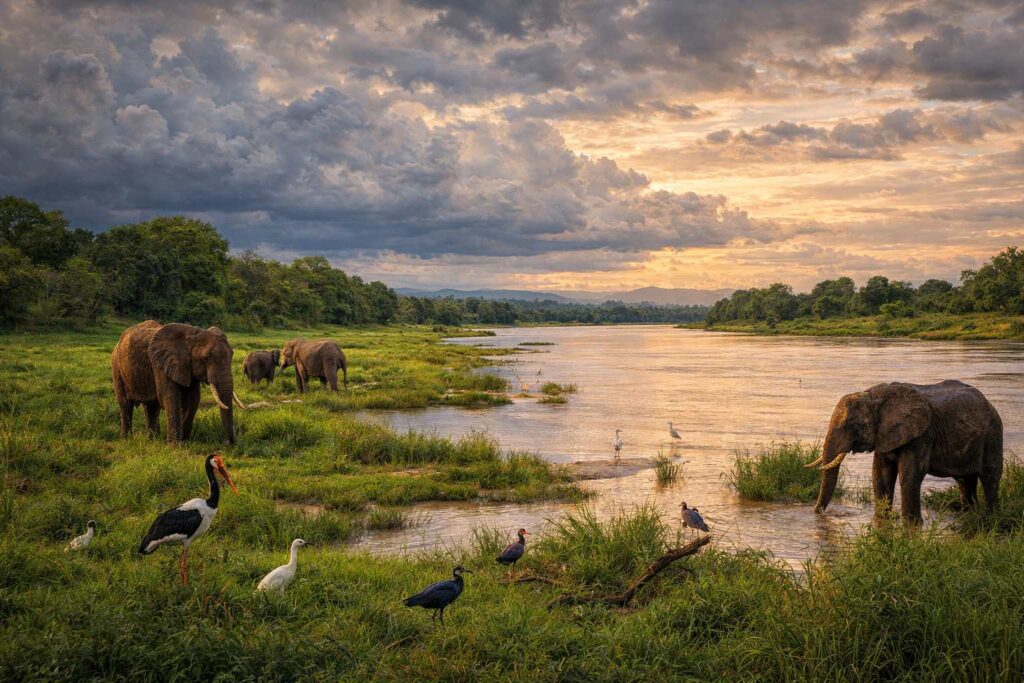
- African skimmers, kingfishers, and herons fishing in swollen channels
- Storks and waders congregating in seasonal wetlands
Many birds display full breeding plumage, making this a top month for bird photography.
3. Dramatic skies and photography conditions
The green season is a dream for photographers. The combination of:
- Deep green backdrops
- Animals against stormy skies
- Water reflections
- Dramatic sunsets and sunrises
creates a palette that can’t be replicated in the dry season. Whether you’re photographing elephants crossing the Luangwa River or a lion pride in tall grass, the lighting and mood are unforgettable.
Safari experience in the green season
A different pace, more personal moments
Unlike the high season (June–October), where vehicles often cluster around sightings, January safaris are more quiet and contemplative. There are:
- Fewer tourists
- More flexibility on game drives
- Longer, more immersive experiences with guides
You may have sightings all to yourself—watching a leopard stalk through tall grass or a family of elephants splash in the river without another vehicle in sight.
Boating and water-based safaris
During the dry season, the Luangwa River retreats, making boating impossible. In January, the river overflows into channels and oxbow lagoons, opening opportunities for boat safaris—a peaceful and scenic way to view hippos, crocodiles, and aquatic birdlife.
It’s a perspective most visitors never get and one of the highlights of green season travel.
Practical tips for January travel
Lodges and accessibility
While some remote bushcamps close during the rains, several top-quality lodges remain open year-round, offering special green season packages. These often include:
- Reduced rates
- Exclusive boating safaris
- Specialist birding experiences
Access is usually via air, as some roads become impassable. But flights into Mfuwe—the main gateway to South Luangwa—are reliable and scenic during this time.
What to pack
- Lightweight, quick-dry clothing for humid days
- Waterproof jacket or poncho
- Good walking shoes
- Camera protection (for sudden downpours)
- Insect repellent and malaria medication
Despite the rain, temperatures are warm (25–30°C / 77–86°F), and mornings/evenings are ideal for activities.
Comparing green season vs dry season
| Feature | Green Season (Jan) | Dry Season (Jul–Oct) |
|---|---|---|
| Landscape | Lush, green, dramatic skies | Dry, open, dusty |
| Wildlife visibility | Dispersed, with newborns | Concentrated near water |
| Birdlife | Peak season | Moderate |
| Safari crowds | Low | High |
| Prices | Lower | Peak rates |
| Activities | Game drives, boat safaris | Game drives, walking safaris |
Both seasons are rewarding but offer very different safari experiences. The green season is about atmosphere, color, and quieter encounters, while the dry season focuses on classic visibility and numbers.
Who should choose a January Luangwa safari?
January is perfect for:
- Repeat safari travelers seeking something different
- Birdwatchers and wildlife photographers
- Nature lovers who appreciate green landscapes and seasonal cycles
- Couples or honeymooners wanting exclusivity and romance
- Budget-conscious travelers who value great experiences at lower costs
It’s also ideal for those with flexibility—who don’t mind adjusting plans due to weather and want to be guided by nature’s rhythm.
Conclusion
A safari in Zambia’s Luangwa Valley during January is a celebration of life at its freshest. From newborn antelope to verdant floodplains alive with birdsong, it’s a season of intimate encounters, striking beauty, and unexpected discoveries.
If you’re seeking something beyond the ordinary—away from the crowds and into the heart of Africa’s wild rebirth—the green season awaits.
Explore more of our safari insights and destination guides to plan your next unforgettable journey.
FAQs
Usually not. Rain showers are often short-lived and guides adjust activities around them.
Yes. Lodges typically offer discounted rates, making it excellent value.
Yes. Lions, leopards, and wild dogs remain active, especially around birthing herds.
In most years, yes. Rising river levels make this an ideal time for boat-based wildlife viewing.
There is a higher risk during the wet season. Consult your doctor and take preventive measures.
Absolutely. It’s peak time for migratory species and breeding activity.
Some lodges limit walking due to thick bush or wet conditions, but short walks may still be possible.
Yes, though access to more remote areas may be limited. Lower Zambezi and Victoria Falls are viable add-ons.