Watching a lion walk past your safari vehicle or seeing an elephant family crossing the plains can be among the most memorable moments of a Serengeti safari. But experiencing Africa’s wildlife up close also raises important questions about safety.
How close can you get to a lion? Is it safe when an elephant approaches your vehicle? Can wild animals enter your safari camp at night?
Serengeti National Park is home to powerful predators, large herbivores, and other potentially dangerous animals. Unlike wildlife in controlled environments, these animals move freely and behave according to their natural instincts.
Fortunately, professionally guided safaris follow established safety procedures that help visitors observe wildlife responsibly.
The most important Serengeti wildlife safety rule is simple: stay inside your safari vehicle near animals, maintain a respectful distance, and always follow your guide’s instructions.
Understanding wildlife safety rules is an essential part of preparing for a Serengeti safari, but choosing the right region, accommodation, and itinerary also shapes your experience. Explore our complete Serengeti National Park safari guide to learn about the park’s different regions, wildlife highlights, and accommodation options before planning your trip.
This guide explains how to behave around wildlife, what to expect at unfenced safari camps, and the rules that help protect both visitors and animals during game drives.
Essential Serengeti wildlife safety rules
Before exploring specific situations, it’s helpful to understand the basic principles of wildlife safety in the Serengeti.
| Situation | Essential safety rule |
|---|---|
| Watching wildlife from a vehicle | Remain inside and follow your guide |
| Animals approaching the vehicle | Stay calm and avoid sudden movements |
| Photographing predators | Never provoke or approach them |
| Elephants crossing the road | Give them space and keep their route clear |
| Leaving the safari vehicle | Only at authorized locations with permission |
| Walking around camp after dark | Use staff escorts when required |
| Eating near wildlife | Never feed animals or leave food accessible |
| Guided walking safaris | Participate only in authorized activities |
These rules aren’t intended to limit your experience. They help ensure that wildlife encounters remain natural, enjoyable, and as safe as reasonably possible.
How close can you get to animals in the Serengeti?
One of the most common questions travelers ask is how close safari vehicles can approach wild animals.
There isn’t one universal safe distance that applies to every species or situation.
An elephant protecting a calf may require considerably more space than a relaxed herd of grazing antelopes.
Professional guides assess animal behavior, visibility, available escape routes, and the surrounding environment before deciding where to stop.
The key principle is to avoid interfering with an animal’s natural behavior.
What if an animal approaches your vehicle?
Sometimes wildlife moves toward or past a stationary safari vehicle without showing obvious concern.
This can happen with lions, elephants, giraffes, and grazing animals.
If an animal approaches, remain seated, speak quietly, and avoid sudden movements.
Don’t attempt to touch it or lean outside for a closer photograph.
Your guide will determine whether remaining stationary or moving away is appropriate.
A close encounter should happen naturally, never because a vehicle deliberately corners or pursues an animal.
Wildlife safety during Serengeti game drives
Most visitors explore the Serengeti in specially adapted 4×4 vehicles with elevated seating and pop-up viewing roofs.
These vehicles provide excellent visibility while allowing guides to maintain controlled wildlife-viewing conditions.
Stay inside the vehicle
Leaving your vehicle near wildlife is one of the most dangerous mistakes a safari traveler can make.
Even when animals appear relaxed, stepping outside can change how they respond to your presence.
Visitors should only exit at designated locations or when explicitly permitted by their guide under applicable park rules.
Never sit on vehicle windows, hang outside, or climb onto the roof near animals.
Respect driving restrictions
Serengeti game drives must follow park regulations.
Vehicles generally remain on designated roads and tracks unless specific authorization permits otherwise.
Drivers must also observe park speed limits and operating hours.
Off-road driving can damage habitats, disturb animals, and create dangerous situations.
A responsible guide will never chase wildlife or block an animal’s movement simply to obtain a better photograph.
Safety around lions, leopards and cheetahs
Big cats are among the Serengeti’s most sought-after wildlife sightings.
Although lions, leopards, and cheetahs are accustomed to seeing safari vehicles in frequently visited areas, they remain wild predators.
A lion resting beside a road should never be approached on foot.
Avoid making animal calls, shouting, or using sounds to attract a predator’s attention.
When photographing big cats, maintain quiet surroundings and allow the animals to behave naturally.
If a predator is hunting, vehicles should avoid blocking its route or interfering with the prey.
The most rewarding encounters often come from patient observation rather than trying to get closer.
Elephant and buffalo safety in the Serengeti
Large herbivores can be just as dangerous as predators when they feel threatened.
Watching elephants safely
Elephants are highly intelligent, social animals that may react defensively when protecting calves or feeling surrounded.
Your guide will watch for signs of discomfort, such as changes in posture, increased agitation, or repeated displays directed toward vehicles.
Never drive between a mother and her calf or obstruct a herd’s path.
If elephants are crossing a road, allow them sufficient space and time.
Why buffaloes require caution
African buffaloes are powerful animals that can behave unpredictably, particularly when injured, alarmed, or separated from a herd.
Visitors should never approach buffaloes on foot.
Even if an animal appears calm while grazing, maintaining a safe distance is essential.
Hippos, crocodiles and river safety
The Serengeti’s rivers and pools support hippos and Nile crocodiles, both of which deserve considerable respect.
Hippos spend much of the day in water but may travel on land, particularly after dark.
Never stand between a hippo and the water or approach one while walking around a camp.
Crocodiles can remain concealed near riverbanks, making unauthorized access to the water especially dangerous.
Swimming, entering rivers, or approaching river edges outside approved activities should be avoided.
During Great Migration crossings, your guide must also respect designated vehicle positions and viewing restrictions to avoid disturbing migrating animals.
Is it safe to stay in an unfenced Serengeti camp?
Many Serengeti safari camps are unfenced, allowing wildlife to move naturally through surrounding areas.
This means elephants, buffaloes, hyenas, and occasionally predators may pass near accommodation.
The experience can feel exciting, especially when hearing animal calls at night, but it requires careful attention to camp procedures.
Walking around camp after dark
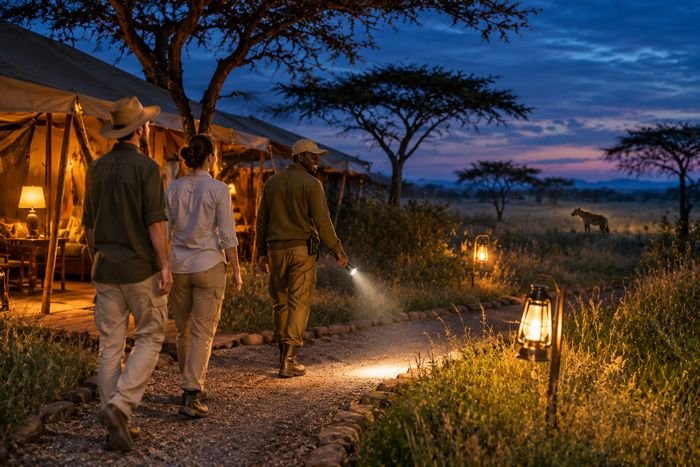
Many camps require guests to be accompanied by staff when walking between tents and communal areas after sunset.
Always use an escort when instructed, even if the distance seems short.
Never investigate unfamiliar sounds outside your tent independently.
If you need assistance during the night, contact camp staff using the communication method explained during your arrival briefing.
Food and tent safety
Follow instructions about closing doors, securing tents, and storing food.
Don’t leave snacks or food waste outside your accommodation, as these can attract animals.
Keep children supervised and never encourage wildlife to approach camp facilities.
A properly managed camp should explain its specific safety procedures when you arrive.
Are walking safaris safe in the Serengeti?
Guided walking safaris are possible in selected authorized areas of the Serengeti.
However, walking independently through the wilderness isn’t permitted as an ordinary tourist activity.
Official walking experiences require qualified supervision and appropriate armed-ranger protection under park regulations.
Before participating, you’ll receive instructions about group movement, communication, and responding to wildlife encounters.
Walking safaris focus on tracking, plants, birds, and ecological details rather than approaching dangerous animals.
They’re best enjoyed as a complement to traditional game drives, not as an opportunity for closer contact with predators.
Wildlife safety tips for families with children
A Serengeti safari can be a wonderful family experience, but children need clear guidance before encountering wildlife.
Explain that animals aren’t pets and should never be touched or fed.
Children should remain seated appropriately in vehicles and follow safety instructions immediately.
Choose family-friendly accommodation with suitable supervision arrangements, particularly at unfenced camps.
Private game drives can be helpful because families have greater control over breaks and daily schedules.
Most importantly, parents should model calm, respectful behavior around animals.
Responsible wildlife photography and safari etiquette
Wildlife photography is one of the Serengeti’s greatest attractions, but getting the perfect photograph should never come before animal welfare.
Avoid using flash or artificial sounds that could disturb wildlife.
Never ask your guide to chase an animal, approach a den unnecessarily, or obstruct a hunting predator.
Keep noise low and avoid crowding other vehicles around popular sightings.
Drones require special authorization and shouldn’t be operated casually within the national park.
The best wildlife photographs capture authentic behavior without influencing it.
What to do if a wildlife encounter feels unsafe
If you feel uncomfortable during a game drive, communicate calmly with your guide.
Don’t attempt to solve the situation by opening a door, stepping outside, or making sudden movements.
Your guide is trained to interpret animal behavior and decide whether the vehicle should remain stationary, reverse, or change direction.
At camp, report any unexpected animal activity to staff rather than investigating independently.
If you’re traveling with an operator that repeatedly ignores safety rules, raise your concerns with management and, where appropriate, the park authorities.
Final thoughts: Staying safe around Serengeti wildlife
Wildlife encounters are what make a Serengeti safari extraordinary, but the animals deserve space and respect.
Most visitors can enjoy remarkable sightings without unnecessary risk by remaining inside safari vehicles, following professional guidance, and observing camp safety procedures.
Remember that close encounters should happen naturally, not through aggressive driving or attempts to attract wildlife.
Whether you’re watching lions resting on a kopje, elephants moving across the plains, or giraffes browsing near your camp, responsible behavior protects both you and the animals.
For more Serengeti safety advice, wildlife guides, and practical safari planning tips, explore the WhySafari blog and prepare for your next African adventure with confidence.
Frequently asked questions about Serengeti wildlife safety
Incidents are uncommon on properly conducted game drives, but wild animals can react defensively if frightened, cornered, or disturbed. A vehicle doesn’t guarantee protection. Experienced guides reduce risks by observing animal behavior and avoiding unnecessary confrontation.
Yes, when used according to your guide’s instructions. Pop-up roofs are designed for wildlife viewing and photography, but passengers should remain within the vehicle’s permitted viewing space and avoid leaning toward nearby animals.
Tell your guide, who can arrange a stop at an authorized picnic area or visitor facility. Never leave the vehicle without permission, even if the surrounding landscape appears empty.
Baboons and monkeys can become troublesome when attracted by food. They may grab bags, enter unsecured spaces, or become aggressive if challenged. Never feed them, keep food secured, and ask staff for assistance rather than confronting them.
Drone operations require special authorization from the relevant authorities. Unauthorized flights can disturb wildlife and violate protected-area regulations. Travelers should obtain all necessary permissions before bringing or operating a drone.
Your guide will normally stop and allow the animal to move naturally. Depending on the situation, the vehicle may wait or take another permitted route. Travelers should remain patient rather than encouraging the guide to force a passage.
No outdoor area in a wildlife reserve is entirely risk-free. Designated picnic areas are intended for visitor use, but animals may still appear nearby. Follow posted instructions, remain alert, and don’t leave food unattended.
Look for a guide who respects park speed limits, maintains appropriate distances, avoids disturbing animals, and follows designated tracks. A professional guide should willingly explain safety decisions and respond seriously to visitor concerns.