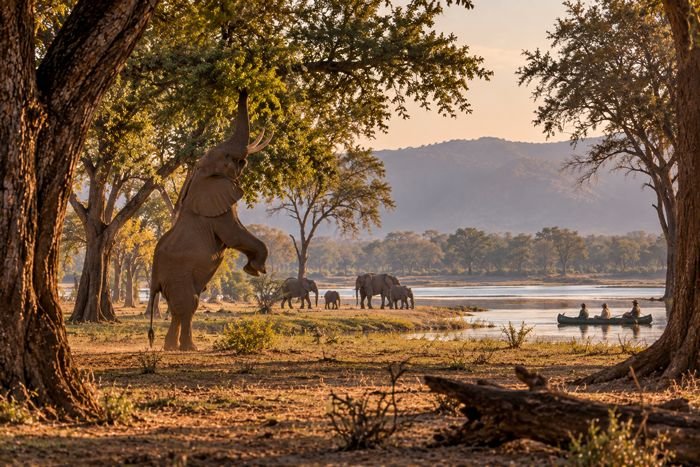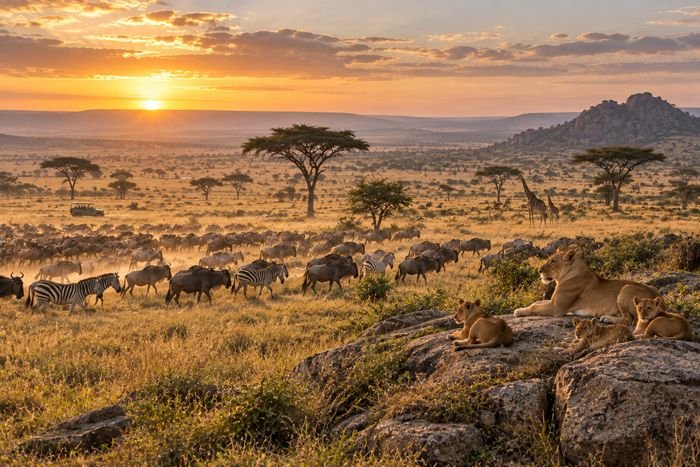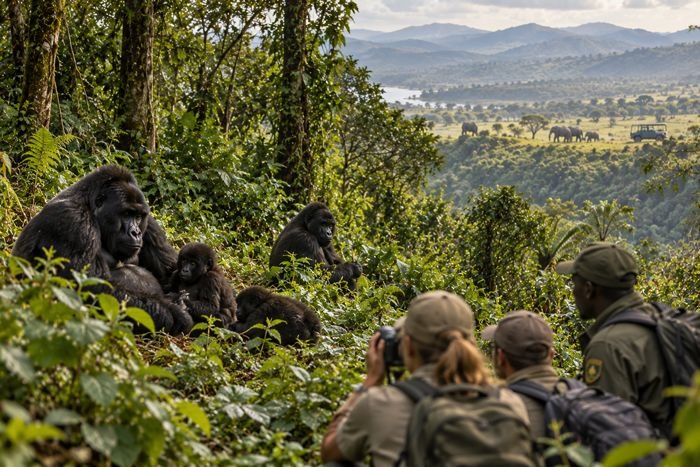
Uganda is one of the few African destinations where a single itinerary can combine mountain gorillas, chimpanzees, savanna wildlife, crater landscapes, lakes, and dense rainforest.
That variety is exactly what makes planning more complicated.
A Uganda safari isn’t simply a matter of choosing several national parks and connecting them in a straight line. Distances can be significant, road transfers are part of the experience, trekking permits need to be secured well in advance, and gorilla tracking is usually the emotional centerpiece of the trip rather than just another activity.
For most travelers, the best approach is to build the itinerary around one or two major primate experiences and then add safari destinations that fit naturally along the route.
A well-paced Uganda safari and gorilla trekking itinerary usually works best over seven to fourteen days, depending on how much wildlife variety you want and how comfortable you are with long travel days.
Start with the gorilla trek
The first decision should be when and where you want to trek mountain gorillas.
In Uganda, gorilla trekking is centered primarily around Bwindi Impenetrable National Park and Mgahinga Gorilla National Park.
Bwindi is the more commonly used option because it has several trekking sectors and a large number of habituated gorilla groups.
That doesn’t mean every sector is interchangeable.
Your permit is connected to a specific trekking area, so accommodation should be chosen accordingly. Booking a lodge on the opposite side of Bwindi can create an unnecessarily difficult transfer.
This is one of the most important planning details in Uganda.
Secure the permit first, then build the surrounding route.
How many days should you allow for gorilla trekking?
Do not plan the trek as a quick stop between two long driving days.
At minimum, allow one night before the trek and preferably another night afterward.
Trekking duration is unpredictable.
Some groups may locate gorillas relatively quickly, while others can spend several hours hiking through steep, humid forest before finding them.
The terrain can be physically demanding, and rain can make trails slippery.
Afterward, most travelers appreciate a relaxed evening rather than immediately starting another major transfer.
For anyone particularly interested in gorillas, adding a second trekking day can be worthwhile if permits and budget allow.
Build the itinerary in a logical geographic direction
Uganda rewards linear planning.
Constantly crossing the country wastes valuable safari time.
A common route begins around Entebbe and moves west through Uganda’s major wildlife regions before finishing in the southwest with gorillas.
Another option reverses the sequence and puts gorilla trekking earlier in the journey.
Both approaches work.
What matters is avoiding unnecessary backtracking.
A classic western circuit can combine:
- Kibale Forest
- Queen Elizabeth National Park
- Bwindi Impenetrable National Park
Longer itineraries can add Murchison Falls National Park farther north.
This combination creates an unusually diverse trip without requiring flights between every destination.
A 5-day itinerary: gorillas with a taste of safari
Five days is possible, but it requires prioritization.
A short itinerary might combine Entebbe, Queen Elizabeth National Park, and Bwindi.
You would spend much of the trip moving between destinations, so this option is best for travelers with limited time who consider gorilla trekking the main objective.
Suggested structure
Day 1: Arrive and transfer toward western Uganda
Day 2: Safari in Queen Elizabeth National Park
Day 3: Transfer toward Bwindi
Day 4: Gorilla trekking
Day 5: Return or fly onward
This works, but it is fast.
If your budget permits, using a domestic flight for one sector can reduce road time substantially.
A 7-day Uganda safari itinerary
Seven days is a much better minimum for travelers who want both gorillas and a meaningful wildlife component.
A typical route could combine Queen Elizabeth National Park with Bwindi and perhaps a short stop elsewhere depending on transport.
Queen Elizabeth offers classic game drives and the possibility of boat-based wildlife viewing, creating a useful contrast with the rainforest trek.
Suggested structure
Days 1–2: Travel toward western Uganda and begin safari activities
Days 3–4: Queen Elizabeth National Park
Day 5: Transfer to Bwindi
Day 6: Gorilla trekking
Day 7: Departure or onward transfer
The advantage of this route is simplicity.
Rather than attempting to fit every famous Ugandan attraction into one week, it focuses on two strong experiences.
A 10-day itinerary adds chimpanzees
Ten days opens the trip considerably.
This is where Uganda starts to feel less rushed.
You can add Kibale National Park, one of the country’s most famous destinations for chimpanzee tracking, before continuing toward Queen Elizabeth and Bwindi.
Chimpanzees provide a fascinating contrast with gorillas.
They move more quickly, vocalize frequently, and may travel through the forest canopy rather than remaining on the ground.
Experiencing both species helps travelers understand just how different great ape encounters can be.
Suggested 10-day route
Days 1–2: Entebbe and transfer toward Kibale
Days 3–4: Chimpanzee tracking and forest activities
Days 5–6: Queen Elizabeth National Park
Day 7: Transfer to Bwindi
Day 8: Gorilla trekking
Day 9: Relaxed morning or additional local activity
Day 10: Transfer or fly back toward Entebbe
This is one of the most balanced first-time Uganda itineraries.
Two weeks gives Uganda room to breathe
If you have around fourteen days, consider adding Murchison Falls National Park.
Murchison brings a very different landscape and classic big-game safari experience to the itinerary.
Here, the Nile cuts through the park, and wildlife viewing can include elephants, giraffes, buffalo, antelope, predators, hippos, crocodiles, and abundant birdlife.
Combining Murchison, Kibale, Queen Elizabeth, and Bwindi creates a comprehensive western Uganda journey.
The downside is distance.
You need enough days to make the route worthwhile.
Trying to squeeze all four destinations into one week would result in far too much driving.
Where classic safari fits into the trip
Uganda is primarily famous internationally for primates, but its savanna parks deserve more attention.
Queen Elizabeth and Murchison Falls both provide conventional game-drive experiences.
That means your trip can include lions, elephants, buffalo, antelope, and other large mammals alongside rainforest trekking.
However, travelers should not expect the same style of safari as the Serengeti or Masai Mara.
Uganda’s greatest strength is diversity.
The combination of primates, wetlands, forest, and savanna is what makes the country distinctive.
Don’t underestimate driving times
This is one of the most common planning mistakes.
Distances that appear manageable on a map can take much longer than expected because of road conditions, traffic, stops, and terrain.
Uganda road journeys can also be fascinating.
You’ll pass towns, villages, agricultural areas, hills, tea plantations, and changing landscapes.
Still, six or seven hours in a vehicle is six or seven hours in a vehicle.
Avoid scheduling major activities immediately after a long transfer whenever possible.
A good itinerary includes recovery time.
Should you use domestic flights?
Domestic flights can make sense when time is limited.
They are particularly useful for travelers who want to combine Bwindi with other parts of Uganda without spending multiple full days on the road.
Flights may operate between Entebbe and airstrips serving southwestern safari regions, depending on current schedules.
The trade-off is cost.
Road transfers are generally more economical and allow you to experience more of the country between parks.
For a shorter luxury itinerary, flying can be worth the premium.
For a two-week trip, overland travel may fit perfectly well.
Gorilla permits need early planning
Gorilla trekking operates under a controlled permit system.
Permits are limited and can sell out, especially during popular travel periods.
This is why accommodation and flights should not be booked independently of permit availability.
Work in the opposite order.
Confirm your preferred trekking date and sector, secure the permit through the appropriate booking channel, and then arrange accommodation and transfers around it.
Permit pricing and regulations can change, so always verify current conditions before paying.
How difficult is gorilla trekking?
There is no single answer.
The difficulty depends on where the gorilla group is located that day, trail conditions, rainfall, elevation, and your own fitness.
You may hike for a relatively short period or spend several hours climbing through forest.
Porters can be extremely helpful.
They can carry your daypack and assist on difficult sections of trail while also providing local employment.
Good footwear, lightweight rain protection, gloves, long trousers, and sufficient water are important.
The goal is not speed.
Move steadily and follow your guides.
When is the best time to go?
Uganda can be visited throughout the year, but drier periods generally make trekking and road travel easier.
Rain can occur at any time in rainforest environments.
During wetter months, trails may become muddier and more slippery, but vegetation is lush and landscapes can be exceptionally beautiful.
Safari conditions also vary by region.
Rather than choosing solely based on rainfall statistics, balance weather with permit availability, crowd levels, pricing, and the other destinations in your itinerary.
What should you pack for gorilla trekking?
Pack for humidity, mud, and changing temperatures.
Useful items include:
- Broken-in walking shoes
- Lightweight waterproof jacket
- Long trousers
- Long-sleeved shirt
- Gardening-style gloves
- Small daypack
- Reusable water bottle
- Sun protection
- Camera with spare battery
Avoid excessively heavy gear.
You’re carrying everything through uneven forest terrain unless you hire a porter.
A moderate telephoto or versatile zoom is usually more practical than an enormous safari lens during the trek.
Don’t schedule the trek too close to your international departure
Building a buffer into the itinerary is sensible.
Road delays, weather, or domestic flight disruption can complicate travel in any safari destination.
Ideally, don’t finish a long gorilla trek and immediately depend on a tight same-day connection to an international flight.
Spend a final night closer to Entebbe when the schedule allows.
That makes the end of the trip far less stressful.
Uganda works especially well for travelers who want variety
A Uganda safari isn’t about maximizing the number of large mammals visible in one photograph.
Its strength is how quickly the environment changes.
One day you can be tracking chimpanzees beneath rainforest canopy.
Two days later, you may be watching elephants from a safari vehicle.
Then you’re climbing through misty forest toward mountain gorillas.
That variety makes Uganda particularly appealing to travelers who want more than conventional game drives.
Conclusion
The best Uganda safari and gorilla trekking itinerary starts with one principle: don’t try to see everything too quickly.
Secure your gorilla permit first, choose accommodation close to the correct trekking sector, and build the route logically around it.
Five days can work for a concentrated gorilla-and-safari trip, but seven days offers much better balance. Around ten days allows you to add chimpanzee tracking in Kibale, while two weeks gives enough time to include Murchison Falls without turning the journey into a race.
Leave space for transfers, respect how physically demanding gorilla trekking can be, and consider domestic flights when they meaningfully improve the itinerary.
Uganda’s appeal lies in contrast: rainforest and savanna, gorillas and elephants, chimpanzees and lions, long road journeys and extraordinarily intimate wildlife encounters.
Plan those elements carefully, and the result can be one of Africa’s most varied safari experiences.
For more gorilla trekking advice, East African safari itineraries, and practical guides to Uganda’s national parks, continue exploring the WhySafari blog.
Frequently asked questions
One trek is enough for most first-time visitors. A second permit can be worthwhile for photographers or travelers who want another chance to observe different individuals and behavior.
Yes, and many travelers find it worthwhile. Porters reduce the effort of carrying equipment and can provide useful support on steep or slippery sections.
There is a minimum-age requirement for gorilla trekking. Families should confirm the current rule before planning, as younger children will need alternative arrangements during the trek.
Entry health requirements can change. Check current official regulations and consult a travel-health professional well before departure.
Yes. Some itineraries combine Uganda’s safari parks with Rwanda, but border procedures, transport logistics, permits, and entry requirements should be checked carefully before booking.
Usually. Travelers especially interested in primates may choose additional forest activities, but one well-guided trek generally provides a strong introduction.
They can be helpful on steep or muddy trails, although poles or walking sticks may sometimes be provided locally. Ask your operator what is normally available.
Yes. Solo travelers can join scheduled activities and guided itineraries, although private transport and single-room supplements can increase costs.