The Serengeti is often described as a single safari destination, but planning a trip that way can lead to disappointment.
This is an enormous ecosystem, and wildlife concentrations shift throughout the year. The open plains of the south feel very different from the rocky kopjes and river valleys of the central region, while the remote north becomes particularly important during part of the Great Migration.
Choosing where to stay is therefore just as important as deciding when to visit.
A well-planned Serengeti National Park safari matches your travel dates with the region, wildlife, accommodation style, and number of nights that suit your priorities. The Great Migration may be the headline attraction, but resident lions, leopards, cheetahs, elephants, giraffes, and countless other animals make the Serengeti rewarding well beyond the most famous migration events.
This guide breaks down the main regions and explains how to build a safari around them.
Understanding the Serengeti ecosystem
Serengeti National Park lies in northern Tanzania and forms part of a much larger ecosystem extending beyond the park’s boundaries.
Its landscapes include short-grass plains, acacia woodland, river systems, rocky kopjes, and more remote northern country.
These habitats support an extraordinary variety of wildlife.
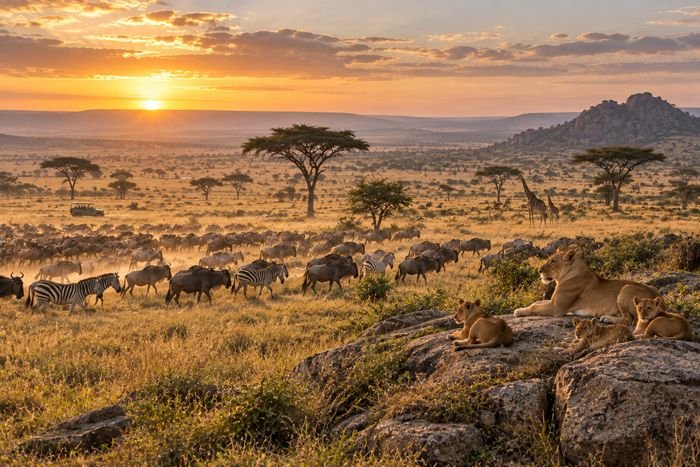
The Serengeti is especially famous for the movement of vast numbers of wildebeest, accompanied by zebra and other herbivores, through the wider ecosystem.
But the migration isn’t a single event.
The herds move in response to rainfall, grazing, and water availability, which means their precise location varies from year to year.
Understanding that movement is fundamental when choosing where to stay.
Central Serengeti: the best all-round safari region
The Seronera area in the Central Serengeti is one of the most reliable choices for a first visit.
Its mixture of grassland, river valleys, acacias, and kopjes supports substantial resident wildlife throughout the year.
This is particularly strong predator country.
Lions are frequently associated with the central plains and rocky outcrops, while leopards may be found around riverine vegetation and trees. Cheetahs use more open terrain where they can scan for prey.
Central Serengeti also works logistically.
Its location makes it possible to connect with other parts of the park, and the region offers a broad selection of camps and lodges.
The trade-off is popularity.
During busy periods, well-known sightings can attract numerous vehicles.
Travelers seeking solitude may prefer to combine Seronera with a more remote region rather than spending their entire safari in the center.
If you’re deciding between these two areas, our Central Serengeti vs Northern Serengeti comparison breaks down the differences in wildlife, landscapes, migration access, crowds, and the type of safari each region suits best.
Southern Serengeti and Ndutu: green-season drama
The southern plains become especially important during the green season, broadly around the early months of the year.
As seasonal rains transform the grasslands, large numbers of migratory animals can gather across the southern Serengeti ecosystem and neighboring Ndutu area.
This period is particularly famous for wildebeest calving.
Thousands of young animals entering the ecosystem also create opportunities for predators.
Lions, cheetahs, hyenas, and other carnivores may take advantage of vulnerable newborns and abundant prey.
For photographers, the combination of green plains, dramatic skies, young animals, and predator activity can be exceptional.
However, migration timing isn’t controlled by a calendar. Rainfall patterns determine where the herds move, so no specific camp can guarantee their presence on exact dates.
Travelers visiting early in the year can experience a very different side of the migration, as the herds gather across the southern plains for calving season. Learn more about visiting the Serengeti in February during calving season.
Western Corridor: rivers and migration movement
As conditions change, migrating herds generally begin moving away from the southern plains and through other parts of the ecosystem.
The Western Corridor becomes particularly interesting during this broader transition.
The region is characterized by woodland and river systems, including the Grumeti River.
Wildebeest and zebra can create impressive concentrations when migration movements align with the area.
The Western Corridor also supports resident wildlife outside the migration period.
Travelers shouldn’t treat it purely as a place to witness one specific event.
Its landscapes offer a different Serengeti experience from the treeless southern plains, making it useful for repeat visitors who want to understand the park’s ecological variety.
Northern Serengeti: remote country and river crossings
The Northern Serengeti is one of the most spectacular parts of the ecosystem.
It is greener and more varied than many travelers expect, with rolling terrain, woodland, open areas, and the Mara River.
During part of the dry-season migration cycle, large herds may reach the north and cross the Mara River between Tanzania and Kenya.
These crossings have become among Africa‘s most famous wildlife spectacles.
They are also extremely unpredictable.
A herd may gather near the river and then retreat. Animals may cross early in the morning, late in the day, or not at all while you’re present.
Never build a safari around the expectation of witnessing a dramatic crossing on command.
Spend several nights in the region and appreciate its resident wildlife as well.
Eastern Serengeti: space and predator country
The eastern areas of the Serengeti can appeal to travelers seeking open landscapes and, depending on location and season, lower vehicle density.
Cheetahs are particularly associated with open plains, although sightings are never guaranteed.
Lions, hyenas, and other wildlife also use these landscapes.
Seasonal conditions matter significantly.
Parts of the eastern ecosystem may become more or less productive as water and grazing change.
This is an area where working with an operator that understands current wildlife movements can be especially useful.
For photographers and repeat safari travelers, the feeling of space can be as important as individual sightings.
The Great Migration is not the whole Serengeti
Many first-time visitors make the mistake of treating the Serengeti and Great Migration as the same thing.
They aren’t.
The migration is one extraordinary ecological process within an ecosystem containing substantial resident wildlife.
Lions don’t simply disappear when the wildebeest move elsewhere. Leopards maintain territories. Elephants travel through woodland and river systems. Giraffes browse acacias, hippos occupy waterways, and hyenas patrol large areas.
A traveler visiting when the main herds are elsewhere can still have an outstanding safari.
In some cases, lower visitor numbers may actually improve the overall experience.
Big cats are a major attraction
The Serengeti is one of Africa‘s great destinations for predator viewing.
Lions are the most obvious.
Prides can be found across several regions, often resting during the hotter hours before becoming more active when temperatures fall.
Cheetahs favor open landscapes where their speed and excellent visibility provide advantages.
Leopards are more elusive and frequently associated with trees, riverine vegetation, and areas providing cover.
Spotted hyenas are equally important to the ecosystem and shouldn’t be treated merely as supporting characters. Their complex social structure and hunting ability make them fascinating animals to observe.
Predator viewing is one of the Serengeti’s biggest wildlife highlights, with lions, leopards, and cheetahs favoring different habitats across the park. For a closer look at where to search for each species, see our guide to the big cats of the Serengeti.
What other wildlife can you see?
Beyond the famous predators and migration herds, the Serengeti supports an enormous range of animals.
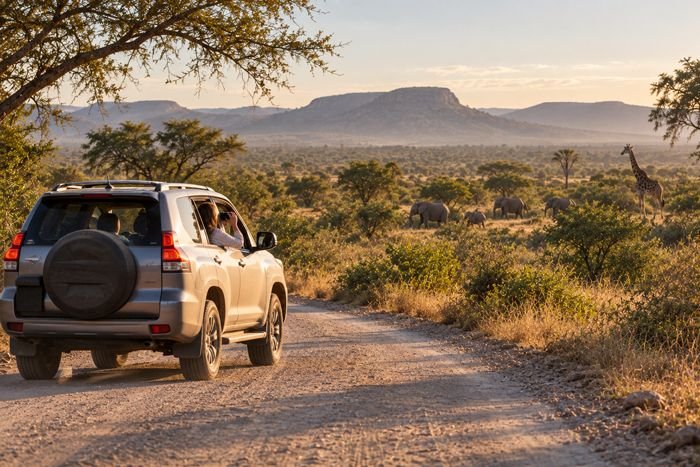
Elephants, giraffes, buffalo, hippos, warthogs, jackals, gazelles, topi, eland, and many other species may appear during game drives.
Birdlife is also exceptional.
Raptors, vultures, secretary birds, ostriches, bustards, storks, and colorful smaller species add another dimension to the safari.
Once you stop concentrating exclusively on the Big Five, game drives become considerably richer.
How you structure your game drives can significantly affect the pace of your safari. Our full-day vs half-day Serengeti game drive guide compares both options based on wildlife viewing, photography, comfort, and travel style.
Where should you stay in the Serengeti?
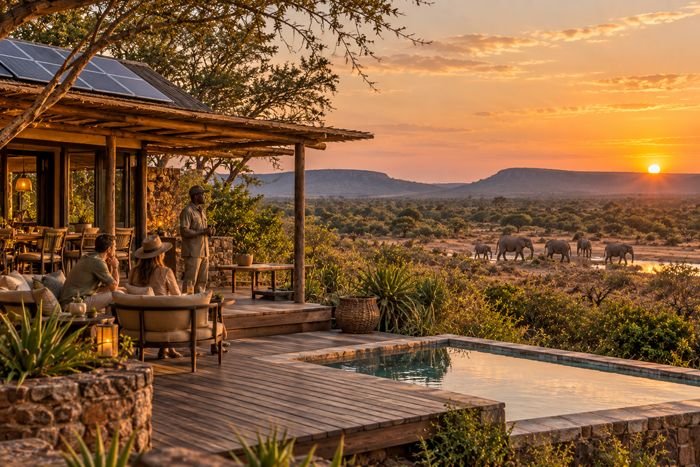
Accommodation falls broadly into permanent lodges, permanent tented camps, and seasonal or mobile-style camps.
Each provides a different experience.
Permanent lodges
Permanent lodges often provide substantial facilities, larger communal areas, and a more conventional hospitality structure.
They can be excellent for first-time safari travelers, families, and guests who value amenities alongside wildlife viewing.
Permanent tented camps
These combine comfort with a stronger feeling of immersion.
Canvas walls allow you to hear the bush at night, while proper beds, bathrooms, dining areas, and professional service maintain a high level of comfort.
Seasonal and mobile camps
Some camps position themselves strategically around anticipated migration areas.
They can be excellent for travelers whose main priority is following the herds.
“Mobile” doesn’t necessarily mean basic.
Many provide comfortable beds, en-suite facilities, excellent food, and experienced guides while maintaining a lighter footprint than permanent construction.
Choose location before luxury level
A beautiful lodge in the wrong region can undermine a migration-focused itinerary.
Start with your priorities.
If you’re traveling during the calving period, investigate accommodation around the southern ecosystem. If northern migration activity is your priority, staying near the Northern Serengeti makes more sense than attempting very long daily drives from Seronera.
For a first-time safari outside a specific migration window, Central Serengeti is often a practical base because of its resident wildlife.
Only after choosing the region should you compare pools, room design, dining, and other amenities.
On safari, geography usually matters more than interior decoration.
How many nights do you need?
Three nights provides a useful introduction, but four or five nights is better.
Travelers visiting two distinct Serengeti regions should consider spending at least two or three nights in each.
A longer stay reduces pressure to rush between sightings.
It also protects against the unpredictability of wildlife.
One game drive might be quiet. The next morning could produce an hour with hunting lions or a cheetah moving across the plains.
Time is one of the most valuable things you can buy on safari.
Driving versus flying between regions
The Serengeti’s scale shouldn’t be underestimated.
Road transfers allow you to watch landscapes change and can produce wildlife sightings along the way, but they also consume time.
Light-aircraft flights can connect airstrips in different safari regions and can be particularly useful on higher-end or time-limited itineraries.
Many travelers combine both.
For example, you might enter the ecosystem by road as part of Tanzania’s northern safari circuit and fly out after your Serengeti stay.
The best arrangement depends on your overall route, budget, and current flight schedules.
When is the best time to visit?
There is no universally best month.
The answer depends on what you want to see.
Travelers interested in calving and green landscapes may favor the early part of the year. Those interested in northern migration activity often travel later in the dry season.
Other months can offer excellent resident wildlife and fewer visitors.
Instead of asking, “When is the Serengeti best?” ask, “Which Serengeti experience do I want?”
That question leads to a much better itinerary.
Conclusion
The Serengeti rewards travelers who understand that it is not one uniform safari destination.
Central Seronera provides excellent year-round wildlife and strong predator viewing. The southern plains become particularly important during the green-season calving period. The Western Corridor adds riverine habitats and seasonal migration movements, while the north combines beautiful landscapes with the possibility of Mara River crossings.
None of those experiences is guaranteed on a specific day.
Rainfall, grazing, water, and animal behavior determine the rhythm of the ecosystem.
Choose your region based on your travel dates, stay long enough to let wildlife come to you, and prioritize camp location before luxury features.
Most importantly, don’t allow the Great Migration to become your only measure of success. The Serengeti’s resident predators, elephants, birds, landscapes, and quieter moments are every bit as important to understanding why this ecosystem remains one of Africa’s great safari destinations.
For more Tanzania itineraries, Great Migration advice, accommodation guides, and detailed comparisons of Africa’s best safari regions, continue exploring the WhySafari blog.
Frequently asked questions
Yes, but individual camps may have age restrictions for certain activities. Families should also consider transfer times, room layouts, meal flexibility, and whether a private safari vehicle would make game drives easier.
Balloon safaris operate in selected Serengeti regions and can provide a spectacular perspective over the landscape. Availability, routes, minimum ages, and seasonal operations should be confirmed when booking.
Many do, particularly permanent lodges, but speed and availability can be limited in remote areas. Some camps deliberately restrict connectivity to communal spaces.
For peak migration periods and highly sought-after camps, planning well in advance is sensible. Travelers with flexible dates or those visiting outside peak periods may have more accommodation options.
Not necessarily. Shared vehicles can provide excellent value, but private vehicles offer more control over departure times, photography, sighting duration, and the interests of your group.
Yes. Bush-and-beach itineraries combining northern Tanzania with Zanzibar are popular, and flights can make the transition relatively efficient.
Yes. Having your own binoculars means you can watch distant wildlife and birds whenever you want rather than waiting to share a single pair.
Yes, but the logistics require careful planning. The parks belong to the same broader ecosystem but are in different countries, so border procedures and transport connections need to be considered.