Choosing where to stay in the Serengeti is one of the most important decisions you’ll make when planning a Tanzania safari. With vast open plains, remote river valleys, and a remarkable variety of wildlife, Serengeti National Park offers accommodation experiences that can feel completely different depending on your location.
You might wake up in a luxury lodge overlooking the savanna, spend the night in a comfortable tented camp surrounded by wildlife sounds, or stay at a seasonal camp positioned near the Great Migration.
But where is the best place to stay in the Serengeti? Should you choose Central Serengeti for year-round wildlife viewing, Northern Serengeti for the famous Mara River crossings, or Southern Serengeti for the calving season?
For most first-time visitors, Central Serengeti is the most convenient and reliable choice. However, travelers following the Great Migration should consider accommodation in different regions depending on their travel dates.
This guide compares the best areas to stay in the Serengeti, explains the differences between safari lodges and camps, and helps you choose accommodation that matches your budget, interests, and itinerary.
Best areas to stay in the Serengeti: Quick comparison
The Serengeti covers approximately 14,750 square kilometers, so staying in the right region can save hours of driving.
| Area | Best time to stay | Main attraction | Best for |
|---|---|---|---|
| Central Serengeti (Seronera) | Year-round | Lions, leopards, resident wildlife | First-time visitors |
| Northern Serengeti (Kogatende and Mara River) | July–October | Great Migration river crossings | Migration enthusiasts |
| Southern Serengeti and Ndutu | December–March | Wildebeest calving season | Predator sightings and photography |
| Western Corridor (Grumeti) | May–July | Migration herds and river habitats | Wildlife enthusiasts |
| Eastern Serengeti | Varies seasonally | Open plains and cheetah habitats | Travelers seeking quieter areas |
Wildlife movements depend on rainfall, so these dates are guidelines rather than guarantees.
Central Serengeti: Best for first-time safari visitors
The Central Serengeti, particularly the Seronera Valley, is one of the park’s most popular accommodation areas.
Its combination of open grasslands, riverine woodland, and permanent water sources supports resident wildlife throughout the year.
Lions are frequently seen around rocky kopjes, while leopards inhabit trees along river valleys. Cheetahs, elephants, giraffes, and buffaloes also occur throughout the region.
Where to stay in Central Serengeti
Central Serengeti offers the widest accommodation variety, from basic public campsites to comfortable tented camps and premium lodges.
Properties such as Serengeti Serena Safari Lodge and Four Seasons Safari Lodge Serengeti appeal to travelers seeking established facilities and additional comfort.
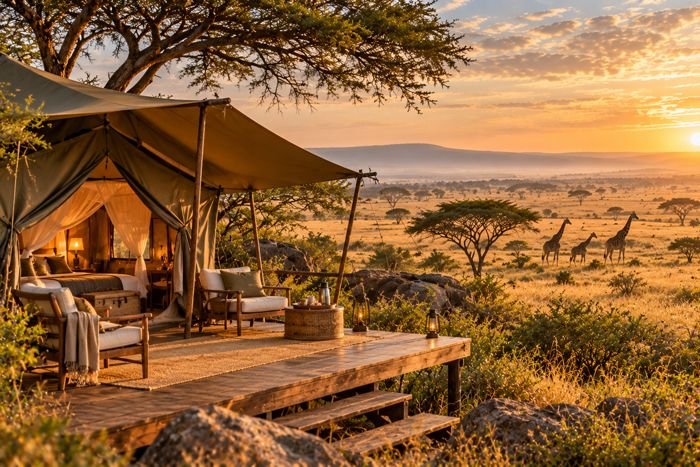
Smaller tented camps provide a more intimate wilderness atmosphere, often with canvas suites, private bathrooms, and outdoor dining areas.
Central Serengeti is particularly practical for shorter safaris because of its established road network and access to Seronera Airstrip.
Best for: First-time visitors, families, photographers, and travelers wanting dependable wildlife viewing regardless of season.
Northern Serengeti: Best for the Great Migration
Northern Serengeti is famous for the Mara River, where migrating wildebeest and zebras sometimes attempt dramatic crossings.
Between approximately July and October, large herds may gather in the region while moving between Tanzania and Kenya.
However, crossings are unpredictable. Herds can remain near the river for days without entering the water.
Where to stay in Northern Serengeti
Accommodation is concentrated around areas such as Kogatende, Lamai, and the broader Mara River region.
Options include exclusive tented camps, seasonal migration camps, and luxury properties such as Sayari Camp and Lemala Kuria Hills.
Some camps operate only during the migration season, while others remain open longer.
Northern Serengeti generally feels more remote than Seronera, although busy river-crossing locations can attract multiple safari vehicles.
The region is also relatively expensive during peak migration months because demand for well-positioned accommodation is high.
Best for: Travelers visiting from July to October, migration photographers, and those seeking an immersive wilderness experience.
Southern Serengeti and Ndutu: Best for calving season
Between approximately December and March, migrating wildebeest commonly gather across the southern Serengeti ecosystem.
January and February are especially exciting because of the calving season, when large numbers of young wildebeest are born.
The concentration of vulnerable calves attracts predators, creating opportunities to observe lions, cheetahs, and hyenas.
Where to stay in Southern Serengeti
Seasonal tented camps are particularly popular because they position travelers close to the migration’s southern grazing areas.
Accommodation around Ndutu provides convenient access to the short-grass plains and nearby woodland habitats.
However, travelers should understand that much of the Ndutu area lies within the Ngorongoro Conservation Area rather than Serengeti National Park itself.
This distinction matters because entry fees, access regulations, and permitted activities can differ.
Best for: Visitors traveling between December and March, wildlife photographers, and anyone interested in the wildebeest calving season.
Western Serengeti: Best for migration and river landscapes
The Western Corridor provides a different landscape from the open plains of Central Serengeti.
Woodland, river systems, and savanna habitats create opportunities to observe elephants, hippos, crocodiles, and resident predators.
During approximately May through July, migration herds may travel through this region as they move toward northern grazing areas.
Where to stay in Western Serengeti
Accommodation ranges from comfortable tented camps to exclusive safari lodges near the Grumeti River.
Some luxury properties are located in private reserves adjoining the national park rather than within the park itself.
These private areas may offer different activities and levels of exclusivity, depending on local regulations.
Western Serengeti is particularly appealing to travelers seeking less familiar landscapes and a more specialized safari experience.
Best for: Wildlife enthusiasts, repeat visitors, and travelers interested in seasonal migration activity.
Eastern Serengeti: Best for quieter wilderness experiences
Eastern Serengeti receives less attention than the central and northern regions but can be rewarding for travelers seeking open landscapes and fewer vehicles.
Its grasslands support cheetahs, gazelles, and other plains wildlife.
Accommodation is more limited and scattered, making careful planning essential.
Wildlife distribution varies seasonally, and some areas are subject to additional access restrictions.
For first-time visitors with limited time, Central Serengeti is usually more practical.
However, Eastern Serengeti can be a valuable addition to longer itineraries.
Best for: Experienced safari travelers, photographers, and visitors seeking quieter game-viewing areas.
Serengeti accommodation types explained
Once you’ve selected a region, the next step is deciding what kind of accommodation suits your travel style.
Luxury safari lodges

Luxury lodges typically feature permanent buildings, spacious rooms, restaurants, and sometimes swimming pools or wellness facilities.
They provide a comfortable retreat after long game drives and are especially popular with couples and families.
However, luxury doesn’t automatically mean better wildlife viewing. Location remains crucial.
Permanent tented camps

Permanent tented camps combine the atmosphere of camping with many traditional hotel comforts.
Rooms often feature proper beds, private bathrooms, hot showers, and electricity.
Canvas walls allow guests to hear the sounds of the surrounding wilderness, creating an immersive safari experience.
These camps can offer an excellent balance between comfort and authenticity.
Mobile migration camps

Mobile camps relocate seasonally to position guests closer to expected migration movements.
Some shift between southern and northern Serengeti as the year progresses.
Despite their temporary structures, many provide comfortable beds, private bathroom facilities, and quality dining.
They are particularly attractive to travelers whose main priority is the Great Migration.
However, being near the expected migration route never guarantees sightings.
Public campsites and budget camping

Public campsites offer a more affordable way to stay within the Serengeti.
Facilities are generally basic, with shared bathrooms and designated camping areas.
Budget camping safaris commonly include tents, cooking equipment, and support staff arranged by the operator.
It’s an adventurous option, but travelers should be prepared for simpler facilities and less privacy.
How much does accommodation in the Serengeti cost?
Accommodation prices vary significantly by region, season, comfort level, and the services included.
Public camping is generally the least expensive option, while comfortable tented camps fall into the mid-range category.
Luxury lodges and exclusive migration camps can cost considerably more, especially during peak travel periods.
When comparing prices, check whether park fees, conservation charges, meals, transfers, and game drives are included.
A lodge advertised at a lower nightly rate may become more expensive once additional services are considered.
Traveling during the green season can sometimes reduce accommodation costs, although certain seasonal camps close.
For better value, prioritize location and guiding quality before luxury features.
Should you stay in one area or split your Serengeti accommodation?
For a short safari of two or three nights, staying in Central Serengeti is usually the most efficient option.
Changing camps consumes valuable time, particularly when traveling along rough park roads.
With four to six nights, combining Central Serengeti with another region can provide a more varied experience.
During migration season, for example, travelers might spend two nights around Seronera before continuing north for three nights near the Mara River.
Between January and March, combining Central Serengeti with Ndutu may be more appropriate.
The key is choosing locations based on seasonal wildlife movements rather than trying to visit every region.
Final thoughts: Choosing the best Serengeti accommodation
The best place to stay in the Serengeti isn’t necessarily the most luxurious lodge or the camp with the highest price.
It’s the accommodation that positions you near the wildlife experiences you want while fitting your budget and travel schedule.
Central Serengeti remains the strongest all-around choice for first-time visitors. Northern Serengeti is ideal for migration-focused travelers during the river-crossing season, while Southern Serengeti offers extraordinary calving activity early in the year.
Choose a permanent lodge for additional comfort, a tented camp for a traditional safari atmosphere, or a mobile camp for seasonal migration access.
For more accommodation advice, wildlife guides, and itinerary inspiration, explore the WhySafari blog and discover how to plan your ideal African safari.
Frequently asked questions about Serengeti accommodation
Yes. Some lodges and camps are located in neighboring wildlife reserves, concessions, and conservation areas. They may offer different activities and pricing arrangements, but reaching the national park can involve additional travel and entrance fees.
Reputable tented camps follow established wildlife-safety procedures. Many are unfenced, so animals can occasionally pass nearby. Guests must follow staff instructions, remain inside their tents when advised, and use escorts after dark where required.
Many established lodges and tented camps offer electricity and Wi-Fi, sometimes powered by solar systems. However, connectivity may be limited, and charging facilities may operate during scheduled hours.
All-inclusive packages can simplify budgeting, particularly when they include meals, game drives, and transfers. However, the definition varies between properties. Always confirm whether national park fees, drinks, and optional activities are covered.
Yes. Selected lodges and tented camps provide family suites, interconnected rooms, and children’s activities. Minimum-age policies vary, especially at unfenced camps, so families should verify accommodation rules before booking.
Some permanent luxury lodges offer air conditioning, but many tented camps rely on natural ventilation, fans, and canvas construction. Temperatures can vary considerably between warm afternoons and cooler nights.
For popular migration periods, booking six to twelve months ahead is advisable, particularly for smaller camps near the Mara River or Ndutu. Central Serengeti generally offers more choices, but desirable properties can still fill early.
Sometimes. Certain camps overlook waterholes, rivers, or open plains where wildlife may pass. However, sightings from your room aren’t guaranteed, and visitors should never leave designated safe areas to approach animals.