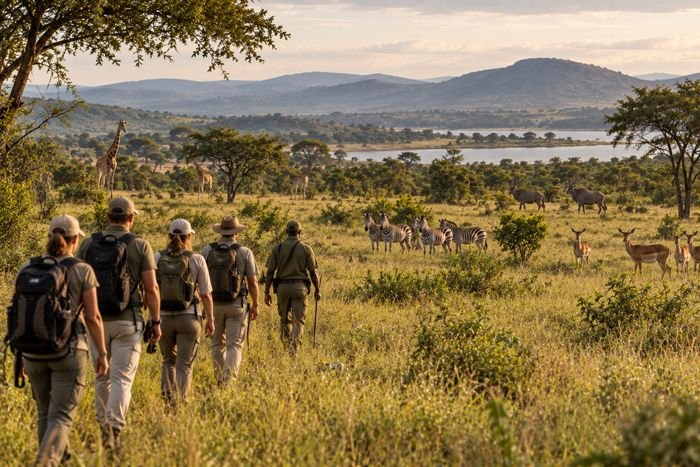
Most African safaris are experienced from inside a vehicle. In Lake Mburo National Park, however, one of the most rewarding ways to explore the landscape is on foot.
Located in western Uganda, Lake Mburo is compact, accessible, and ecologically different from the country’s better-known primate destinations. Its rolling grasslands, acacia woodland, rocky outcrops, wetlands, and lakes support zebra, impala, eland, buffalo, warthogs, giraffes, and abundant birdlife.
What makes the park especially interesting is the opportunity to experience some of that wildlife during a guided walk.
A walking safari in Lake Mburo National Park is not about approaching animals as closely as possible. It is about slowing down, noticing tracks and sounds, understanding how animals use the landscape, and experiencing the bush without the barrier of a vehicle.
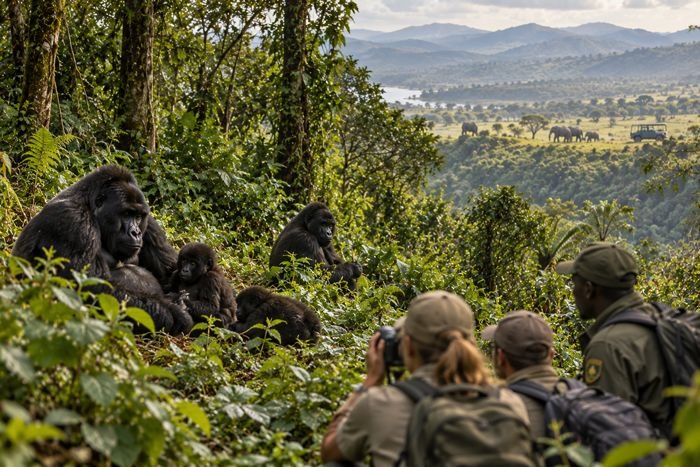
For travelers combining Lake Mburo with gorilla trekking in southwestern Uganda, it can also be one of the most memorable stops on the journey.
Why Lake Mburo is well suited to walking safaris
Lake Mburo has several characteristics that make guided walking particularly appealing.
Its relatively compact size allows visitors to explore varied habitats without traveling enormous distances. The park also lacks the same concentration of large predators found in some other East African reserves, although potentially dangerous wildlife is still present.
This creates opportunities for guided walking in selected areas under controlled conditions.
The park’s open landscapes are another advantage.
Zebra, impala, topi, eland, and other herbivores may be visible across grasslands, while acacia woodland creates a completely different environment for tracking and birding.
On foot, those changes in habitat become much more noticeable than they do from a vehicle.
What a walking safari actually feels like
The first surprise is often the silence.
Without an engine running beneath you, the bush becomes much louder.
You hear birds, insects, branches moving in the wind, and the alarm calls of animals long before you see them.
Walking also changes your sense of scale.
A zebra that seems relatively close from a safari vehicle can feel much farther away when you’re standing on the same ground.
Guides typically use tracks, dung, feeding signs, and animal behavior to interpret what has recently moved through an area.
The experience becomes less focused on collecting sightings and more focused on understanding how the ecosystem works.
Which animals can you see on foot?
Lake Mburo is particularly well known for plains game.
Zebra are among the park’s most recognizable animals and are frequently associated with its open grasslands.
Impala are another highlight. Lake Mburo is one of Uganda’s key destinations for seeing them, and their social behavior can be interesting to observe from a respectful distance.
You may also encounter:
- Eland
- Topi
- Waterbuck
- Warthogs
- Giraffes
- Bushbuck
- Buffalo
Sightings depend on route, season, vegetation, and animal movements.
A walking safari should never be judged solely by how many large animals you encounter. Tracks, birds, plants, insects, and smaller mammals can become equally important parts of the experience.
Buffalo require particular respect
Buffalo are one of the animals that make professional guiding essential.
They may appear calm when viewed from a distance, but they are powerful wild animals and can be dangerous if surprised or approached incorrectly.
Guides assess wind direction, visibility, escape routes, and animal behavior before deciding how to proceed.
If buffalo are present, your guide may alter the route or keep the group at a much greater distance.
This is why independent walking in wildlife areas should never replace an authorized guided experience.
Lake Mburo is excellent for zebra encounters
For many visitors, zebra become one of the defining animals of Lake Mburo.
Seeing them on foot is very different from passing a herd in a vehicle.
You become more aware of their alertness.
Animals may stop feeding, raise their heads, and watch the group carefully. If they become uncomfortable, they can move away quickly.
That response is part of the encounter.
The goal isn’t to close the distance.
A good guide uses the animals’ behavior to determine when to stop, when to move, and when to give them more space.
Eland are an underrated highlight
Eland are the world’s largest antelope and can be surprisingly difficult to appreciate properly from inside a moving vehicle.
On foot, their size becomes much more obvious.
They are generally cautious and may keep substantial distance between themselves and people.
Spotting them across open country can therefore feel more like traditional wildlife tracking than a conventional game-drive sighting.
Binoculars are particularly useful for watching eland and other animals without approaching.
Birding becomes much better on foot
Lake Mburo is also a strong birding destination.
The park’s mixture of woodland, grassland, wetland, and lakeside habitat supports a wide variety of species.
Walking allows you to notice smaller birds that are easy to miss from a vehicle.
Instead of focusing only on distant mammals, your guide may stop for calls in the canopy, movement in grass, or raptors circling overhead.
Even travelers who aren’t dedicated birders often become more interested because walking encourages slower observation.
Bring lightweight binoculars if possible.
Early morning is usually the best time
Walking safaris are generally most comfortable during the cooler hours of the day.
Early morning has several advantages.
Temperatures are lower, wildlife may be more active, and tracks from overnight movements can be easier to interpret.
The light is also better for photography.
Later in the day, heat can make walking less comfortable, particularly across exposed grasslands.
Exact departure times and routes depend on the operator, guide, season, and current park conditions, so travelers should confirm arrangements locally rather than assuming a fixed schedule.
What to wear on a walking safari
Comfort and practicality matter more than specialist safari clothing.
Neutral-colored clothing is generally preferable because it is less conspicuous in the landscape.
Long trousers can help protect against vegetation and insects.
Wear closed shoes with good grip, but heavy hiking boots are not always necessary for typical guided walks.
Useful items include:
- Hat
- Sunscreen
- Water
- Lightweight rain layer
- Binoculars
- Small camera
- Insect repellent
Avoid carrying too much.
The more comfortable you are, the easier it is to concentrate on the wildlife around you.
Photography is different on foot
Walking safaris create excellent photographic opportunities, but they require a different mindset.
You usually won’t be able to position yourself as freely as you might from a vehicle.
Safety comes first, and your guide determines where the group can stop.
A versatile telephoto zoom is often more useful than an extremely large lens.
Environmental images work particularly well.
Rather than trying to fill the frame with a zebra, photograph the animal within the grassland, acacias, or rolling hills.
Walking naturally emphasizes the relationship between wildlife and habitat.
How difficult are the walks?
Most walking safaris in Lake Mburo are not intended to be endurance hikes.
Routes can vary in distance and difficulty, and many experiences are designed around wildlife observation rather than covering large numbers of kilometers.
That said, conditions can include uneven ground, heat, grass, rocks, and occasional muddy sections.
Travelers should tell the guide about any mobility limitations before setting out.
Families should also confirm minimum ages, as participation rules may vary depending on the activity and operator.
Walking vs game drives in Lake Mburo
The two experiences complement each other rather than compete.
Game drives cover more ground.
They are therefore useful for exploring different parts of the park, finding wildlife at greater distances, and accessing areas that aren’t suitable for walking.
Walking provides intimacy.
You may see fewer large animals, but you will notice much more detail.
A strong Lake Mburo itinerary should ideally include both.
Use the vehicle to understand the broader landscape, then walk to experience one portion of it at ground level.
How Lake Mburo fits into a Uganda itinerary
Lake Mburo occupies a particularly useful position for travelers moving between central Uganda and the southwest.
That makes it a natural stop on itineraries involving Bwindi Impenetrable National Park and gorilla trekking.
Instead of treating a long road transfer as a single travel day, spending a night or two near Lake Mburo can add a completely different safari experience.
It works especially well after several days focused on forest and primates.
The open grasslands, zebras, antelope, and walking safari provide an immediate contrast.
Other activities pair well with walking
Walking isn’t the only way to experience Lake Mburo.
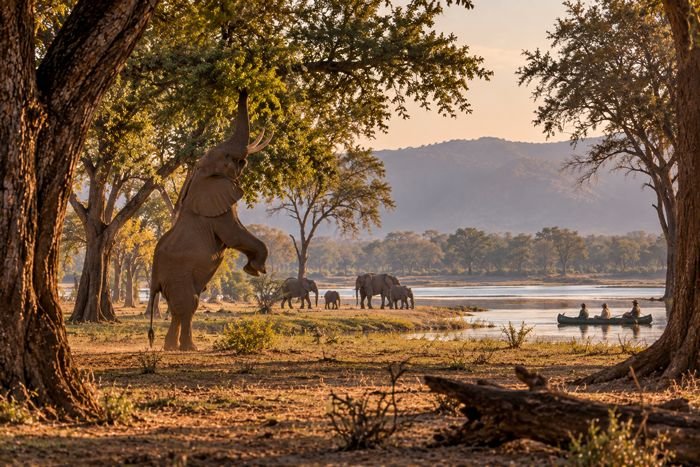
Depending on current availability and park regulations, visitors may combine it with conventional game drives and boat-based wildlife viewing.
This creates a varied short stay.
A morning might begin with a walk through grassland, followed by a relaxed midday break and a later game drive.
The following day could focus more heavily on wetlands, birds, and other parts of the landscape.
Because the park is relatively compact, travelers don’t need a very long stay to experience several different perspectives.
How many nights should you spend?
One night can work as a convenient stopover, but it limits what you can do.
Two nights is much better for travelers who specifically want a walking safari.
That gives you enough time to arrive without rushing, complete an early-morning activity, and still add a game drive or another experience.
A third night can be worthwhile for birders, photographers, or travelers who prefer a slower pace.
Lake Mburo is easy to underestimate precisely because it is smaller than many famous African parks.
Its appeal becomes clearer when you stop treating it as somewhere to pass through.
Safety rules matter more when walking
Walking among wildlife requires concentration.
Follow your guide’s instructions immediately.
Stay together as a group, avoid sudden movements, and don’t move ahead of the guide.
Never approach wildlife for a photograph.
If an animal changes its behavior because of your presence, the group may need to retreat or change direction.
Avoid strong expectations about proximity.
A responsible walking safari often keeps considerably more distance from animals than travelers initially imagine.
That distance is part of good wildlife etiquette.
Is Lake Mburo a good first walking safari?
Yes, for many travelers it can be an excellent introduction.
The combination of open habitat, abundant herbivores, accessible location, and guided walking opportunities makes it less intimidating than some more demanding wilderness walks elsewhere in Africa.
It also teaches useful safari habits.
You begin to read tracks, listen for alarm calls, notice wind direction, and think about how animals perceive your presence.
Those skills make every later safari more interesting, even when you’re back inside a vehicle.
Conclusion
Walking safaris reveal a side of Lake Mburo National Park that is easy to miss from behind a windshield.
Zebras become more alert and impressive when you’re sharing the landscape with them. Eland appear enormous. Bird calls become easier to distinguish, tracks start telling stories, and even a quiet stretch of grassland can suddenly feel full of information.
The experience isn’t about getting dangerously close to wildlife.
It is about slowing down enough to understand the environment around you.
For travelers combining Uganda’s primate destinations with traditional safari, Lake Mburo provides an especially valuable contrast: open country after rainforest, plains game after gorillas, and a chance to explore on your own two feet.
Allow at least two nights if walking is a priority, choose an experienced authorized guide, and approach the activity with curiosity rather than a checklist.
For more Uganda safari itineraries, gorilla trekking advice, and guides to lesser-known East African wildlife destinations, continue exploring the WhySafari blog.
Frequently asked questions
Walking in wildlife areas should only take place where permitted and under the appropriate park or guide arrangements. Never assume an open road or trail is safe for independent walking.
Age restrictions can vary by activity and operator. Families should confirm current minimum ages and consider whether the child can remain quiet and follow instructions consistently around wildlife.
It can be, but trails may become wetter or muddier and vegetation may be denser. Lightweight waterproof clothing and shoes with reliable grip become more useful.
Most travelers do not need them for ordinary wildlife walks, but they may help people who prefer additional stability on uneven terrain. Ask the lodge or guide about the expected route.
Usually not once you’re away from camp or designated facilities. Use the restroom before departure and ask your guide about the practical arrangements for longer activities.
Some accommodation providers in the wider Lake Mburo area may offer additional non-vehicle activities, including horseback experiences. Availability and rules vary, so confirm current options before booking.
A small, comfortable bag that keeps both hands free is preferable to bulky luggage. Protect equipment from dust or rain and avoid carrying unnecessary lenses.
Tipping practices vary between lodges and operators. Ask your accommodation or safari company about its current gratuity guidelines so you can plan appropriately.