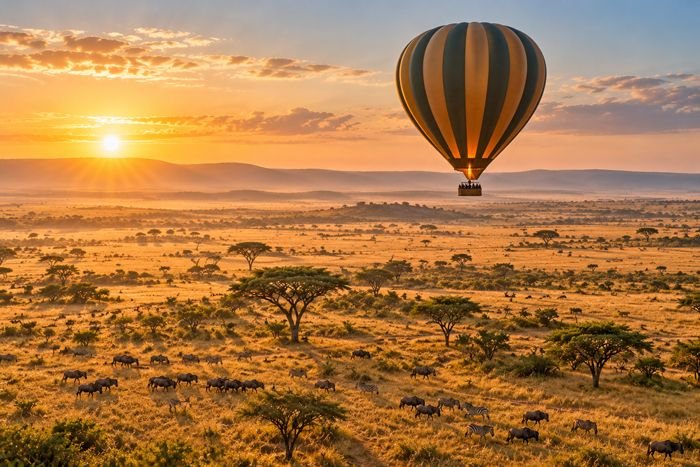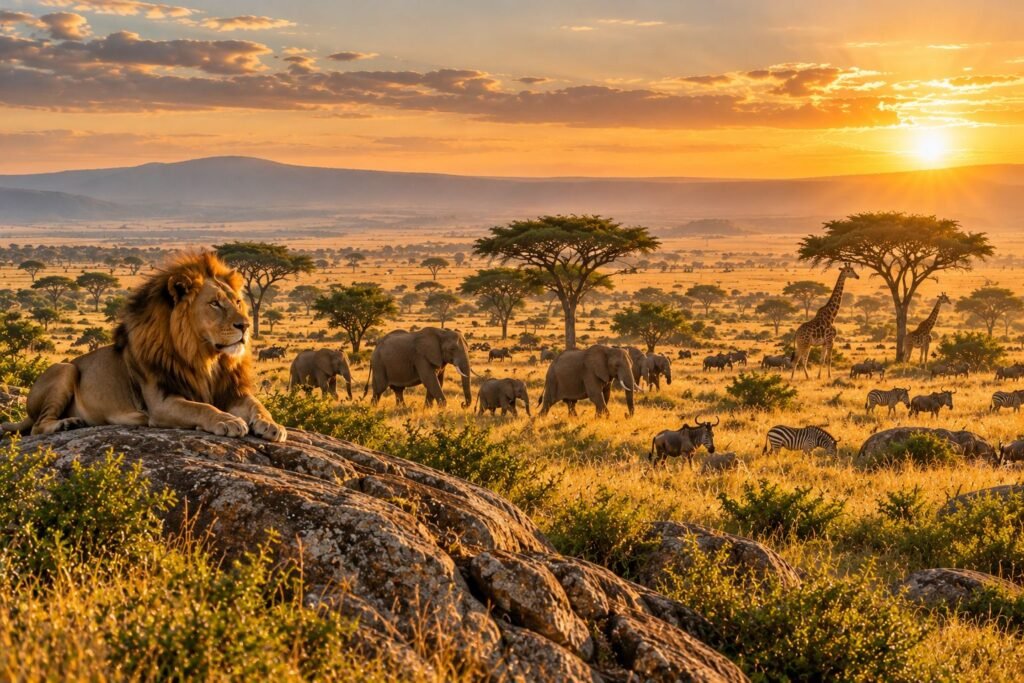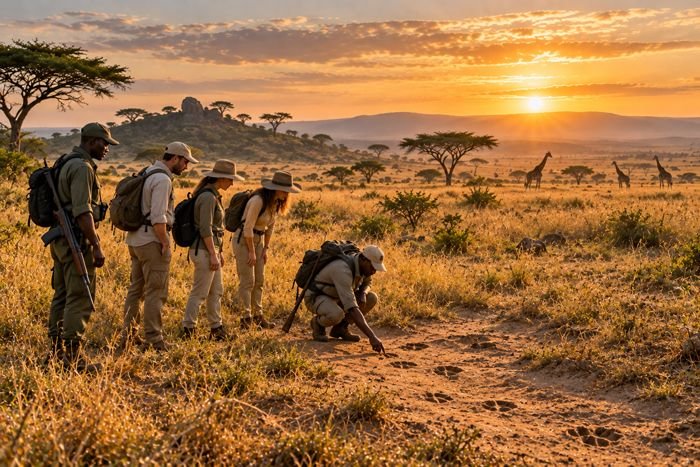
Imagine stepping out of your safari vehicle and experiencing the African wilderness on foot. Instead of watching wildlife through a window, you’re listening to birds calling from nearby trees, examining animal tracks in the dust, and feeling the vastness of the Serengeti around you.
A walking safari offers a completely different perspective on one of Africa’s most famous wildlife destinations. It’s less about chasing Big Five sightings and more about understanding the intricate details of the ecosystem, guided by professionals who know how to interpret the landscape.
But can you actually do a walking safari in the Serengeti? And is it safe to explore an environment inhabited by lions, elephants, buffaloes, and other potentially dangerous animals?
Yes, walking safaris are possible in selected areas of Serengeti National Park, but they must be organized through authorized operators and conducted under strict safety procedures.
This guide explains what happens on a Serengeti walking safari, where these experiences are available, how safety is managed, and whether walking through the African bush is right for you.
Can you do a walking safari in the Serengeti?
Unlike a traditional game drive, where visitors explore designated roads in a 4×4 vehicle, a walking safari allows you to experience the Serengeti on foot.
However, walking isn’t permitted everywhere in the national park.
Guided walking activities take place in specifically authorized areas and must follow Tanzania National Parks Authority regulations.
These experiences are led by qualified guides, with appropriate armed-ranger or armed-guide protection, who understand wildlife behavior, animal tracking, and emergency procedures.
Visitors cannot simply leave their safari vehicles and wander independently through the park.
Walking safaris are offered by selected specialist operators and safari camps, often in quieter wilderness areas away from the busiest tourist routes.
Some accommodations include short guided walks as part of their activities, while others organize specialized multi-day walking expeditions.
Availability depends on the location, season, current park permissions, and the operator’s arrangements.
What happens on a Serengeti walking safari?
A walking safari usually begins early in the morning, when temperatures are cooler and wildlife is often more active.
After meeting your guide, you’ll receive a safety briefing explaining how to move through the bush, communicate with the group, and respond to wildlife encounters.
Most short walking safaris last approximately two to four hours, although longer expeditions are also available.
Learning to read animal tracks
One of the most fascinating parts of a walking safari is discovering how much information animals leave behind.
Your guide may identify lion footprints in the sand, explain the difference between zebra and wildebeest tracks, or examine signs of recent elephant activity.
Animal droppings, disturbed vegetation, and feeding marks provide clues about which species have passed through an area.
These details are easy to overlook from a safari vehicle but become central to the experience when exploring on foot.
Discovering the smaller details of the ecosystem
Walking safaris reveal an entirely different side of the Serengeti.
Instead of concentrating exclusively on large mammals, you’ll begin noticing insects, birds, plants, and smaller creatures.
Your guide might explain how termites influence the soil, identify medicinal plants used traditionally by local communities, or describe the relationship between predators and scavengers.
You’ll also become more aware of the sounds and scents of the environment, from rustling grass to distant animal calls.
It’s a slower, more immersive way to understand how the Serengeti ecosystem functions.
Observing wildlife from a safe distance
Wildlife sightings are possible during a walking safari, but they differ considerably from those experienced in vehicles.
You might observe giraffes browsing nearby woodland, antelopes moving across open plains, or elephants traveling in the distance.
However, guides deliberately avoid approaching dangerous animals too closely.
The purpose isn’t to stand beside a lion or get closer to an elephant than you would on a game drive.
Instead, the experience emphasizes observing wildlife respectfully while maintaining safe distances.
Are walking safaris in the Serengeti safe?
Safety is understandably one of the biggest concerns for first-time visitors.
The Serengeti is home to large predators and powerful herbivores, and walking through their natural habitat involves genuine risks.
However, authorized walking safaris are designed around professional supervision and established safety procedures.
Experienced guides and armed protection
Walking safari guides receive specialized training in animal behavior, tracking, risk assessment, and emergency response.
Guided walks typically include appropriate armed protection in accordance with park requirements.
Before leaving camp, guides assess factors such as visibility, weather conditions, animal activity, and the composition of the group.
If conditions are unsuitable, they may alter the route or cancel the activity.
Essential safety rules
Visitors must follow their guide’s instructions throughout the walk.
Important rules generally include:
- Stay together with the group and never wander away independently.
- Walk quietly and avoid sudden movements.
- Never approach, feed, or attempt to attract wild animals.
- Follow instructions immediately if wildlife is encountered.
- Avoid running unless explicitly instructed by your guide.
- Inform your guide about any health or mobility concerns beforehand.
Although professional guiding significantly reduces risks, no walking safari can be considered completely risk-free.
Choosing a reputable, properly authorized operator is essential.
Where can you go on a walking safari in the Serengeti?
Walking safaris are available in selected parts of the Serengeti, particularly where specialist camps have authorization to conduct guided activities.
Northern Serengeti
The northern region offers rolling hills, woodland, rocky outcrops, and expansive wilderness areas.
Some specialized camps organize walking experiences away from the busiest Mara River viewing locations.
Depending on the season, visitors may observe grazing herds, giraffes, birds, and evidence of predator activity.
The region’s varied terrain makes it particularly appealing for travelers interested in exploring different habitats.
Central and other designated wilderness areas
Certain authorized areas elsewhere in the Serengeti also support guided walking activities.
These may include combinations of open grassland, acacia woodland, and rocky kopjes.
However, a standard lodge in the Seronera region doesn’t necessarily offer walking safaris.
Travelers should confirm whether their chosen accommodation has access to an approved walking area rather than assuming the activity is available everywhere.
Multi-day walking safari routes
For more adventurous travelers, specialized operators arrange longer walking expeditions through designated wilderness zones.
These experiences may involve several days of guided trekking, supported by mobile camps or fly-camping arrangements.
They provide opportunities to explore landscapes rarely reached during standard vehicle safaris.
However, longer expeditions require greater physical endurance and more careful preparation.
Walking safari vs game drive: What’s the difference?
Although both activities allow you to experience the Serengeti, they offer different advantages.
| Feature | Walking safari | Game drive |
|---|---|---|
| Main focus | Ecosystem, tracking, immersion | Large wildlife sightings |
| Wildlife distance | Usually farther away | Often closer |
| Duration | Typically 2–4 hours | Several hours |
| Physical activity | Moderate walking | Mostly seated |
| Route | Approved walking areas | Designated vehicle tracks |
| Photography | Landscapes, details, distant wildlife | Close-up wildlife photography |
| Best for | Nature enthusiasts and adventurous travelers | First-time visitors and wildlife photographers |
Walking safaris are particularly rewarding for travelers who enjoy learning about nature.
However, they shouldn’t replace traditional game drives if your main goal is observing lions, leopards, cheetahs, and other iconic wildlife.
For most visitors, combining both activities creates a more complete safari experience.
Best time for a walking safari in the Serengeti
The dry season, generally from June to October, is often considered the most favorable period for walking safaris.
Vegetation tends to be thinner, making it easier for guides to maintain visibility across the landscape.
Temperatures are also relatively comfortable during early morning walks, and rainfall is less likely to disrupt activities.
During the wetter months, the Serengeti becomes greener, with taller grass and occasionally muddy terrain.
These conditions can make walking more challenging and reduce visibility in certain areas.
However, some specialist operators continue offering guided walks during suitable conditions outside the dry season.
The best period depends on your chosen camp, the location of approved walking routes, and seasonal wildlife movements.
What should you wear and bring?
Packing appropriately makes a walking safari safer and more comfortable.
Choose lightweight, breathable clothing in neutral colors such as olive, khaki, beige, or brown.
Long trousers help protect your legs from thorny vegetation and insects, while a lightweight long-sleeved shirt provides additional sun protection.
Comfortable walking shoes with good traction are important because the terrain may be uneven, rocky, or sandy.
Other useful essentials include sunscreen, a wide-brimmed hat, insect repellent, binoculars, and drinking water.
Avoid carrying unnecessary equipment. A small daypack is usually sufficient for short walks.
Your operator may provide water or other essentials, so confirm what is included before departure.
Who should consider a Serengeti walking safari?
Walking safaris are particularly appealing to travelers who want something beyond conventional wildlife viewing.
Nature enthusiasts appreciate the opportunity to learn about animal tracks, vegetation, and ecological relationships.
Photographers interested in landscapes, textures, plants, and smaller creatures may also enjoy the slower pace.
For repeat safari visitors, walking provides a refreshing perspective on familiar environments.
However, travelers with limited mobility, significant health concerns, or discomfort around large wildlife should carefully assess whether the activity is suitable.
Minimum age requirements vary between operators and locations, so families should confirm eligibility before booking.
How to book a walking safari in the Serengeti
Not every Serengeti accommodation offers walking safaris, making advance planning particularly important.
When researching camps or safari operators, ask whether guided walks are available directly from the property or require a transfer to an approved walking area.
Confirm the expected duration, group size, minimum age, physical requirements, and whether the activity is included in your accommodation package.
You should also verify that the operator has the necessary permissions and provides qualified guides with appropriate safety arrangements.
If walking is a major priority, consider choosing your accommodation around the availability of this experience rather than trying to add it at the last minute.
Final thoughts: Is a Serengeti walking safari worth it?
A walking safari in the Serengeti offers something that even the most exciting game drive cannot fully recreate: the opportunity to experience the African wilderness at ground level.
It’s an adventure defined by quiet observation, fascinating discoveries, and a deeper understanding of the natural environment.
While it may not deliver the same close-up wildlife sightings as a vehicle safari, walking reveals details that often go unnoticed.
For adventurous travelers who appreciate nature and are comfortable following professional safety instructions, it’s a memorable addition to a Serengeti itinerary.
Combine guided walks with traditional game drives for the best of both experiences.
For more practical safari advice, destination guides, and unique wildlife experiences, explore the WhySafari blog and discover new ways to experience Africa’s extraordinary wilderness.
Frequently asked questions about Serengeti walking safaris
Short walks generally require moderate fitness rather than advanced hiking experience. The terrain is often relatively gentle, but uneven ground, heat, and several hours on your feet can be tiring. Longer expeditions demand greater endurance.
Minimum ages depend on the operator, route, and park permissions. Some providers require participants to be at least 12 years old, while others apply higher limits. Confirm the exact age requirements before planning a family walking safari.
Walking groups are generally kept small to improve safety and minimize disturbance to wildlife. Some operators offer groups of approximately four to eight guests, subject to applicable park restrictions and guiding arrangements.
The aim is not to approach lions or other dangerous animals. If predators are encountered, your guide will assess the situation and maintain an appropriate distance. Close encounters are never guaranteed or deliberately encouraged.
Some specialist operators can arrange private guided walks, depending on availability, location, and permissions. Private experiences may provide greater flexibility for photographers or travelers with specific natural-history interests.
Yes, photography is generally permitted, but you must follow your guide’s instructions. Lightweight equipment is preferable. Tripods, large lenses, or frequent stops may be impractical depending on the route and safety conditions.
Yes. Solo travelers can often join scheduled small-group walks offered by participating camps. Private walking experiences may also be possible, although minimum charges or additional guiding fees can apply.
You should feel comfortable being outdoors in an environment inhabited by wild animals. Guides provide safety briefings and professional supervision, but the experience may not suit travelers who would find the possibility of wildlife encounters overwhelming.