One of the decisions you’ll make when planning a Serengeti safari is whether to book full-day game drives or stick with the more traditional morning and afternoon half-day drives.
At first glance, it might seem obvious that spending more hours in the bush automatically leads to better wildlife sightings. In reality, the answer is more nuanced.
The Serengeti’s wildlife follows natural daily rhythms. Predators are most active during the cooler hours of the day, while many animals rest during the intense midday heat. As a result, the best option depends on your travel style, the season, your accommodation, and what you hope to experience.
Here’s how full-day and half-day game drives compare—and which one is likely to suit your safari best.
How game drives typically work
Most Serengeti lodges include two game drives each day:
- An early morning drive.
- A late afternoon drive.
Guests usually return to camp during the hottest part of the day for lunch and some downtime before heading back into the park later.
This schedule mirrors wildlife activity and has been refined over decades of safari operations.
However, some lodges and tour operators also offer full-day game drives that keep you in the bush from morning until late afternoon, often with a picnic lunch.
What is a half-day game drive?
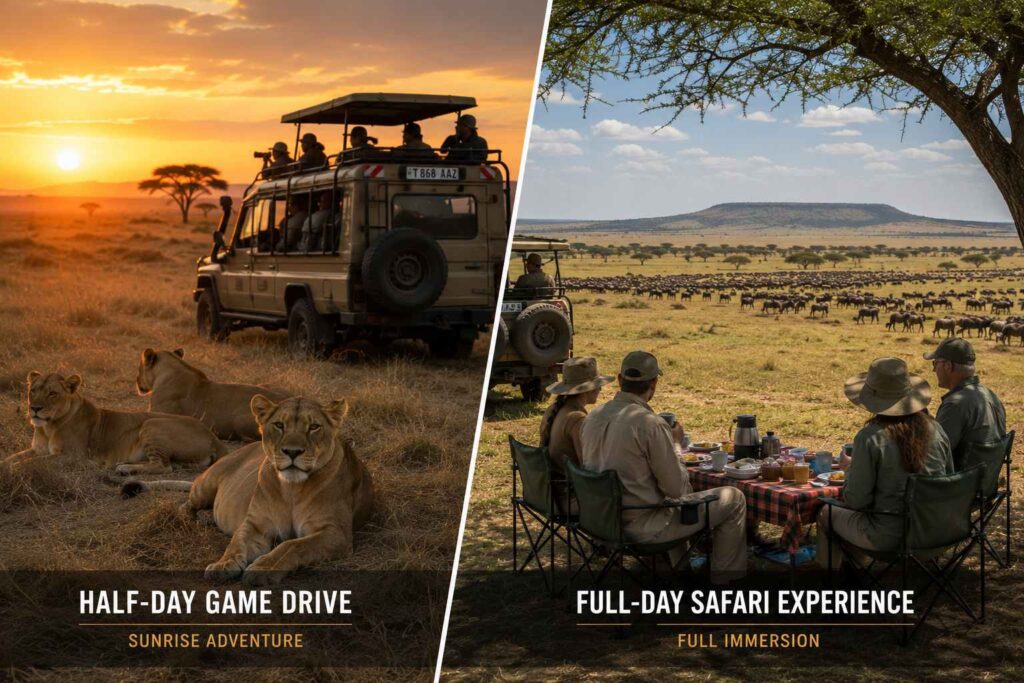
A half-day drive normally lasts between three and five hours.
Morning drives often begin before or shortly after sunrise, while afternoon drives usually start once temperatures begin to cool.
Typical activities include:
- Wildlife viewing.
- Birdwatching.
- Photography.
- Scenic stops.
- Learning about the ecosystem from your guide.
Returning to camp allows time to relax before heading out again when animals become active.
Advantages of half-day game drives
Half-day safaris match the natural rhythm of the Serengeti.
Benefits include:
- Wildlife is generally more active.
- Cooler temperatures.
- Better photography light.
- Time to rest during midday.
- Opportunity to enjoy lodge facilities.
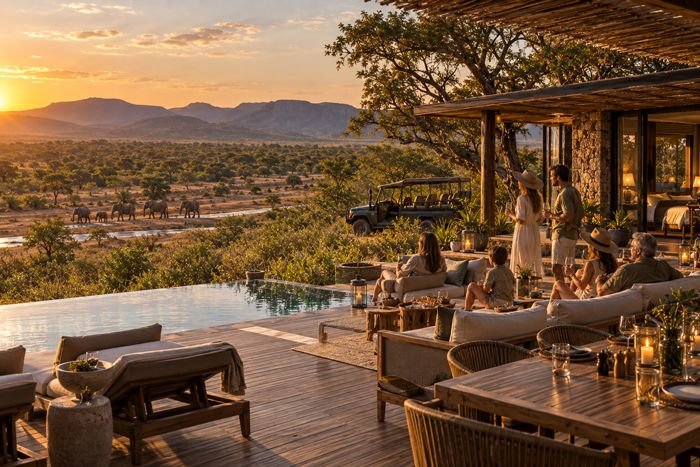
This style of safari is particularly enjoyable if you’re staying at a luxury camp with features such as a swimming pool, spa, or spectacular views.
Rather than rushing from one sighting to the next, you experience both the bush and your accommodation.
What is a full-day game drive?
A full-day safari keeps you out in the park for most of the day.
Instead of returning to camp for lunch, you’ll usually enjoy a packed breakfast or picnic lunch at a designated picnic site before continuing your exploration.
These drives often last:
- Eight to ten hours.
- Occasionally longer, depending on park regulations and your itinerary.
The goal is to cover more ground and explore areas farther from your lodge.
Advantages of full-day game drives
A full-day safari offers greater flexibility.
Because you remain in the park continuously, guides can:
- Follow wildlife movements over longer distances.
- Visit multiple habitats.
- Explore remote areas.
- Spend more time observing interesting behavior.
This is especially valuable during the Great Migration, when herds may move considerable distances during the day.
Photographers also appreciate having extra time to wait patiently for animal behavior rather than needing to return to camp.
Midday isn’t always quiet
One reason travelers sometimes hesitate to book full-day drives is the belief that nothing happens during the middle of the day.
While wildlife activity certainly slows, midday still offers rewarding experiences.
You may encounter:
- Lions resting beneath trees.
- Elephants feeding.
- Hippos wallowing.
- Crocodiles basking.
- Raptors soaring overhead.
- Giraffes browsing.
Midday is also an excellent time to appreciate the Serengeti’s landscapes and observe animal behavior that differs from the more active hunting periods.
Which is better for the Great Migration?
If your primary goal is witnessing the Great Migration, full-day drives often provide an advantage.
Migration herds don’t follow convenient schedules.
River crossings, predator interactions, and herd movements can occur at almost any time.
Remaining in the field all day increases your chances of being present when something extraordinary happens.
However, patience remains essential.
Even on a full-day safari, dramatic migration events can never be guaranteed.
Which is better for photography?
The answer depends on your priorities.
Half-day drives
Ideal for:
- Sunrise photography.
- Golden-hour lighting.
- Cooler shooting conditions.
- Comfortable pacing.
Full-day drives
Better for:
- Wildlife behavior.
- Long observation sessions.
- Exploring different landscapes.
- Waiting for rare moments.
Many photographers prefer combining both approaches during longer safaris.
Comfort considerations
Full-day drives require more stamina.
You’ll spend many hours in a safari vehicle, often on uneven roads.
Half-day drives allow time to:
- Stretch your legs.
- Swim.
- Rest.
- Download photographs.
- Recharge camera batteries.
Travelers who value relaxation often prefer this slower rhythm.
Families with children
Half-day drives generally work better for families.
Younger children may find full-day outings tiring, particularly during warmer months.
Returning to camp provides opportunities for:
- Meals.
- Swimming.
- Rest.
- Educational activities.
Many family-friendly lodges structure their safaris around shorter drives for this reason.
Budget implications
Whether full-day drives cost more depends on your safari operator.
Some lodges include both options within their packages, while others charge an additional fee for packed lunches or extended guiding.
Before booking, ask whether your itinerary includes:
- Park fees.
- Meals.
- Drinks.
- Picnic lunches.
- Additional guide costs.
Comparing what’s included makes it easier to evaluate overall value.
When should you choose full-day drives?
A full-day safari is ideal if you:
- Have limited time.
- Want to maximize wildlife viewing.
- Are following the Great Migration.
- Love wildlife photography.
- Don’t mind spending long hours in a vehicle.
The extra time in the field often rewards dedicated wildlife enthusiasts.
When are half-day drives the better choice?
Choose half-day drives if you:
- Prefer a relaxed pace.
- Enjoy luxury lodge facilities.
- Are traveling with children.
- Want cooler game drives.
- Appreciate sunrise and sunset photography.
Many experienced safari travelers find that two well-timed half-day drives provide the perfect balance between wildlife viewing and relaxation.
Can you combine both?
Absolutely.
In fact, many experienced safari planners recommend exactly that.
For example:
- Enjoy morning and afternoon drives on most days.
- Schedule one full-day excursion to explore a more distant region of the park.
Where you stay and which regions you plan to explore can influence whether a full-day drive makes sense. See our complete Serengeti National Park safari guide for an overview of the park’s regions, wildlife, and accommodation options.
This combination provides excellent wildlife viewing while avoiding fatigue.
It’s often the best of both worlds.
Conclusion
Both full-day and half-day game drives offer exceptional ways to experience the Serengeti, and neither is inherently better than the other. Half-day drives align with the natural activity patterns of wildlife while giving you time to enjoy your lodge and recharge between outings. Full-day safaris, meanwhile, provide greater flexibility, access to more remote areas, and extra opportunities to witness remarkable wildlife behavior—especially during the Great Migration.
The best choice depends on your travel style, interests, and itinerary. Many visitors discover that combining both options creates the most rewarding Serengeti experience.
For more Serengeti travel guides, safari planning advice, and wildlife tips, continue exploring the WhySafari blog.
FAQs
Yes, particularly if you’re visiting for a short time, following the Great Migration, or hoping to explore more remote areas of the Serengeti.
No. While many species rest during the hottest hours, wildlife remains visible throughout the day, and interesting behaviors can still be observed.
For many travelers, yes. Morning and afternoon drives coincide with peak wildlife activity and offer an excellent balance between safari time and relaxation.
Half-day drives provide the best light at sunrise and sunset, while full-day drives allow more time to wait for unusual wildlife behavior and visit different habitats.
Most operators provide a picnic or packed lunch, although inclusions vary depending on your safari package.
They can be, but younger children often find shorter game drives more comfortable. Family-friendly lodges frequently recommend half-day outings.
Yes. Combining mostly half-day drives with one or two full-day excursions is a popular approach that offers both flexibility and variety.