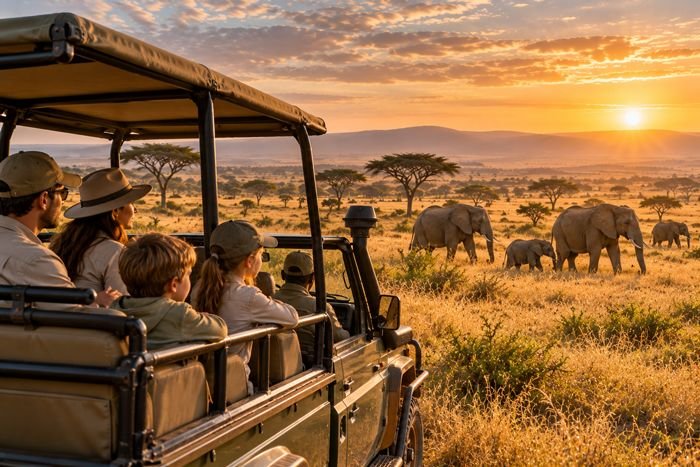
Imagine waking up before sunrise to the distant roar of a lion, stepping outside your safari tent as the African sky begins to brighten, and climbing into a 4×4 vehicle for your first wildlife encounter of the day.
A Serengeti safari isn’t like a typical vacation. Instead of sightseeing schedules and crowded attractions, your days revolve around wildlife movements, changing light, and the natural rhythms of the African wilderness.
But if you’ve never been on safari before, you might wonder what actually happens between waking up and going to bed. How early do game drives start? How many hours do you spend in the vehicle? And is there time to relax between wildlife encounters?
A typical day on safari in the Serengeti includes an early morning game drive, breakfast, time to rest during the hottest hours, an afternoon wildlife excursion, and dinner at your lodge or tented camp.
However, schedules vary depending on your accommodation, the season, and whether you’re exploring one area or traveling between destinations.
This guide walks you through a realistic Serengeti safari day, from your first cup of coffee to the sounds of wildlife after dark.
A typical Serengeti safari daily schedule
Most lodge-based safaris follow a general routine designed around the hours when animals are most active.
| Time | Typical activity |
|---|---|
| 5:30–6:00 AM | Wake-up call, coffee, and light breakfast |
| 6:00–9:30 AM | Morning game drive |
| 9:30–10:30 AM | Breakfast or brunch at camp |
| 10:30 AM–12:30 PM | Relaxation and free time |
| 12:30–2:00 PM | Lunch and afternoon rest |
| 3:00–3:30 PM | Afternoon refreshments |
| 3:30–6:30 PM | Afternoon game drive |
| 7:00–8:30 PM | Dinner at camp or lodge |
| After 8:30 PM | Campfire, stargazing, and bedtime |
These times are illustrative rather than fixed. Sunrise, park operating hours, accommodation arrangements, and your guide’s plans influence the actual schedule.
5:30 AM: Waking up in the African wilderness
Your Serengeti safari day usually begins early.
At many camps, staff provide a wake-up call around 5:30 AM, sometimes accompanied by tea, coffee, and biscuits.
The air can feel surprisingly cool before sunrise, especially during the dry season. A fleece or lightweight jacket makes those first hours much more comfortable.
After getting dressed, you’ll meet your guide and fellow travelers before climbing into the safari vehicle.
There’s something special about these quiet moments before the day begins. The landscape is still dark, birds are starting to call, and you may hear distant animal sounds around camp.
6:00–9:30 AM: Your first game drive of the day
Early morning is one of the most rewarding times for wildlife viewing in the Serengeti.
As temperatures remain relatively cool, predators and grazing animals are often more active.
Your guide will follow designated tracks through grasslands, river valleys, and woodland, looking for animal movements and signs of recent activity.
What animals might you see?
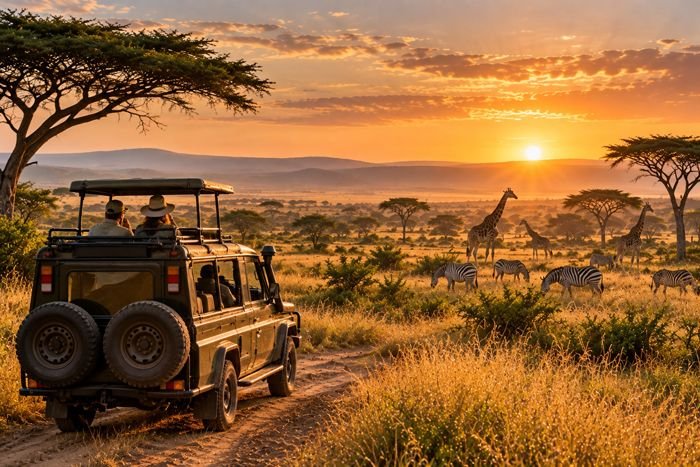
Depending on your location, you could encounter lions returning from nighttime hunting, giraffes browsing trees, elephants moving through the grass, or zebras gathering in herds.
Central Serengeti’s Seronera Valley is particularly productive for resident wildlife, including lions, leopards, and cheetahs.
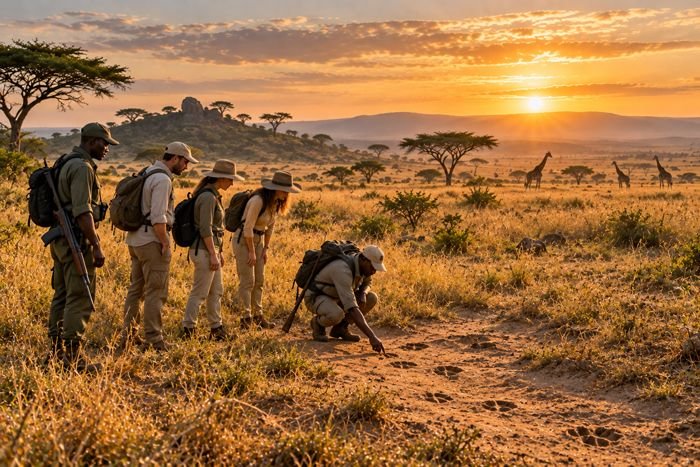
Your guide may stop to examine tracks, listen for alarm calls, or observe animals from a respectful distance.
Sometimes you’ll spend twenty minutes watching a leopard resting in a tree. Other times, you’ll drive for an extended period without a major sighting.
This unpredictability is part of the safari experience.
Coffee breaks in the bush
Many guides arrange a short refreshment stop during longer drives.
Depending on the location and park regulations, you may enjoy coffee and snacks at a designated safe stopping area.
It’s a welcome opportunity to stretch your legs, appreciate the scenery, and ask questions about the wildlife you’ve encountered.
9:30–10:30 AM: Breakfast back at camp
After several hours exploring the plains, you’ll usually return to your accommodation for breakfast or brunch.
Safari breakfasts can be surprisingly substantial, often including fresh fruit, eggs, toast, cereals, and hot drinks.
Some lodges serve buffet-style meals, while smaller camps prepare breakfast individually.
If you’re on a full-day game drive, your guide may arrange a packed breakfast or picnic instead.
Meal arrangements depend on your safari package, so it’s worth checking what your accommodation includes.
10:30 AM–2:30 PM: Relaxing during the midday heat
One of the most unexpected aspects of a Serengeti safari is how much downtime you may have.
During the middle of the day, temperatures rise and many animals become less active.
Rather than spending every hour driving, lodge-based itineraries often include several hours for relaxation.
You might read a book overlooking the plains, edit your wildlife photographs, take a nap, or enjoy a swimming pool if your lodge has one.
Lunch is generally served around midday or early afternoon.
At tented camps, this quieter period also gives you time to appreciate the surroundings. Even from your accommodation, you may see birds, grazing antelopes, or other wildlife at a distance.
However, always follow camp safety instructions, particularly at unfenced properties.
3:30–6:30 PM: Afternoon game drive
As temperatures begin to fall, wildlife activity often increases again.
Your afternoon game drive provides another chance to explore the Serengeti, sometimes visiting different habitats from those you saw in the morning.
The changing sunlight creates beautiful photographic conditions, particularly during the final hour before sunset.
Lions may become more active, giraffes continue browsing, and elephant families may move toward feeding or drinking areas.
Your guide will adjust the route according to recent sightings, weather conditions, and the time available before returning to camp.
What about sundowners?
A sundowner is a traditional safari experience involving drinks or light refreshments while enjoying the late-afternoon scenery.
Some camps arrange sundowners at authorized scenic locations, while others serve refreshments back at the property.
Inside Serengeti National Park, activities must follow applicable park regulations, including restrictions on where visitors can stop and when vehicles may operate.
Standard game drives generally finish around sunset, with any after-dark activities requiring specific authorization.
7:00 PM onward: Dinner and evenings at safari camp
After returning from your afternoon drive, you’ll have time to freshen up before dinner.
Meals at safari lodges and tented camps range from casual communal dining to multi-course dinners, depending on the accommodation category.
Evenings are often relaxed and social.
You might exchange stories with fellow travelers, review your favorite photographs, or sit around a campfire with a view of the stars.
At remote camps, minimal artificial lighting can make the night sky particularly impressive.
Wildlife sounds are another memorable part of the experience. Lions may roar in the distance, hyenas may call, and insects create a constant nighttime soundtrack.
Because most safari days start early, many travelers head to bed relatively soon after dinner.
What happens on a full-day Serengeti game drive?
Not every Serengeti safari follows the morning-drive, midday-break, afternoon-drive schedule.
Full-day game drives are particularly common on road-based safaris, migration-focused itineraries, and days involving travel between different parts of the park.
Instead of returning to camp for lunch, you’ll remain in the vehicle for much of the day.
Your guide will usually arrange a packed picnic lunch and stop at an appropriate designated area.
This approach is especially useful when exploring distant wildlife locations or traveling between Central and Northern Serengeti.
However, full-day drives can be tiring, particularly on rough roads.
For longer safaris, alternating full-day excursions with more relaxed schedules often provides a better balance.
How much time do you actually spend in the safari vehicle?
On a typical lodge-based day, you may spend approximately six to seven hours on game drives, divided between morning and afternoon excursions.
Full-day safaris can involve eight hours or more in the vehicle, including travel, wildlife stops, and picnic breaks.
Most Serengeti safari vehicles are adapted 4x4s with elevated seating and pop-up roofs for photography.
While they provide excellent visibility, road surfaces can be uneven and dusty.
Bring drinking water, sunscreen, binoculars, and a lightweight jacket.
If you’re sensitive to motion sickness or have back problems, discuss your needs with the operator before departure.
Can you customize your Serengeti safari schedule?
Yes, particularly when booking a private safari.
Private vehicles allow greater flexibility with departure times, break lengths, and wildlife interests.
Families with younger children may prefer shorter game drives, while photographers might prioritize sunrise lighting or spend longer observing animal behavior.
Travelers staying at mobile camps may follow schedules determined by migration movements.
Balloon safaris and authorized walking activities can also change the day’s routine.
However, all itineraries remain subject to park regulations, safety considerations, and seasonal conditions.
Tips for enjoying your first full day on safari
A Serengeti safari becomes more enjoyable when you embrace its natural pace.
Prepare your clothing and camera equipment the evening before to make early mornings easier.
Dress in layers because temperatures can change significantly between sunrise and midday.
Bring binoculars, even if you have a camera with a zoom lens.
Most importantly, avoid treating wildlife viewing as a checklist.
Some days deliver dramatic predator encounters, while others are defined by peaceful moments watching elephants, birds, or grazing herds.
Trust your guide, remain patient, and appreciate the smaller discoveries along the way.
Final thoughts: A day in the Serengeti is never ordinary
A typical Serengeti safari day follows a recognizable rhythm, but the wildlife encounters are always unpredictable.
Early mornings bring anticipation, game drives reveal extraordinary animals, and quieter afternoons provide time to appreciate the surroundings.
By evening, you’ll often find that the most memorable moments weren’t necessarily the biggest sightings, but the unexpected details: a lion’s distant call, a giraffe silhouetted against the sunrise, or the stillness of the African plains.
For first-time travelers, understanding this daily routine helps create realistic expectations and makes the experience more relaxing.
For more practical safari advice, itinerary ideas, and wildlife guides, explore the WhySafari blog and discover everything you need to plan your next African adventure.
Frequently asked questions about a typical Serengeti safari day
Yes, English-speaking guides are widely available on organized Serengeti safaris. Some operators also offer guides fluent in Spanish, French, German, or other languages. Request your preferred language when booking.
Toilets are available at selected picnic sites, visitor facilities, and accommodations. Facilities can be widely spaced, so tell your guide when you need a stop. Leaving the vehicle elsewhere requires explicit permission.
Many modern safari vehicles have USB ports or charging sockets, but this isn’t universal. Bring a power bank and confirm available charging options with your operator before departure.
Most Serengeti vehicles have roofs and windows that help protect passengers from rain. Game drives may continue in light rainfall, but guides can modify routes or schedules when conditions become unsafe.
Tipping is customary but discretionary. The amount depends on your group size, trip length, and service received. Ask your safari operator for its suggested tipping guidelines before traveling.
Absolutely. Tell your guide about your wildlife interests, whether that’s big cats, elephants, birds, or photography. Guides can prioritize suitable habitats, although sightings can never be guaranteed.
Coverage is available in certain Serengeti areas, especially around developed locations, but can be unreliable elsewhere. Download essential travel information beforehand and don’t depend on continuous internet access.
At many lodges, you can choose to relax instead of joining a scheduled activity. Private safaris provide the most flexibility. Check whether missed drives can be rescheduled, as this is not always possible.