For many travelers, camping is one of the most authentic ways to experience an African safari. Falling asleep to the distant roar of lions, waking to birdsong, and spending evenings around a campfire under a sky full of stars creates memories that luxury lodges simply can’t replicate.
Yet for first-time visitors, one question almost always comes up:
Is it actually safe to camp on safari?
The short answer is yes—provided you camp in designated areas, follow the guidance of experienced staff, and understand that you’re staying in a wild environment rather than a traditional campground.
Whether you’re joining an overland tour, staying at a public campsite in a national park, or booking a fully serviced mobile camping safari, understanding how safari camps operate will help you feel confident and prepared.
The different types of safari camping
Not all safari camping experiences are the same.
Understanding the differences helps set realistic expectations.
Public campsites
Many national parks offer designated campsites with shared facilities such as bathrooms, kitchens, and picnic areas.
These camps are managed by park authorities and are designed specifically for visitors.
Some are fenced, while others are not, depending on the destination.
Overland camping
Popular with budget travelers, overland safaris combine wildlife viewing with camping in established campsites across multiple destinations.
Participants usually travel in specially equipped trucks, with guides handling logistics while guests help with simple camp tasks.
These trips offer excellent value and a sociable atmosphere.
Mobile camping safaris
Mobile camps move between different wildlife areas as part of a guided itinerary.
Guests stay in spacious safari tents that are set up and dismantled by the safari team.
Despite the temporary nature of the camp, these safaris often include comfortable beds, private bathrooms, and freshly prepared meals.
Luxury tented camps
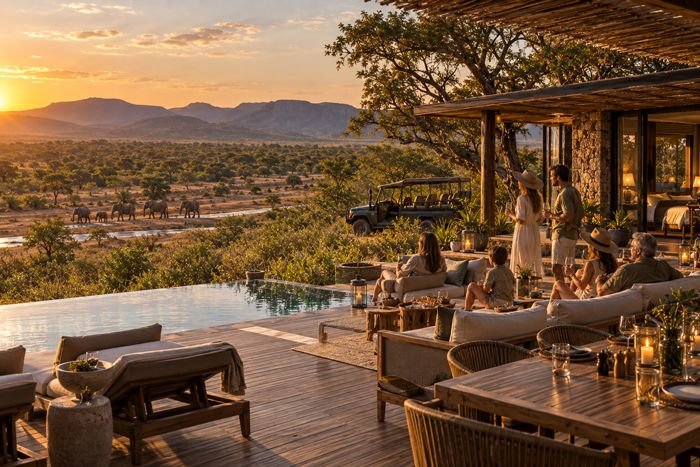
Although technically “camping,” luxury tented lodges bear little resemblance to traditional camping.
Large canvas suites often include:
- Real beds
- En-suite bathrooms
- Hot showers
- Electricity
- Fine dining
- Housekeeping
They combine the atmosphere of canvas accommodation with hotel-level comfort.
Are wild animals really nearby?
Yes—and that’s part of the experience.
Depending on the destination, animals such as elephants, buffalo, hyenas, hippos, antelope, and even predators may move through or near safari camps.
This sounds intimidating, but it’s important to remember that wildlife has coexisted with these camps for many years.
Animals generally ignore people who remain calm and follow camp rules.
Professional staff monitor wildlife activity closely and know how to respond if large animals approach.
Why safari camps are generally safe
Safari camps rely on strict safety procedures developed through decades of experience.
Common measures include:
- Designated walking paths
- Staff escorts after dark where needed
- Night security personnel
- Safety briefings
- Clear camp rules
- Experienced guides
These procedures significantly reduce risks while allowing guests to enjoy an authentic wilderness experience.
Serious incidents involving guests are extremely rare when rules are followed.
The golden rule: Listen to your guide
The single most important safety tip is simple:
Always follow your guide’s instructions.
Guides understand local wildlife behavior and know when it’s safe to walk, when to remain in camp, and how to respond if animals appear nearby.
Rules that may seem overly cautious often exist because of years of practical experience.
Trusting your guide is one of the best ways to stay safe.
Walking around camp after dark
Many animals become more active at night.
For this reason:
- Stay on marked paths.
- Carry a flashlight or headlamp.
- Accept staff escorts if offered.
- Avoid wandering around camp alone.
In unfenced camps, it is common for staff to accompany guests between dining areas and tents after sunset.
This is a normal part of safari life rather than a sign of danger.
Staying inside your tent
Modern safari tents are surprisingly secure.
Although canvas walls are obviously different from brick buildings, wildlife generally doesn’t view occupied tents as prey or something worth investigating.
To help keep camps safe:
- Zip tents completely closed.
- Store food only where instructed.
- Avoid eating inside tents unless permitted.
- Keep belongings organized.
- Follow any specific guidance provided by camp staff.
Animals are usually far more interested in natural food sources than in human accommodation.
Campfires and food
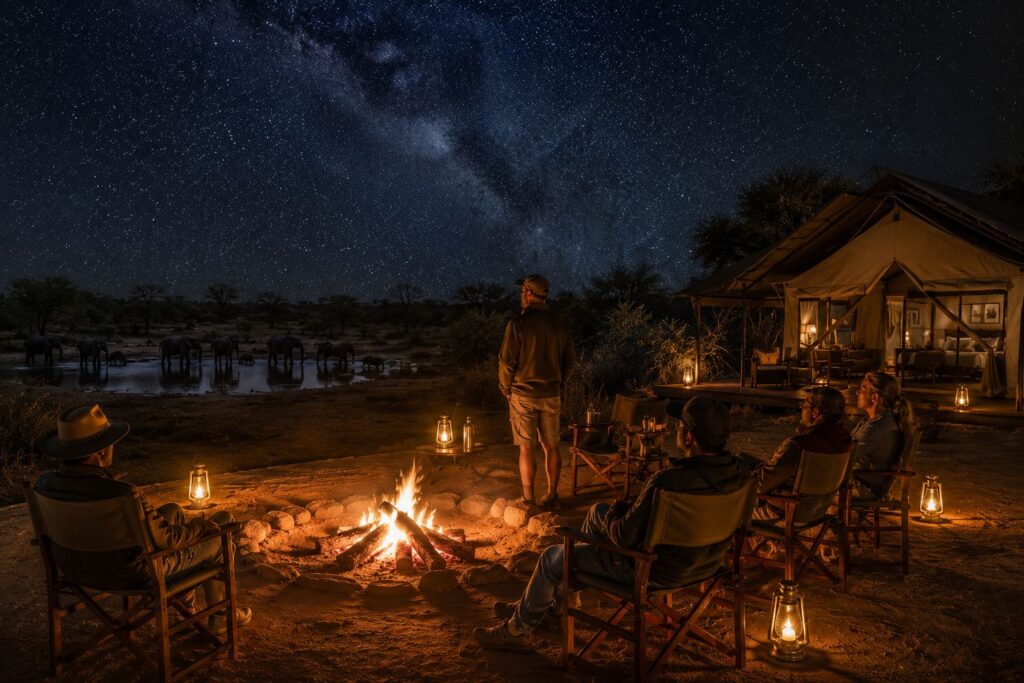
Evening campfires are a highlight of many camping safaris.
However, food should always be handled responsibly.
Avoid:
- Leaving snacks outside.
- Feeding wildlife.
- Storing food inside sleeping tents unless advised otherwise.
Monkeys, baboons, and smaller mammals are often more interested in unattended food than large predators.
Keeping camps clean benefits both wildlife and visitors.
Camping in overland groups
One reason many travelers choose overland safaris is the added sense of security.
Traveling in a group provides:
- Experienced tour leaders.
- Shared responsibilities.
- Established routines.
- Safety briefings.
- Support throughout the journey.
For solo travelers, this can be one of the safest and most enjoyable ways to experience African camping.
It also creates opportunities to meet like-minded travelers from around the world.
What about children?
Many family-friendly safari camps welcome children, although age restrictions vary.
Parents should:
- Supervise children closely.
- Explain camp rules clearly.
- Prevent running around camp.
- Follow staff guidance carefully.
Many luxury tented camps offer family accommodation specifically designed with safety in mind.
Practical safety tips
A few simple habits greatly improve both comfort and safety.
Bring:
- Flashlight or headlamp.
- Insect repellent.
- Closed shoes.
- Reusable water bottle.
- Personal medications.
- Small first-aid kit.
Always check your shoes before putting them on in the morning, particularly in warmer climates where insects may occasionally shelter overnight.
Common myths about camping on safari
“Animals regularly attack tents.”
This is extremely uncommon.
Wildlife usually avoids occupied camps and has little interest in people who behave responsibly.
“Camping is much more dangerous than staying in a lodge.”
Not necessarily.
Luxury tented camps also use canvas accommodation, and both camping safaris and lodges follow similar safety principles.
“Budget safaris are unsafe.”
Reputable budget operators maintain professional safety standards, experienced guides, and well-organized itineraries.
Price alone is not an indicator of safety.
Is camping right for you?
Camping is ideal if you:
- Enjoy outdoor travel.
- Want to reduce costs.
- Like adventure.
- Appreciate social travel.
- Prefer immersive nature experiences.
You may prefer a lodge if you:
- Want maximum comfort.
- Have mobility concerns.
- Prefer private facilities.
- Are celebrating a special occasion.
Many travelers discover that camping provides a stronger connection with nature than they expected.
The rewards of camping in the bush
Camping offers something that hotels cannot.
Instead of separating you from the environment, it places you within it.
You’ll hear hyenas calling in the distance, watch stars emerge without city lights, wake to birdsong, and experience the rhythms of the African bush throughout the day and night.
For many travelers, these moments become the memories they treasure most.
Conclusion
Camping on safari is not only safe when done with reputable operators and proper precautions—it is also one of the most immersive ways to experience Africa’s wild places. Whether you’re joining an overland expedition, staying at a public campsite, or enjoying a fully serviced mobile safari, the combination of professional guides, established safety procedures, and common-sense behavior makes camping a rewarding option for many travelers.
By listening to your guides, respecting wildlife, and embracing the unique atmosphere of life under canvas, you’ll gain a deeper appreciation for the landscapes and ecosystems that make African safaris so unforgettable.
For more safari planning advice, travel safety guides, and destination inspiration, continue exploring the WhySafari blog.
FAQs
Yes. Reputable safari camps follow strict safety procedures, and wildlife rarely poses a threat when guests follow camp rules and staff guidance.
In some unfenced camps, large animals may occasionally pass through nearby areas. Staff monitor wildlife carefully, and guests are instructed on how to behave safely.
Yes. Traveling with an organized group and experienced tour leaders makes overland safaris one of the safest and most social ways to explore multiple safari destinations.
Only when necessary and in accordance with camp guidance. Many camps provide escorts after dark, particularly in unfenced wildlife areas.
Remain calm, keep your distance, and notify camp staff if appropriate. Never approach, feed, or attempt to scare away wild animals.
Generally yes. Camping safaris are often one of the most affordable ways to experience Africa while still enjoying excellent wildlife viewing.
Not necessarily. Many safari operators provide all equipment, set up camp, prepare meals, and explain everything you need to know before your adventure begins.