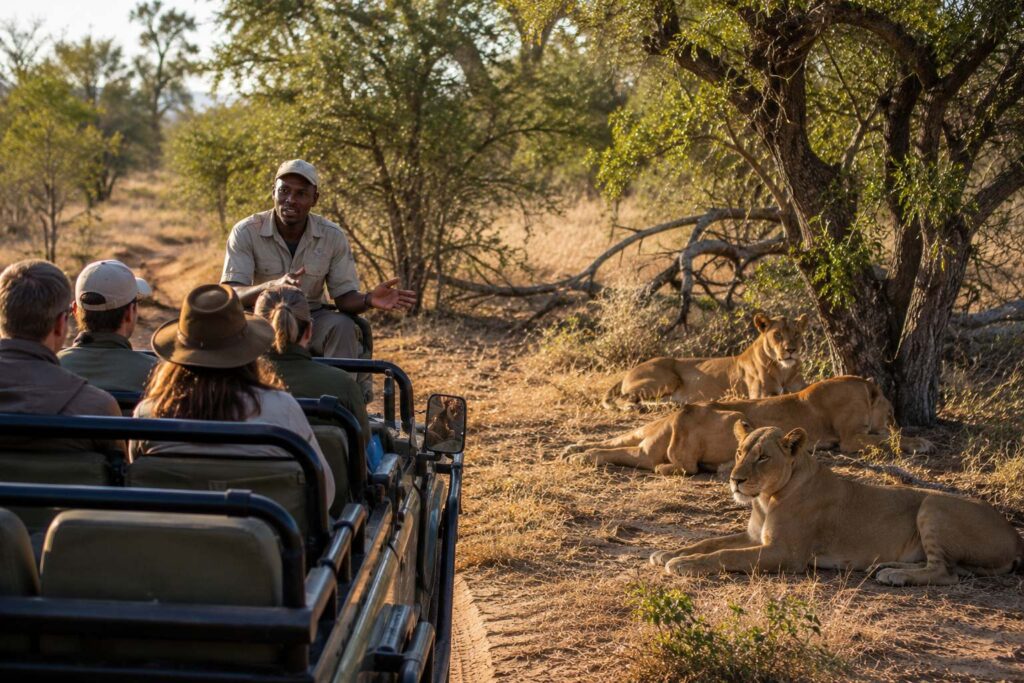
It’s one of the questions many first-time safari travelers secretly wonder about.
What happens if your safari vehicle breaks down while you’re surrounded by elephants—or worse, near a pride of lions?
Fortunately, vehicle breakdowns on safari are relatively uncommon, and when they do happen, experienced guides are trained to handle the situation calmly and professionally. Modern safari operators also maintain their vehicles carefully, carry communication equipment, and have well-established emergency procedures.
Most importantly, the safest response is almost always the simplest one: stay inside the vehicle.
Understanding how guides deal with breakdowns—and why remaining calm is so important—can help you feel much more confident before your safari.
How common are safari vehicle breakdowns?
Far less common than many people imagine.
Professional safari companies invest heavily in maintaining their vehicles because reliability is essential in remote environments.
Routine maintenance typically includes:
- Daily vehicle checks
- Regular servicing
- Tire inspections
- Brake maintenance
- Spare parts
- Emergency equipment
Even on rough roads, most safaris operate without mechanical problems.
When breakdowns do occur, they’re usually minor issues rather than dramatic emergencies.
Why staying inside the vehicle is so important
Your safari vehicle acts as a protective shell.
Wild animals generally recognize vehicles as large, unfamiliar objects rather than individual people.
As long as passengers remain seated and avoid sudden movements, most animals simply ignore the vehicle.
Stepping outside changes that situation dramatically.
A standing person is much more noticeable and may be interpreted differently by wildlife.
For this reason, guides almost always instruct guests to:
- Stay seated.
- Remain quiet.
- Avoid sudden movements.
- Follow instructions carefully.
Even if the engine has stopped, the vehicle itself continues to provide protection.
What your guide does first
If a mechanical problem occurs, your guide’s priorities are clear.
They will usually:
- Assess the situation.
- Keep passengers calm.
- Evaluate nearby wildlife.
- Attempt simple repairs if appropriate.
- Contact assistance if needed.
Professional guides receive extensive training in both vehicle management and wildlife behavior.
Their calm response helps prevent unnecessary stress for both guests and animals.
How help is usually arranged
Most safari operators have reliable communication systems.
Depending on the destination, guides may use:
- Two-way radios
- Mobile phones (where coverage exists)
- Satellite communication devices
Nearby vehicles, lodge staff, or maintenance teams can often reach the location within a relatively short time.
In busy safari areas, another guide may already be nearby and able to assist.
Remote parks naturally require more time, which is why guides prepare carefully before every game drive.
What if predators are nearby?
This is the scenario that worries most visitors.
The reality is usually much less dramatic.
Lions, leopards, and hyenas are generally curious rather than aggressive toward stationary safari vehicles.
If predators are resting nearby, guides will normally ask everyone to:
- Stay completely inside.
- Speak quietly.
- Avoid unnecessary movement.
- Allow the animals to behave naturally.
Predators often lose interest quickly and continue resting or moving through the area.
The vehicle itself remains the safest place to wait.
What about elephants?
Elephants deserve particular respect because of their size and intelligence.
If an elephant approaches during a breakdown, the guide will closely monitor its behavior.
Most elephants simply investigate briefly before moving on.
Signs of a relaxed elephant include:
- Calm feeding
- Slow walking
- Relaxed ears
- Trunk exploring the environment
Experienced guides understand elephant body language and can judge whether the animal is comfortable or becoming agitated.
Remaining still is almost always the best response.
Do animals attack broken-down vehicles?
Very rarely.
Wild animals generally do not distinguish between a functioning safari vehicle and one experiencing mechanical problems.
From their perspective, it remains the same large object.
Occasionally curious elephants, baboons, or hyenas may approach, but genuine attacks on safari vehicles are extremely unusual.
Most wildlife simply ignores vehicles unless people behave unpredictably.
Self-drive breakdowns
If you’re exploring a national park independently, the advice remains the same.
If your vehicle develops a problem:
- Stay inside whenever possible.
- Lock the doors if appropriate.
- Call for assistance if you have communication.
- Wait for another visitor if necessary.
- Use emergency numbers provided by the park.
Never leave your vehicle unless park authorities specifically instruct you to do so or you’re in an area where it is clearly designated as safe.
Patience is usually the safest strategy.
Preparing before your safari
Although breakdowns are uncommon, reputable operators prepare thoroughly.
Vehicles often carry:
- Spare tires
- Recovery equipment
- First-aid kits
- Drinking water
- Basic tools
- Communication devices
These preparations allow guides to resolve many minor issues without significantly disrupting the safari.
How guests can help
Passengers also play an important role.
If a breakdown occurs:
- Stay calm.
- Listen carefully.
- Avoid distracting the guide.
- Keep voices low.
- Don’t stand up for photographs.
- Wait for instructions before doing anything.
Remaining relaxed allows the guide to concentrate on both the vehicle and surrounding wildlife.
Why guides stay so calm
Experienced safari guides have often encountered mechanical problems before.
They understand that wildlife generally reacts to human behavior.
A calm group creates a calm atmosphere.
Anxious shouting, sudden movements, or ignoring instructions can increase unnecessary risks.
One reason professional guides inspire confidence is that they focus on solving the situation rather than reacting emotionally.
Mechanical issues are part of adventure travel
African safari vehicles operate in demanding environments.
Dust, rough roads, river crossings, and long distances naturally increase wear compared with everyday driving.
Occasional punctures or minor repairs are simply part of operating vehicles in remote wilderness.
Many travelers later remember these unexpected delays as memorable parts of the adventure—particularly when wildlife continues behaving naturally nearby.
Should you worry?
Not really.
Millions of safari game drives take place across Africa every year with excellent safety records.
Professional operators maintain high standards of vehicle maintenance, guide training, and emergency planning.
The combination of experienced guides, reliable communication, and sensible wildlife behavior means that even unexpected breakdowns are usually handled safely and efficiently.
Rather than worrying about unlikely scenarios, focus on enjoying the remarkable experience of being surrounded by Africa’s incredible wildlife.
Conclusion
A safari vehicle breakdown near wildlife may sound alarming, but in reality it’s a situation that professional guides are well prepared to manage. Modern safari vehicles are carefully maintained, communication systems are in place, and guides receive extensive training in both mechanical problem-solving and wildlife behavior.
If the unexpected does happen, the safest approach is simple: stay inside the vehicle, remain calm, and follow your guide’s instructions. More often than not, the interruption becomes just another memorable story from an unforgettable safari rather than a dangerous situation.
For more safari safety advice, wildlife behavior guides, and travel planning tips, continue exploring the WhySafari blog.
FAQs
No. Reputable safari operators maintain their vehicles carefully, making serious breakdowns relatively rare.
No. Unless your guide or park authorities specifically instruct otherwise, staying inside the vehicle is almost always the safest option.
Remain calm and stay seated. Lions usually ignore safari vehicles, whether they are moving or stationary, provided passengers remain inside.
Curious elephants may occasionally inspect vehicles, but experienced guides understand elephant behavior and know how to manage these situations safely.
Depending on the location, guides may use radios, mobile phones, or satellite communication devices to contact nearby staff or support vehicles.
Self-drive visitors should also remain inside the vehicle whenever possible and contact park authorities or wait for assistance rather than walking through wildlife areas.
Yes. Wildlife is accustomed to safari vehicles, and professional guides follow strict safety procedures designed to minimize risk during every game drive.