Watching lions in the wild, sleeping beneath the African stars, and exploring vast landscapes inhabited by elephants and buffaloes are experiences that make a Serengeti safari unforgettable. But for first-time visitors, the excitement often comes with an important question: is a Serengeti safari safe?
The Serengeti is a genuine wilderness, where animals move freely and medical facilities can be far away. Although organized safaris are designed with visitor safety in mind, understanding the potential risks is essential before traveling.
The good news is that a Serengeti safari is generally a safe experience when organized through a reputable operator and conducted according to park safety regulations. Professional guides, established game-drive procedures, and trained camp staff help visitors explore the ecosystem responsibly.
Understanding safari safety is an important part of preparing for the Serengeti, but choosing the right region, accommodation, and itinerary also shapes your overall experience. Our complete Serengeti National Park safari guide explores the park’s main regions, wildlife highlights, and accommodation options to help you plan your trip with confidence.
However, wildlife encounters, road conditions, tropical diseases, and remote locations require sensible precautions.
This guide explains the main Serengeti safari safety risks, how to reduce them, and what travelers should know before their Tanzania adventure.
Is Serengeti National Park safe for tourists?
Serengeti National Park is one of Tanzania’s best-established wildlife destinations. It welcomes international visitors throughout the year and is managed by the Tanzania National Parks Authority (TANAPA).
Professional guides, park rangers, and accommodation staff play important roles in protecting visitors and wildlife.
However, no wilderness destination can be considered completely risk-free.
In October 2026, the United States Department of State classified Tanzania as Level 2: Exercise Increased Caution, citing concerns including crime, terrorism, health, unrest, and enforcement of local laws.
This advisory applies to Tanzania more broadly, rather than indicating that every part of the Serengeti faces the same risks.
Travelers should check current government guidance for their nationality before departure, as security conditions and official recommendations can change.
For a typical organized safari, the most relevant precautions involve respecting wildlife, choosing reliable transportation, preparing for health risks, and understanding emergency procedures.
Serengeti safari safety: Main risks at a glance
| Potential risk | What travelers should know | Recommended precaution |
|---|---|---|
| Dangerous wildlife | Large animals can behave unpredictably | Follow your guide and remain in the vehicle |
| Malaria and insects | Mosquito-borne illness is a concern | Obtain travel-health advice and use bite protection |
| Road accidents | Roads can be rough and remote | Choose experienced drivers and maintained vehicles |
| Remote medical facilities | Advanced treatment may require evacuation | Purchase suitable medical evacuation insurance |
| Unfenced safari camps | Wildlife may pass through accommodation areas | Follow staff instructions and escort procedures |
| Theft and scams | Risks exist around airports, cities, and tourist services | Use reputable transfers and secure valuables |
| Weather conditions | Heavy rain can affect roads and transfers | Build flexibility into your itinerary |
Understanding these risks doesn’t mean expecting something to go wrong. It means preparing appropriately so you can enjoy the experience with greater confidence.
Are wild animals dangerous on a Serengeti safari?
The Serengeti is home to lions, leopards, elephants, buffaloes, hippos, crocodiles, and numerous other wild animals.
Although these species are extraordinary to observe, they should never be treated as tame or predictable.
Most conventional safaris take place inside specially adapted 4×4 vehicles, allowing visitors to observe wildlife without approaching animals on foot.
Safety during game drives
Your guide will assess animal behavior and maintain appropriate viewing distances.
Remain inside the vehicle unless you’re at a designated stopping area or your guide explicitly permits you to exit.
Never stand outside the vehicle near wildlife, attempt to attract an animal’s attention, or feed any species.
Keep noise levels low and avoid sudden movements that could disturb animals.
Remember that even apparently peaceful herbivores, particularly elephants and buffaloes, can become dangerous when threatened.
What if a lion approaches the vehicle?
Sometimes lions or other animals walk close to stationary safari vehicles.
If this happens, remain calm and follow your guide’s instructions.
Avoid leaning toward the animal, making loud noises, or attempting to touch it.
Experienced guides understand how to assess these situations and determine whether the vehicle should remain stationary or move away.
Is it safe to sleep in a Serengeti safari camp?
Sleeping in a Serengeti tented camp is one of the most memorable parts of the experience.
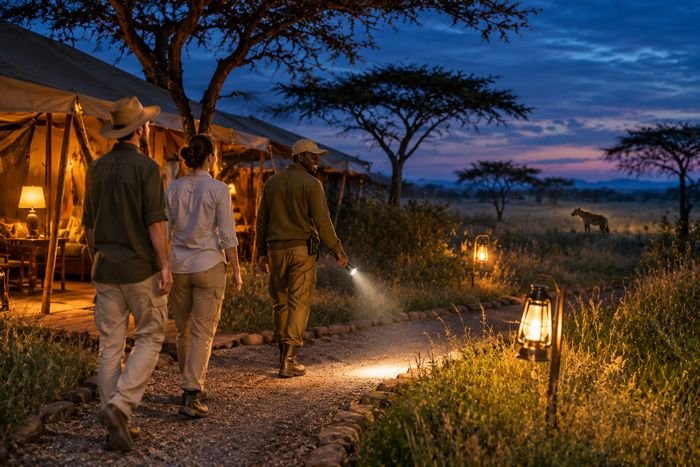
However, many camps and lodges are unfenced, meaning animals may occasionally move through the surrounding property.
Hearing hyenas, lions, or other wildlife at night is possible and doesn’t necessarily indicate immediate danger.
Reputable camps establish safety procedures designed around their location and the surrounding wildlife.
Essential safety rules at camp
Follow staff instructions about moving between tents and communal areas, especially after dark.
If escorts are required, never walk alone.
Keep your tent securely closed according to the property’s instructions, and avoid leaving food outside.
Never approach animals that appear near your accommodation, even if they seem accustomed to human activity.
Families should confirm child-safety policies before booking, particularly at remote unfenced camps.
Health risks: Malaria, vaccinations, and food safety
Health preparation deserves just as much attention as wildlife safety.
Malaria is a concern in Tanzania, including many safari areas. Travelers should consult a qualified healthcare professional about suitable preventive medication and mosquito protection.
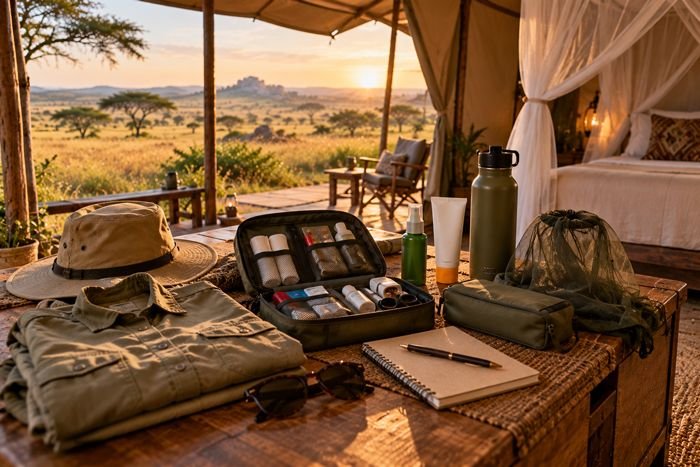
Long sleeves, insect repellent, and properly maintained mosquito nets can help reduce bites.
Travelers should also review their routine vaccinations and any additional recommendations for Tanzania.
Yellow fever certificate requirements depend partly on your travel route and whether you’re arriving from or transiting through a country with yellow fever transmission risk.
Food and water precautions are also important.
Drink water confirmed safe by your accommodation or guide, wash or sanitize your hands regularly, and communicate food allergies before traveling.
If you develop a fever during your trip or after returning home, seek prompt medical attention and mention your travel history.
Road safety and transportation in the Serengeti
Road conditions are another important consideration.
Traveling from Arusha to Central Serengeti can take several hours, including sections of rough, dusty, or uneven roads.
Heavy rainfall may make certain tracks muddy or difficult to navigate.
Choose an operator with experienced drivers, well-maintained vehicles, functioning seat belts, and appropriate emergency equipment.
Avoid itineraries requiring unnecessary night driving, and never pressure your guide to travel faster to reach a wildlife sighting.
If you’re concerned about long road journeys, domestic flights to Serengeti airstrips can reduce time spent on rough roads, although flights have their own operational and weather-related considerations.
Is it safe to walk in the Serengeti?
Walking independently through Serengeti National Park is not permitted as an ordinary tourist activity.
Authorized walking safaris are available in designated areas under specialized supervision.
These experiences require appropriate guiding arrangements, including armed-ranger protection according to applicable regulations.
Walking safaris offer opportunities to learn about animal tracks, vegetation, and smaller ecological details, but they involve risks different from those of vehicle-based game drives.
Never leave your safari vehicle to explore on foot without explicit authorization.
Crime, personal security, and choosing a reliable operator
Although the Serengeti is remote from major urban centers, travelers should still take sensible security precautions.
Theft, fraud, and other crimes may occur during travel through airports, cities, and tourist areas.
Arrange transfers through reputable providers, keep important documents secure, and avoid displaying large amounts of cash.
When choosing a safari operator, verify its registration, review recent independent feedback, and ask about guiding credentials, vehicle maintenance, and emergency arrangements.
Be cautious with unusually cheap offers requiring large payments without clear contracts or cancellation policies.
A reliable operator should provide transparent information about what’s included, who will guide your safari, and how emergencies are handled.
What happens during a medical emergency?
The Serengeti’s remoteness is one of its greatest attractions, but it also creates logistical challenges.
Advanced medical facilities may be several hours away, and serious emergencies can require evacuation by road or aircraft.
Before traveling, confirm that your insurance covers emergency treatment and medical evacuation from remote safari areas.
Ask your operator how it communicates with emergency services, whether staff have first-aid training, and how evacuation would be coordinated.
Carry prescribed medications, important medical information, and copies of your insurance documents.
Because mobile coverage can be unreliable, don’t assume you’ll always be able to contact emergency services directly from your phone.
Is the Serengeti safe for families and solo travelers?
The Serengeti can be suitable for both families and solo visitors, provided the itinerary matches their needs.
Families should choose accommodations that welcome children, arrange suitable vehicle restraints, and ensure younger travelers understand wildlife-safety rules.
Private game drives can make it easier to manage breaks and adjust schedules.
Solo travelers may join established group safaris or arrange private guiding.
In either case, using reputable operators and avoiding independent exploration in wildlife areas are important precautions.
Travelers with medical conditions or mobility limitations should discuss accommodation accessibility, vehicle requirements, and emergency planning before booking.
Practical Serengeti safety checklist
Before leaving for Tanzania, make sure you’ve addressed these essentials:
- Check the latest official Tanzania travel advisory.
- Book a registered, reputable safari operator.
- Confirm vehicle safety equipment and guiding arrangements.
- Consult a travel-health professional about malaria and vaccinations.
- Purchase travel insurance with medical evacuation coverage.
- Carry personal medication, insect repellent, and sufficient drinking water.
- Review camp rules and wildlife-viewing regulations.
- Keep copies of important documents available offline.
- Share your itinerary and emergency contact information with someone at home.
These precautions make it easier to focus on wildlife encounters rather than avoidable problems.
Final thoughts: Is a Serengeti safari safe enough to visit?
For most travelers, a professionally organized Serengeti safari can be a safe and rewarding adventure.
The park’s wildlife is genuinely wild, roads can be challenging, and medical services are remote. These realities deserve respect rather than alarm.
With experienced guides, appropriate health preparations, reliable accommodation, and a clear understanding of safety rules, visitors can significantly reduce avoidable risks.
The goal isn’t to eliminate every uncertainty. It’s to explore one of Africa’s most remarkable ecosystems responsibly.
For more Serengeti travel guidance, family safari advice, and practical planning tips, explore the WhySafari blog and prepare for your African adventure with confidence.
Frequently asked questions about Serengeti safari safety
Yes, guided safaris operate during the rainy season, although heavy rainfall can affect road access and scheduled activities. Experienced operators monitor conditions and may adjust routes to avoid flooded or difficult tracks.
Balloon flights are operated by specialist companies with trained pilots, but aviation activities involve inherent risks. Weather conditions can lead to cancellations. Choose an established operator and confirm its safety procedures, passenger requirements, and cancellation policy.
Snakes and scorpions occur in the Serengeti, but encounters are generally uncommon in regularly maintained guest areas. Wear shoes outdoors, use a flashlight at night, and ask staff for assistance if you discover an unfamiliar animal.
Remain in a safe, designated location and contact your guide or accommodation staff when possible. Do not attempt to navigate the wilderness independently. Follow the emergency instructions provided during your safari briefing.
Established lodges generally provide treated, filtered, or bottled drinking water. However, don’t assume all tap water is safe. Ask staff which water sources are suitable for drinking and brushing your teeth.
Pregnancy requires additional planning because of malaria risk, long road transfers, and limited access to medical care. Consult an obstetrician and travel-health specialist before booking, and review airline, accommodation, and insurance restrictions.
Self-driving is possible under applicable park rules, but navigating remote roads and wildlife encounters requires experience. For first-time visitors, a professional driver-guide is generally the safer and more practical choice.
Many travelers bring valuable photography equipment without problems, but sensible precautions are important. Keep cameras attended in public areas, use secure storage where available, and confirm that your travel insurance covers equipment loss or damage.