Getting to the Serengeti is part of the adventure, but choosing the right transportation can make a significant difference to your Tanzania safari. Should you board a small aircraft and fly directly over the plains, or travel by road through the beautiful landscapes of northern Tanzania?
Both options have advantages. Flying is faster, more comfortable, and particularly useful for short safaris. Driving is generally more affordable and gives you the opportunity to explore destinations such as Ngorongoro Crater and Tarangire National Park along the way.
However, travel times, costs, and accessibility vary considerably depending on where you’re staying within the Serengeti.
So, what’s the best way to get to the Serengeti: flying or driving?
For travelers spending only two or three nights in the park, flying is usually the better option. Those planning a longer northern Tanzania safari may find driving more rewarding and economical.
This guide compares both transportation methods, explains the main routes and airstrips, and helps you choose the most practical way to reach Serengeti National Park.
Flying vs driving to the Serengeti: Quick comparison
Most Serengeti safaris begin in Arusha, northern Tanzania’s main safari gateway.
From there, travelers can either take a domestic flight to a regional airstrip or travel overland in a safari vehicle.
| Factor | Flying | Driving |
|---|---|---|
| Typical journey from Arusha | Around 1–2 hours airborne | Around 7–9 hours to Central Serengeti |
| Cost | Generally higher | Usually more economical for groups |
| Comfort | Avoids long, rough roads | Bumpy and sometimes dusty |
| Scenic experience | Aerial landscapes | Villages, highlands, and changing scenery |
| Wildlife opportunities en route | Limited | Possible once entering wildlife areas |
| Luggage | Strict weight restrictions | Usually more flexibility |
| Best for | Short safaris and remote camps | Multi-park safaris and longer trips |
Journey times are approximate. Flights may involve intermediate stops, while road transfers depend on weather, traffic, and your accommodation’s location.
Where do Serengeti safaris usually start?
For international travelers, Kilimanjaro International Airport (JRO) is one of the most convenient gateways to northern Tanzania.
Located approximately 50 kilometers from Arusha, it receives international flights from several major connecting hubs.
From Kilimanjaro Airport, travelers typically transfer to Arusha, where most organized northern Tanzania safaris begin.
Arusha Airport (ARK) is a smaller airport used primarily for domestic and regional flights, including services to Serengeti airstrips.
Some travelers also arrive through Dar es Salaam or Zanzibar before connecting to northern Tanzania.
The best arrival route depends on your international flights, safari operator, and whether you’re combining the Serengeti with other destinations.
How to get to the Serengeti by plane
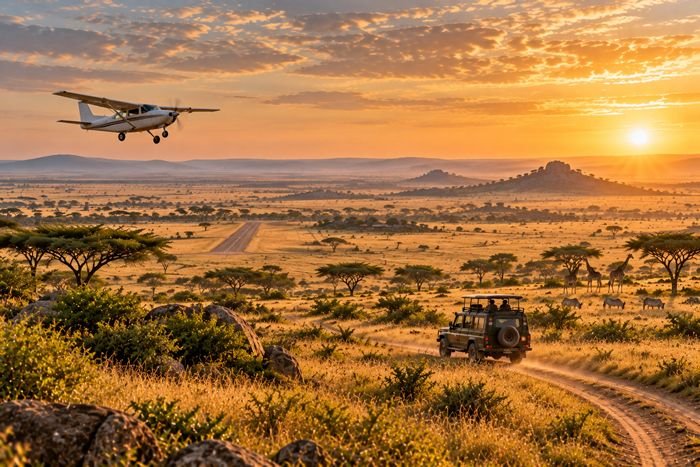
Flying is the quickest way to reach Serengeti National Park.
Small aircraft operate between Arusha and selected airstrips within the Serengeti ecosystem, providing convenient access to different wildlife regions.
Flights commonly take approximately one to two hours, although routes with intermediate stops can take longer.
After landing, a guide from your safari operator or accommodation usually meets you for the drive to camp.
Main Serengeti airstrips
Choosing the correct airstrip is essential because the Serengeti is enormous.
Seronera Airstrip serves Central Serengeti and is particularly convenient for first-time visitors seeking year-round wildlife viewing.
Kogatende Airstrip serves Northern Serengeti and is popular during the Great Migration’s Mara River crossing season, generally between July and October.
Grumeti Airstrip provides access to parts of Western Serengeti and surrounding safari properties.
Ndutu and other southern airstrips serve seasonal safari areas associated with wildebeest calving activity. Ndutu is within the Ngorongoro Conservation Area, adjacent to the southern Serengeti.
Flights to certain airstrips operate seasonally or according to demand. Always confirm the nearest appropriate airstrip with your accommodation.
Advantages of flying
The biggest advantage is saving time.
Instead of spending most of a day traveling from Arusha, you can arrive in the Serengeti with time remaining for wildlife viewing, depending on your flight schedule.
Flying also reduces exposure to rough roads and makes remote regions more accessible.
For honeymooners, families with younger children, and travelers planning a short luxury safari, this convenience can justify the additional cost.
Disadvantages of flying
Domestic safari flights are generally more expensive than shared road transfers.
Small aircraft also have stricter baggage allowances, frequently around 15 kilograms per passenger including hand luggage, although some airlines allow more.
Soft-sided bags may be required.
Flight schedules can change because of weather, operational requirements, or intermediate stops.
Travelers should avoid scheduling tight connections between bush flights and international departures.
How to get to the Serengeti by road
Driving from Arusha to Central Serengeti typically takes approximately seven to nine hours, sometimes longer.
The most common route passes through the Ngorongoro highlands and enters the national park through Naabi Hill Gate.
Much of the journey takes place on established roads, but sections approaching and entering the Serengeti are unpaved and can be heavily corrugated.
What is the drive from Arusha like?
The journey begins in the landscapes surrounding Arusha before continuing toward the Rift Valley and Ngorongoro Conservation Area.
As you travel west, you’ll encounter farmland, highland scenery, and increasingly remote landscapes.
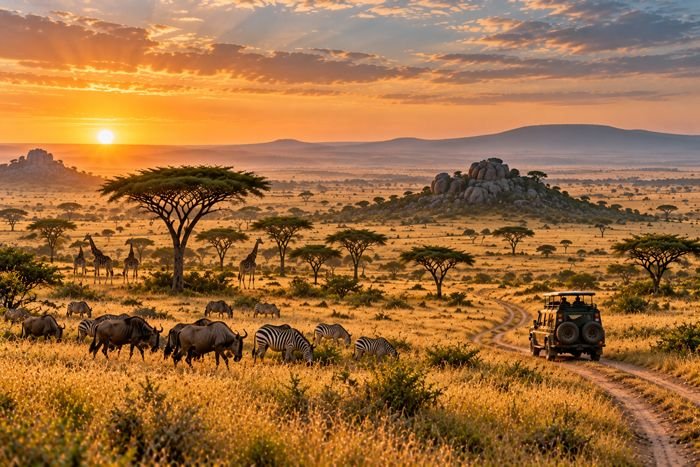
After crossing the Ngorongoro highlands, the terrain gradually opens toward the Serengeti’s extensive grasslands.
Wildlife sightings become possible as you enter protected areas, although the journey shouldn’t be treated as a guaranteed game drive.
Your guide may stop at permitted viewpoints and designated rest areas along the route.
Advantages of driving
Driving provides greater flexibility and can be more economical, particularly for families or groups sharing one safari vehicle.
It’s also convenient when combining the Serengeti with Ngorongoro Crater, Tarangire, or Lake Manyara.
Traveling overland allows you to appreciate the landscapes between destinations rather than moving directly from airport to camp.
Disadvantages of driving
The main drawback is travel time.
Long journeys on rough roads can be tiring, particularly for travelers with limited mobility or those prone to motion sickness.
During the rainy season, muddy conditions may slow transfers.
Driving directly to Northern Serengeti takes substantially longer than reaching Seronera, making road-only itineraries less practical for short trips.
How much does it cost to fly vs drive to the Serengeti?
Transportation costs vary according to season, passenger numbers, flight route, and safari operator.
A one-way domestic flight from Arusha to a Serengeti airstrip may cost several hundred US dollars per person.
Exact fares depend on the destination, airline, baggage requirements, and availability.
For road safaris, transportation is commonly included in a package covering the vehicle, professional guide, fuel, and transfers.
However, driving isn’t automatically cheaper for every traveler.
A private road safari for one or two people can be relatively expensive because vehicle and guiding costs are shared among fewer passengers.
When comparing quotations, request the complete price, including airport transfers, park entrance fees, conservation-area transit charges, and accommodation.
The most affordable option depends on your overall itinerary rather than the transportation method alone.
Can you fly one way and drive the other?
Yes, and this is often one of the smartest ways to organize a Serengeti safari.
A combined fly-and-drive itinerary allows you to save time while still enjoying northern Tanzania’s landscapes.
For example, you could travel by road from Arusha through Tarangire and Ngorongoro before reaching the Serengeti.
After several days of wildlife viewing, take a domestic flight back to Arusha or onward to another destination.
Alternatively, fly directly into the Serengeti and return overland through Ngorongoro Crater.
This approach works particularly well for five- to seven-day safaris and travelers visiting multiple parks.
Flying or driving: Which option should you choose?
The best decision depends primarily on your available time and travel priorities.
Choose flying if you have a short safari
If you’re spending only two or three nights in the Serengeti, flying generally makes the most sense.
You’ll preserve valuable game-drive time and avoid spending a large proportion of your trip in transit.
Choose driving for a multi-park safari
If your itinerary includes Ngorongoro, Tarangire, or Lake Manyara, driving allows you to connect these destinations naturally.
It’s particularly appealing when you have a week or more to explore northern Tanzania.
Choose a combination for flexibility
For travelers balancing cost, comfort, and wildlife viewing, flying one way and driving the other can provide an excellent compromise.
It’s also worth considering your final destination. Travelers continuing to Zanzibar may find certain domestic flight connections convenient.
Practical tips before booking your Serengeti transfer
Before finalizing your transportation, confirm your accommodation’s exact location.
A flight into Seronera may not be convenient if you’re staying near the Mara River in Northern Serengeti.
Ask about baggage limits, ground transfers, and how many stops your aircraft might make.
For road transfers, check the expected journey duration and whether your itinerary includes meaningful game-drive stops.
Travel insurance that covers unexpected delays is advisable, particularly when connecting with international flights.
Most importantly, avoid trying to save money on transportation at the expense of the safari experience you’ve traveled so far to enjoy.
Final thoughts: The best way to reach the Serengeti
Both flying and driving offer rewarding ways to reach Serengeti National Park.
Flying is ideal for travelers who value comfort, efficiency, and maximum time with wildlife.
Driving provides a more immersive journey through northern Tanzania and works particularly well for longer, multi-park safaris.
For many visitors, combining the two methods offers the best balance.
Choose transportation based on your safari duration, accommodation location, and overall budget rather than price alone.
For more Serengeti itineraries, destination comparisons, and practical Tanzania travel advice, explore the WhySafari blog and discover how to plan your next African safari with confidence.
Frequently asked questions about getting to the Serengeti
No. Serengeti airstrips primarily handle smaller domestic and charter aircraft. International travelers generally arrive at Kilimanjaro International Airport or another Tanzanian gateway before connecting to a regional safari flight.
Yes, self-driving is permitted, but a reliable 4×4 vehicle and experience navigating remote African roads are strongly recommended. First-time visitors generally benefit from hiring a professional driver-guide who understands the routes and park regulations.
Reputable safari airlines operate under Tanzanian aviation regulations, but small-aircraft travel carries inherent risks. Choose established operators, follow baggage and safety instructions, and allow flexibility for weather-related schedule changes.
Yes. Scheduled domestic connections operate between Zanzibar and selected Serengeti airstrips, although availability and intermediate stops vary. This is a convenient option for travelers combining a beach holiday with a safari.
Not directly through the common safari routes across the international boundary. Travelers generally need to use an authorized border crossing and arrange onward transportation. Cross-border logistics can require significant additional travel time.
Yes, many scheduled services operate throughout the year, but adverse weather may cause delays or changes. Certain regional airstrips have seasonal services, so confirm flight availability for your specific travel dates.
Most organized fly-in safari packages include an airstrip pickup by a camp representative or safari guide. However, transfers aren’t universally included, so confirm arrangements when booking.
Large hard-shell suitcases are often unsuitable for small safari aircraft. Many operators require soft-sided bags and enforce strict weight limits. Check your specific airline’s baggage policy before packing.