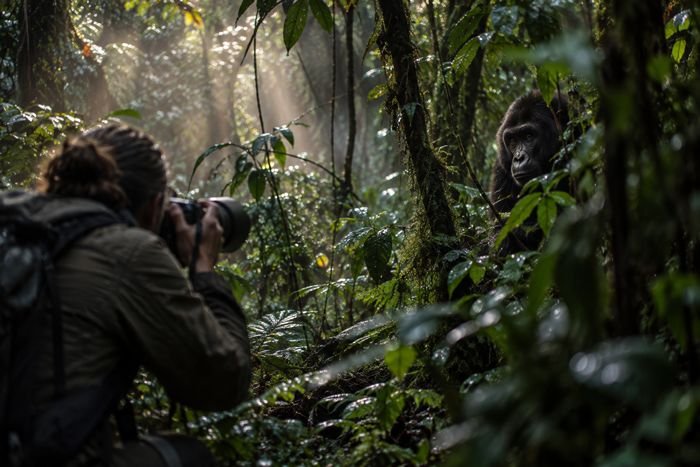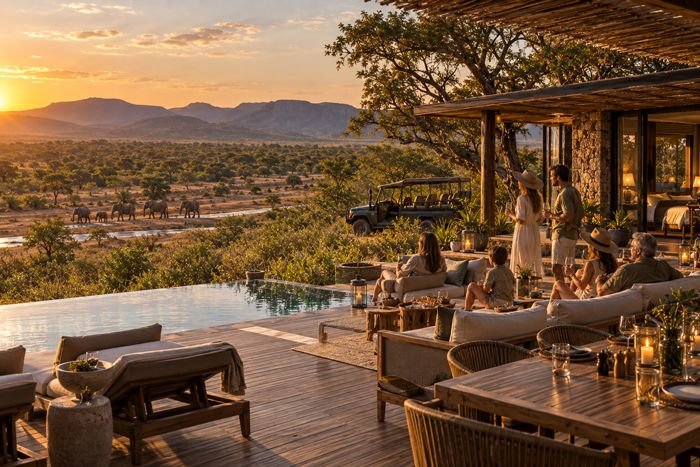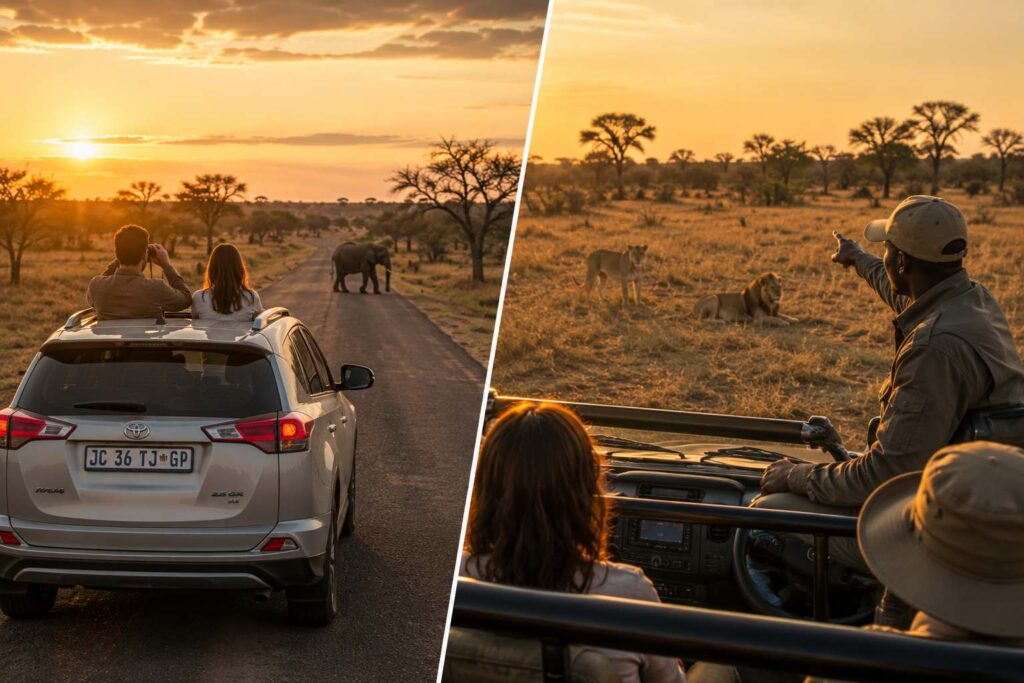
One of the biggest decisions when planning a safari in South Africa’s Kruger National Park is whether to explore on your own or join a guided game drive. Both options offer incredible wildlife experiences, but they cater to different travel styles, budgets, and expectations.
A self-drive safari gives you complete freedom to set your own schedule, choose your routes, and spend as long as you like at each sighting. A guided safari, on the other hand, offers expert knowledge, access to experienced wildlife trackers, and a more relaxed experience where someone else handles the driving.
Neither option is objectively better. The right choice depends on what you value most: independence, convenience, wildlife expertise, or overall cost.
This guide compares self-drive and guided game drives in Kruger National Park, helping you decide which experience best matches your safari goals.
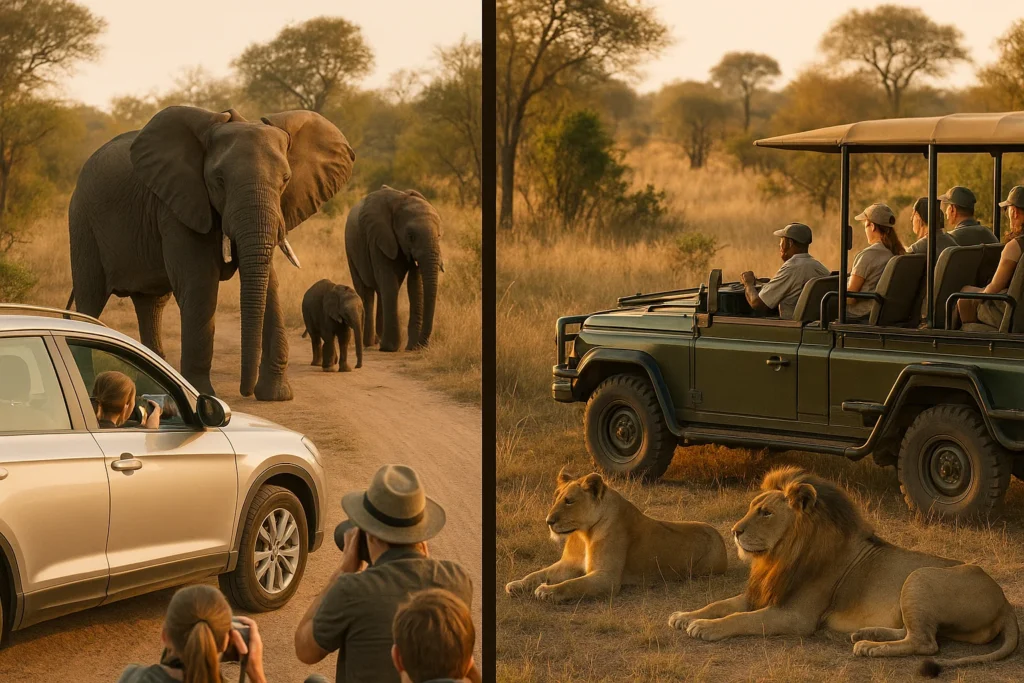
Understanding the two safari styles
A self-drive safari means entering Kruger National Park in your own rental car or personal vehicle. Visitors drive the park’s well-maintained road network independently, following park regulations and opening hours while searching for wildlife themselves.
A guided game drive is led by a professional safari guide in a specially designed open safari vehicle. Guides handle navigation, wildlife spotting, and interpretation while guests simply enjoy the experience.
Guided drives are available through SANParks rest camps, private lodges inside Kruger, and lodges in the Greater Kruger private reserves.
Although both take place in the same ecosystem, the experiences can feel surprisingly different.
Cost comparison
Budget is often the first consideration.
Self-drive costs
A self-drive safari is usually the more affordable option. Typical expenses include:
- Park conservation fees
- Vehicle rental (if needed)
- Fuel
- Accommodation
- Food
- Optional maps or guidebooks
Because you control your schedule, you can choose budget-friendly campsites, self-catering accommodation, or government rest camps.
For families or small groups sharing one vehicle, self-driving offers excellent value.
Guided safari costs
Guided safaris generally cost more because they include professional guiding, specialized safari vehicles, and, in many cases, additional services.
Depending on the operator, prices may include:
- Professional guide
- Open safari vehicle
- Park entry
- Meals
- Accommodation
- Transfers
- Refreshments
- Bush walks or other activities
Luxury guided safaris naturally cost significantly more, but many travelers feel the improved wildlife experience justifies the additional expense.
Wildlife sightings: Who has the advantage?
This is where guided safaris often stand out.
Professional guides spend years learning animal behavior, bird calls, tracks, seasonal movements, and habitat preferences. They know where predators were seen earlier in the day, understand how weather influences wildlife activity, and communicate with other guides about recent sightings.
As a result, guided drives often produce more consistent wildlife encounters, particularly for elusive species like leopards, wild dogs, or cheetahs.
Self-drive visitors can certainly enjoy spectacular sightings, but success depends more heavily on patience, timing, and a bit of luck.
Many experienced self-drivers eventually develop excellent spotting skills, but first-time visitors may overlook wildlife hidden in thick vegetation.
The experience behind the wheel
Driving yourself through Kruger creates a strong sense of adventure.
You decide when to leave camp, where to stop, how long to remain at sightings, and whether to spend an hour watching elephants or continue searching for predators.
Many travelers enjoy the independence and excitement of making discoveries on their own without following a structured itinerary.
However, driving also requires constant concentration. You’ll need to navigate roads, monitor speed limits, watch for other vehicles, and remain alert for wildlife crossing the road.
Instead of fully immersing yourself in the scenery, part of your attention remains on driving safely.
The guided safari experience
On a guided game drive, your only responsibility is enjoying the safari.
Open-sided safari vehicles provide elevated views and excellent visibility in every direction. Without windows or a roof obstructing your view, photography becomes easier and wildlife feels more immersive.
Guides explain animal behavior, identify birds, discuss ecology, interpret tracks, and answer questions throughout the drive.
Many guests say they leave guided safaris with a far deeper understanding of the ecosystem than they would have gained independently.
Logistics and convenience
Self-driving requires more planning.
You’ll need to:
- Book accommodation.
- Reserve a rental vehicle.
- Plan daily routes.
- Monitor fuel levels.
- Follow gate opening and closing times.
- Navigate independently.
This flexibility appeals to confident travelers who enjoy organizing their own adventures.
Guided safaris simplify logistics considerably.
Most operators coordinate transportation, game drives, accommodation, meals, and daily schedules. This convenience makes guided safaris particularly attractive for international visitors unfamiliar with South Africa.
Photography opportunities
Both safari styles offer excellent photography, but each has different strengths.
Self-drive photography
Advantages include:
- Unlimited time at sightings.
- Freedom to return to favorite locations.
- Flexible daily schedule.
Challenges include:
- Vehicle windows can restrict shooting angles.
- The driver may miss photographic opportunities.
- Limited ability to reposition safely.
Guided safari photography
Advantages include:
- Elevated open vehicles.
- Better viewing angles.
- Guides position vehicles strategically.
- No driving distractions.
Some private reserves also allow limited off-road driving for certain wildlife sightings, creating photographic opportunities unavailable on public roads.
Safety considerations
Kruger National Park is considered safe for visitors who follow park regulations.
Whether self-driving or joining a guided safari, safety rules remain the same:
- Stay inside your vehicle except where permitted.
- Obey speed limits.
- Never feed wildlife.
- Respect animal space.
- Avoid driving after gate closing times.
Guided safaris offer an additional level of reassurance because professional guides are trained to interpret wildlife behavior and respond appropriately if animals approach the vehicle.
For nervous first-time safari travelers, this expertise can significantly enhance confidence.
Which option suits first-time visitors?
Many first-time visitors prefer guided safaris because they eliminate uncertainty.
Instead of worrying about maps, driving etiquette, or finding animals, guests can simply absorb the experience while learning from experienced professionals.
The educational aspect also helps visitors understand animal behavior, making future self-drive safaris even more rewarding.
If your budget allows, guided game drives provide an excellent introduction to Kruger.
Why experienced travelers often love self-drive safaris
Many repeat visitors eventually fall in love with self-driving.
They appreciate the flexibility to explore lesser-used roads, revisit favorite picnic sites, and spend hours observing a single herd without following a group schedule.
Self-driving also creates a greater sense of discovery. Spotting a leopard entirely on your own often feels incredibly rewarding.
Experienced photographers, birdwatchers, and independent travelers frequently prefer the freedom that self-drive safaris provide.
Can you combine both?
Absolutely—and for many visitors, this is the ideal solution.
Many travelers spend several days self-driving before booking one or two guided game drives.
This combination offers the best of both experiences:
- Independence during self-drive days.
- Expert interpretation from professional guides.
- Greater chances of finding elusive wildlife.
- More varied safari experiences.
Guests staying in SANParks camps can even join early morning, sunset, or night drives operated by park guides while self-driving during the rest of their stay.
Which safari style is right for you?
Choose a self-drive safari if you:
- Enjoy independent travel.
- Want maximum flexibility.
- Are traveling on a tighter budget.
- Love planning your own itinerary.
- Enjoy spending extended time at wildlife sightings.
Choose a guided safari if you:
- Are visiting Kruger for the first time.
- Want expert wildlife interpretation.
- Prefer a relaxed, stress-free experience.
- Hope to maximize wildlife sightings.
- Enjoy learning from professional guides.
Conclusion
Both self-drive and guided game drives offer unforgettable ways to experience Kruger National Park.
Self-driving delivers freedom, affordability, and the excitement of personal discovery, making it perfect for independent travelers and repeat visitors. Guided safaris provide expert knowledge, outstanding wildlife spotting, greater convenience, and a deeper understanding of the bush, making them especially valuable for first-time safari-goers.
Rather than viewing the two options as competitors, consider them complementary. Combining self-drive exploration with a few guided game drives often creates the richest and most rewarding Kruger safari experience.
For more Kruger travel guides, safari planning advice, and destination comparisons, continue exploring the WhySafari blog.
FAQs
Yes. Kruger’s roads are well maintained, and self-drive safaris are very popular. Safety depends on following all park rules, staying inside your vehicle where required, and driving responsibly.
No safari can guarantee sightings, but experienced guides generally improve your chances thanks to their knowledge, tracking skills, and communication with other guides.
Yes. Most visitors use standard sedans or SUVs. Four-wheel drive is generally unnecessary for Kruger’s public roads.
For many travelers, yes. Professional guides provide wildlife interpretation, better spotting opportunities, and a more relaxing experience that many visitors consider excellent value.
Yes. Many SANParks rest camps offer scheduled sunrise, sunset, and night drives that any overnight guest can book, subject to availability.
Families often enjoy self-driving because of the flexibility to travel at their own pace. Guided safaris can also be excellent, particularly if children enjoy learning from knowledgeable guides.
Absolutely. Many visitors see all of the Big Five while self-driving, although sightings depend on timing, patience, and a little luck.