When people dream of a luxury African safari, there’s one destination that consistently rises to the top of the list: Sabi Sand Game Reserve. Bordering the world-famous Kruger National Park, this exclusive private reserve has earned an international reputation for exceptional wildlife encounters, luxurious lodges, and some of the finest safari guiding anywhere in Africa.
But what exactly makes Sabi Sand so special?
After all, the wildlife moves freely between Sabi Sand and Kruger National Park. The lions, elephants, leopards, and rhinos don’t recognize reserve boundaries. Yet year after year, Sabi Sand continues to be regarded as South Africa’s premier private game reserve.
The answer lies not in having different animals, but in offering a different safari experience.
A unique location within Greater Kruger
Sabi Sand Game Reserve forms part of the Greater Kruger ecosystem, sharing an unfenced boundary with Kruger National Park.
Covering approximately 65,000 hectares (160,000 acres), the reserve allows wildlife to roam naturally across one of Africa’s largest protected landscapes.
Unlike Kruger National Park, however, Sabi Sand consists entirely of privately managed reserves operating under strict conservation guidelines.
Visitor numbers are carefully controlled, creating a far more exclusive safari experience.
Exceptional wildlife viewing
Sabi Sand is renowned for consistently outstanding wildlife encounters.
Guests regularly see:
- Lions
- Leopards
- Elephants
- Buffalo
- Rhinos
- Spotted hyenas
- Giraffes
- Zebras
- Hippos
- African wild dogs (occasionally)
Because every safari is led by professional guides and trackers, wildlife sightings often go beyond simply spotting animals.
Visitors have opportunities to observe:
- Hunting behavior
- Territorial interactions
- Courtship
- Predator-prey dynamics
- Family groups raising young
These longer, more immersive encounters are one of Sabi Sand’s defining strengths.
The world’s most famous leopard destination
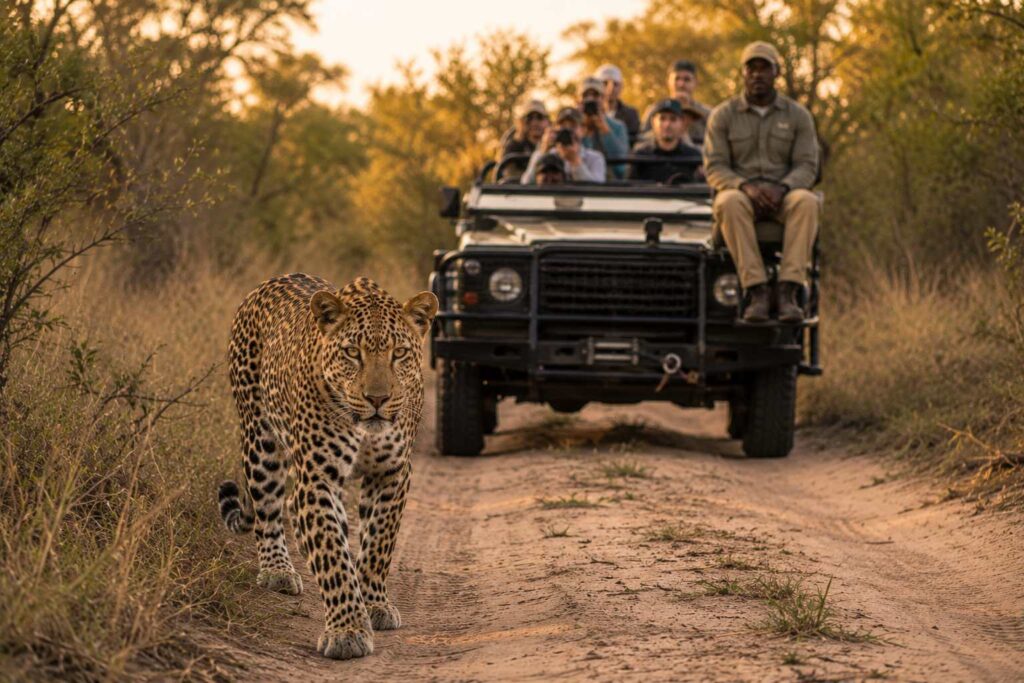
If one species defines Sabi Sand, it is undoubtedly the leopard.
Few places anywhere in Africa offer such reliable leopard sightings.
Several factors contribute to this reputation:
- Decades of responsible wildlife viewing
- Highly skilled Shangaan trackers
- Off-road driving for selected sightings
- Habituated leopard populations
- Strict vehicle regulations
Instead of catching only a brief glimpse, guests often spend extended periods observing leopards resting, hunting, climbing trees, or caring for cubs.
For photographers, wildlife filmmakers, and big cat enthusiasts, Sabi Sand is widely considered one of the best leopard destinations on Earth.
Expert guides and trackers
One of the reserve’s greatest assets is its people.
Each safari vehicle is typically staffed by:
- A professional field guide
- An experienced Shangaan tracker
This partnership combines scientific knowledge with generations of traditional tracking expertise.
Trackers read subtle clues such as:
- Footprints
- Broken vegetation
- Alarm calls
- Fresh scents
- Animal behavior
The result is a safari experience that feels more like participating in a wildlife expedition than simply taking a game drive.
Off-road wildlife viewing
Unlike public national parks, Sabi Sand allows controlled off-road driving for selected wildlife sightings.
This policy enables guides to position vehicles responsibly while minimizing disturbance to the animals.
The benefits include:
- Better photographic angles
- Longer wildlife observations
- Closer—but still respectful—viewing
- Reduced competition for viewing positions
Strict rules ensure that conservation always comes before tourism.
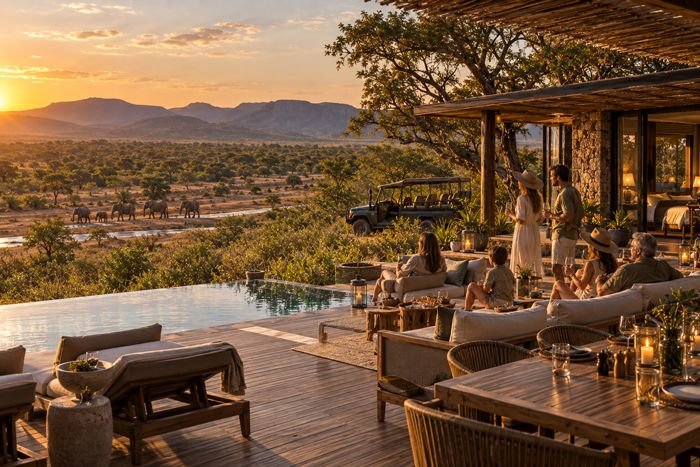
Luxury at every level
Sabi Sand is also synonymous with luxury.
Accommodation ranges from elegant boutique camps to some of Africa’s most celebrated safari lodges.
Many properties feature:
- Spacious suites
- Private plunge pools
- Outdoor showers
- Fine dining
- Spa facilities
- Personalized service
Yet despite their sophistication, the emphasis remains firmly on connecting guests with the surrounding wilderness.
The luxury enhances the safari rather than distracting from it.
Small numbers, big experiences
Another reason Sabi Sand stands apart is its commitment to low-impact tourism.
Unlike larger public parks, visitor numbers remain intentionally limited.
Benefits include:
- Fewer safari vehicles
- Quieter wildlife sightings
- More personalized service
- Greater flexibility during game drives
- A stronger sense of exclusivity
This approach protects both the environment and the quality of the visitor experience.
Walking safaris
Many lodges also offer guided bush walks.
Led by armed professional guides, these excursions focus on:
- Animal tracks
- Plants
- Insects
- Birds
- Ecology
- The smaller details often missed from a vehicle
Walking through the bush provides a completely different appreciation of the Greater Kruger ecosystem.
Availability varies between lodges and depends on weather and wildlife conditions.
Conservation at the heart of the reserve
Sabi Sand’s success isn’t measured only by guest satisfaction.
The reserve has long played an important role in conservation through:
- Habitat protection
- Scientific research
- Wildlife monitoring
- Anti-poaching initiatives
- Community partnerships
Many lodges actively support local education, employment, and conservation projects, ensuring tourism contributes directly to protecting both wildlife and surrounding communities.
When is the best time to visit?
Sabi Sand delivers outstanding safaris throughout the year.
Dry season (May to September)
Expect:
- Cooler temperatures
- Sparse vegetation
- Easier wildlife viewing
- Excellent predator sightings
This is generally regarded as the peak safari season.
Green season (October to April)
Advantages include:
- Lush scenery
- Baby animals
- Migratory birds
- Beautiful photography
- Fewer visitors outside holiday periods
Thanks to experienced guides and trackers, wildlife viewing remains consistently impressive.
Is Sabi Sand worth the higher price?
Compared with a self-drive safari in Kruger National Park, Sabi Sand is undeniably expensive.
However, the price reflects an entirely different style of safari.
You’re paying for:
- World-class guiding
- Expert trackers
- Luxury accommodation
- Small guest numbers
- Off-road wildlife viewing
- Outstanding service
- Exclusive access
For travelers seeking the very best safari experience South Africa has to offer, many consider the investment worthwhile.
Who should choose Sabi Sand?
Sabi Sand is ideal for travelers who:
- Want a luxury safari.
- Love wildlife photography.
- Dream of seeing leopards.
- Prefer guided experiences.
- Are celebrating a honeymoon or special occasion.
- Value personalized service.
Budget-conscious travelers or those who enjoy independent exploration may find Kruger National Park a better fit.
Conclusion
Sabi Sand Game Reserve has earned its reputation as South Africa’s premier private game reserve through a unique combination of exceptional wildlife, world-class guiding, luxury accommodation, and a deep commitment to conservation. While the animals roam freely between Sabi Sand and Kruger National Park, the way visitors experience them is what truly sets the reserve apart.
From unforgettable leopard sightings and expertly guided game drives to intimate lodges and carefully managed tourism, every aspect of a Sabi Sand safari is designed to create meaningful connections with Africa’s wildlife. For travelers seeking the finest safari experience South Africa can offer, Sabi Sand continues to set the benchmark.
For more Greater Kruger guides, safari comparisons, and African travel inspiration, continue exploring the WhySafari blog.
FAQs
Sabi Sand is internationally renowned for its exceptional leopard sightings, luxury lodges, highly skilled guides and trackers, and exclusive safari experiences.
No. It is a private reserve that shares an unfenced boundary with Kruger, allowing wildlife to move freely between the two areas.
Sabi Sand offers guided safaris, off-road wildlife viewing, smaller visitor numbers, luxury accommodation, and a more personalized safari experience.
For travelers seeking expert guiding, luxury, and some of Africa’s best wildlife encounters, many consider it one of the best-value premium safari experiences available.
The dry season from May to September generally offers the easiest wildlife viewing, although excellent safaris are possible year-round.
Yes. Sabi Sand is one of South Africa’s premier Big Five destinations, with excellent opportunities to see all five species.
Three to four nights is ideal, allowing enough time to experience multiple game drives, optional bush walks, and the relaxed pace of lodge life.