Packing for a Serengeti safari is different from preparing for an ordinary vacation. One moment, you might be wrapped in a fleece watching the sunrise over the plains; a few hours later, you’ll be reaching for sunscreen as the African sun warms your safari vehicle.
Between early morning game drives, dusty roads, changing temperatures, and possible luggage restrictions on small aircraft, knowing what to bring can make your adventure considerably more comfortable.
The good news? You don’t need an entirely new wardrobe or expensive outdoor equipment to enjoy Tanzania’s most famous national park.
The ideal Serengeti safari packing list focuses on lightweight clothing, comfortable footwear, sun protection, insect repellent, and a few useful wildlife-viewing accessories.
Whether you’re visiting during the dry season, following the Great Migration, or combining your safari with Zanzibar, this guide explains exactly what to pack for a Serengeti safari—and what you can confidently leave at home.
Serengeti safari packing list: The essentials
Before exploring clothing and equipment in detail, here’s a practical checklist for a typical four- to seven-day safari.
| Category | What to pack |
|---|---|
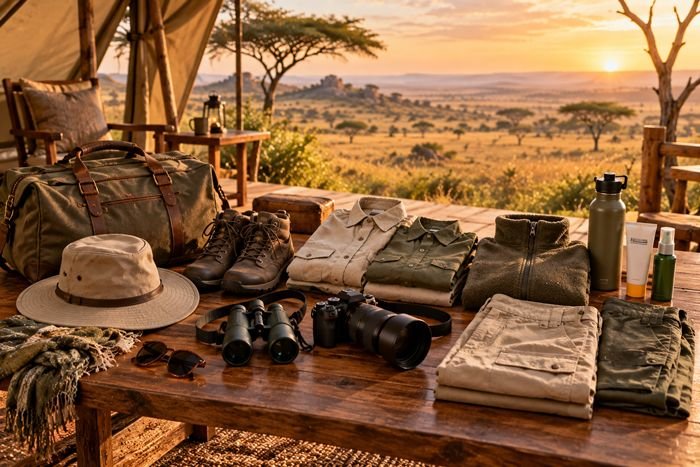
| Clothing | 3–4 lightweight shirts, 2–3 trousers or shorts, fleece, lightweight jacket |
| Footwear | Comfortable closed-toe shoes, sandals |
| Sun protection | Wide-brimmed hat, sunglasses, SPF 30+ sunscreen |
| Wildlife viewing | Binoculars, camera, spare batteries |
| Health essentials | Insect repellent, personal medication, first-aid basics |
| Accessories | Small daypack, reusable water bottle, headlamp |
| Documents | Passport, visa if required, travel insurance, booking confirmations |
| Luggage | Soft-sided duffel bag, especially for domestic flights |
This checklist assumes access to laundry facilities during a longer trip. Adjust quantities according to your accommodation, activities, and travel season.
What clothes should you wear on a Serengeti safari?
Comfort and practicality should guide your safari wardrobe.
Most game drives involve spending several hours seated in a 4×4 vehicle, so lightweight, breathable clothing is more useful than fashionable or heavily structured outfits.
Choose neutral colors
Khaki, beige, olive green, and muted brown are excellent choices for safari clothing.
These colors suit the natural environment, conceal dust reasonably well, and are particularly appropriate for guided walking activities.
Bright white clothing tends to show dirt quickly, while black and dark blue can attract certain biting flies and become uncomfortable in direct sunlight.
Avoid military-style camouflage clothing, which can cause problems in some African countries.
You don’t need to dress entirely in khaki, though. Comfortable everyday clothes in subdued colors work perfectly well for most vehicle-based safaris.
Pack layers for changing temperatures
Although the Serengeti is associated with warm African weather, early mornings can be surprisingly chilly.
The park’s elevation and the cool air experienced in open safari vehicles make a fleece or warm jacket particularly useful.
A simple layering system works best:
- A breathable T-shirt or lightweight long-sleeved shirt.
- A fleece or warm sweater for early mornings.
- A packable windproof or waterproof jacket.
As temperatures rise, you can remove layers without returning to camp.
Long sleeves and trousers also help protect your skin from sunlight and insects.
What shoes do you need for the Serengeti?
For a standard vehicle-based Serengeti safari, comfortable closed-toe shoes are usually sufficient.
Lightweight trainers or walking shoes with good grip work well for game drives, designated rest stops, and moving around camp.
Heavy hiking boots are generally unnecessary unless your itinerary includes guided walking safaris or more demanding outdoor activities.
Bring a pair of sandals or comfortable slip-on shoes for relaxing at your accommodation.
Whatever footwear you choose, wear it before traveling. New shoes can cause blisters, even during relatively short walks.
Essential safari accessories you shouldn’t forget
A few carefully chosen items can make a noticeable difference to your wildlife-viewing experience.
Binoculars
Binoculars are among the most useful things to bring on a Serengeti safari.
Animals aren’t always close to the vehicle. Lions may be resting hundreds of meters away, while leopards can be difficult to distinguish among tree branches.
Compact 8×42 or 10×42 binoculars are popular choices for wildlife viewing.
Even if your guide carries binoculars, having your own means you won’t need to share every time something interesting appears.
Camera and photography equipment
A smartphone is perfectly capable of capturing landscapes, camp life, and some nearby wildlife.
However, a camera with a telephoto lens is helpful if you’re hoping to photograph distant predators or birds.
A zoom lens reaching approximately 200–300mm or more gives you additional flexibility.
Pack spare batteries, memory cards, a protective camera bag, and a cleaning cloth for dust.
Sun and insect protection
The Serengeti’s open landscapes provide limited shade during lengthy game drives.
Bring a wide-brimmed hat, UV-protective sunglasses, and sunscreen with at least SPF 30.
Insect repellent is also important, particularly during warmer or wetter periods.
Some areas have tsetse flies, while mosquitoes present additional concerns around malaria prevention.
Seek personalized advice from a travel-health professional before departure.
What luggage should you take on a Serengeti safari?
Your luggage choice is particularly important if your itinerary includes domestic flights.
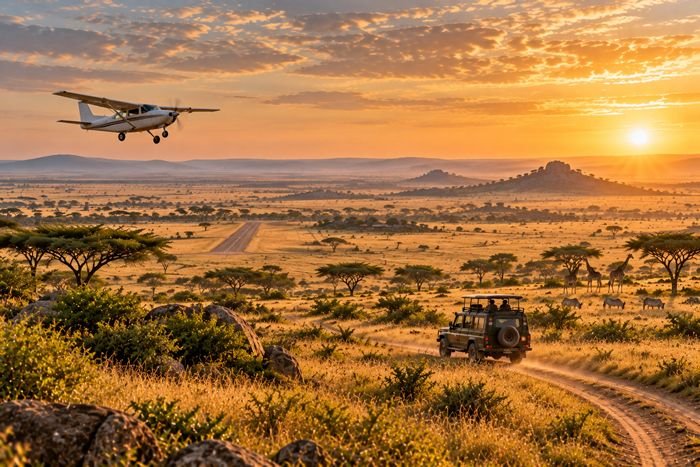
Many light-aircraft safari operators impose baggage limits of approximately 15 kilograms per passenger, including hand luggage, although allowances vary.
Soft-sided duffel bags are often required or strongly recommended because they’re easier to fit into small aircraft compartments.
Hard-shell suitcases can be unsuitable for certain flights.
Choose a durable, lightweight bag and use packing cubes to organize clothing.
A small daypack is useful for carrying sunscreen, binoculars, personal medication, and other essentials during game drives.
Always confirm your airline’s current weight and size restrictions before packing.
What to pack for different Serengeti seasons
Your Serengeti packing list should reflect the time of year you’re visiting.
Dry season: June to October
The dry season generally brings lower rainfall, dusty roads, and cooler early mornings.
Bring a warm fleece, windproof outer layer, sunglasses, and a scarf or buff to protect against dust.
Moisturizer and lip balm can also be useful when conditions are particularly dry.
Green season: November to May
The wetter months bring greener landscapes, occasional heavy rainfall, and potentially muddy conditions.
Pack a lightweight waterproof jacket, quick-drying clothing, and shoes with reliable traction.
Waterproof bags or protective covers are useful for cameras and electronics.
Rainfall varies throughout this season, with April and May generally among the wettest months.
Health essentials and important travel documents
Before traveling, ensure you have your passport, applicable visa, travel insurance documents, and confirmed safari reservations.
Keep digital copies available offline in case internet access becomes unreliable.
Pack prescription medication in its original packaging, along with basic first-aid supplies and any personal medical essentials.
Travelers should consult a healthcare professional about recommended vaccinations, malaria prevention, and applicable entry-related health documentation.
Choose travel insurance that includes emergency medical evacuation, as many safari camps are located far from advanced medical facilities.
For additional convenience, bring a universal power adapter and a power bank, since charging facilities may be limited at some camps.
What should you leave at home?
Packing light is often the smartest approach.
You can usually leave behind formal clothing, excessive toiletries, several pairs of shoes, and bulky equipment you won’t use.
Large hard-shell suitcases are best avoided when flying on small safari aircraft.
Drones shouldn’t be packed for recreational use without confirming the necessary aviation and protected-area permissions.
Tanzania also restricts plastic carrier bags, so choose reusable packing organizers rather than disposable shopping bags.
Finally, resist the temptation to bring too many electronics. A safari is an opportunity to disconnect and appreciate the wilderness.
Packing tips for families and special safari activities
Families should pack familiar snacks, appropriate sun protection, child-sized binoculars, and quiet entertainment for long transfers.
For hot air balloon safaris, bring warm layers and secure footwear because departures happen before sunrise.
Guided walking safaris may require longer trousers, sturdy shoes, and additional insect protection.
If you’re combining the Serengeti with Zanzibar, add lightweight beachwear, swimwear, and suitable coastal clothing without overloading your safari bag.
Ask your accommodation about laundry services before packing extra outfits.
Final thoughts: Pack light and enjoy the Serengeti
Knowing what to pack for a Serengeti safari makes the experience easier, more comfortable, and far less stressful.
You don’t need expensive specialist clothing or a suitcase full of equipment. Neutral-colored layers, reliable footwear, sun and insect protection, binoculars, and the right luggage will cover most of your needs.
Focus on practical essentials, prepare for cool mornings and warm afternoons, and leave space for the unexpected moments that make every safari special.
For more Tanzania travel advice, wildlife guides, and practical safari planning tips, explore the WhySafari blog and get ready for your next African adventure.
Frequently asked questions about packing for a Serengeti safari
Yes, especially around camp or during travel days. However, jeans can feel heavy and uncomfortable in hot weather and take longer to dry after washing. Lightweight trousers are generally more practical for game drives.
Most established lodges and permanent tented camps provide towels, soap, and basic toiletries. Budget campsites may offer fewer amenities. Check your accommodation details before packing bulky bathroom products.
Yes. Small amounts of cash are useful for tips, souvenirs, and incidental expenses. US dollars are widely accepted by many safari businesses, but bills should be in good condition. Tanzanian shillings are useful for smaller local purchases.
A power bank is particularly useful at remote camps where charging facilities operate during limited hours. Keep power banks and spare lithium batteries in your carry-on luggage, following your airline’s battery rules.
If your lodge has a swimming pool, a swimsuit is worth packing. Some luxury properties offer pools overlooking the savanna, providing a relaxing way to spend time between game drives.
Usually not. Most Serengeti lodges have a relaxed dress code, with comfortable trousers, shirts, and casual dresses perfectly acceptable. Some premium properties may recommend smart-casual clothing.
Packaged snacks are generally practical for long transfers, subject to relevant entry and park rules. Never feed wildlife or leave food unattended. Confirm whether your safari operator already provides snacks during game drives.
Yes. Many safari operators provide safe drinking water for refilling bottles, reducing single-use plastic waste. Confirm your operator’s arrangements and never assume untreated tap or natural water sources are safe to drink.