When planning a safari in Kenya, most travelers immediately think of the Masai Mara or Amboseli National Park. Both are world-famous for spectacular wildlife and iconic scenery. Yet farther north lies a destination that offers a completely different safari experience: Samburu National Reserve.
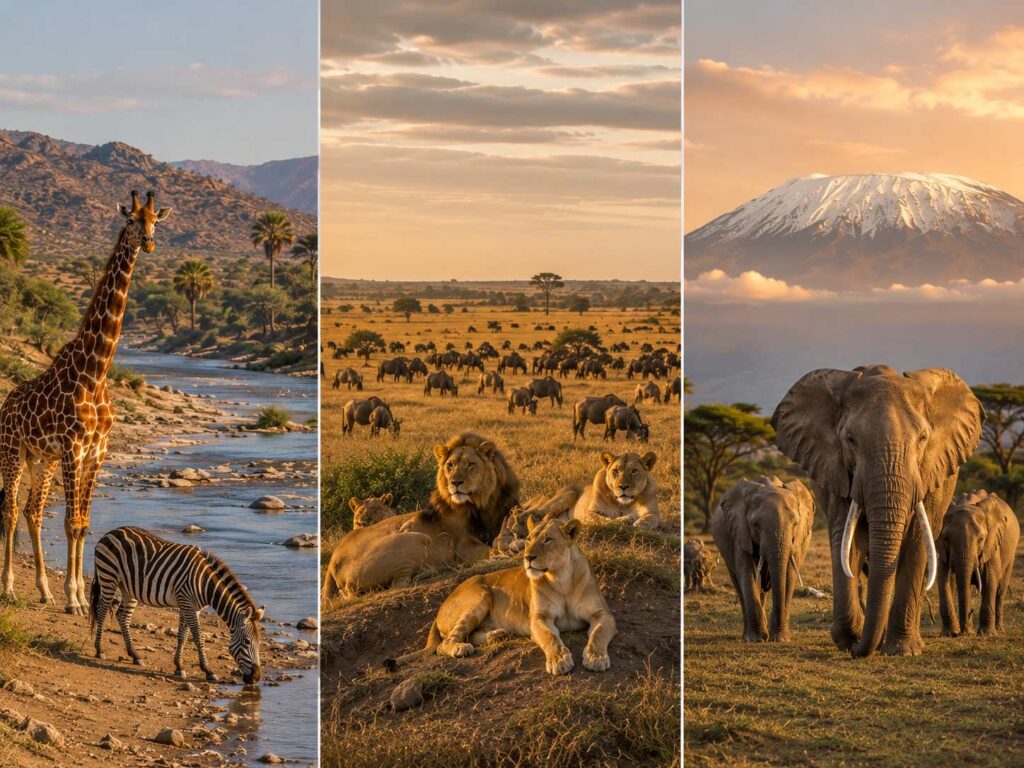
While the Masai Mara is renowned for the Great Migration and predator action, and Amboseli is celebrated for its elephant herds beneath Mount Kilimanjaro, Samburu stands apart with its semi-arid landscapes, unique wildlife species, rich cultural heritage, and quieter atmosphere.
None of these destinations is better than the others—they simply offer different experiences. Choosing the right one depends on what you hope to see, your travel style, and how much time you have in Kenya.
This guide compares Samburu, the Masai Mara, and Amboseli to help you decide which safari destination is the best fit for your trip.
Three parks, three completely different ecosystems
One of Kenya’s greatest strengths is its ecological diversity.
Although all three destinations support exceptional wildlife, their environments are remarkably different.
Samburu National Reserve
Located in northern Kenya, Samburu is defined by dry riverbeds, rocky hills, acacia woodland, doum palms, and the life-giving Ewaso Ng’iro River.
Its hot, semi-arid climate creates a rugged wilderness unlike the greener southern parks.
Masai Mara National Reserve
The Masai Mara consists primarily of open grasslands, rolling plains, seasonal rivers, and scattered acacia trees.
These vast savannahs support some of Africa’s highest concentrations of grazing animals and large predators.
Amboseli National Park
Amboseli is famous for its open plains, marshes, seasonal lakes, and dusty landscapes dominated by spectacular views of Mount Kilimanjaro just across the border in Tanzania.
Permanent wetlands fed by underground springs attract wildlife throughout the year despite the park’s generally dry climate.
The scenery alone makes each destination feel entirely distinct.
Wildlife differences
All three parks offer remarkable game viewing, but their wildlife highlights vary considerably.
Samburu: The Samburu Special Five
Samburu is best known for species rarely seen elsewhere in Kenya.
Visitors come specifically to see the “Samburu Special Five”:
- Grevy’s zebra
- Reticulated giraffe
- Somali ostrich
- Beisa oryx
- Gerenuk
These northern specialists are adapted to arid environments and are difficult to find in the country’s southern parks.
Samburu also supports healthy populations of elephants, lions, leopards, cheetahs, crocodiles, hippos, and numerous bird species.
Masai Mara: Predator paradise
The Masai Mara is famous for its incredible predator density.
Lions, leopards, cheetahs, hyenas, and jackals are commonly seen, while the annual Great Migration brings millions of wildebeest, zebras, and gazelles into the ecosystem between roughly July and October.
If your priority is witnessing dramatic predator-prey interactions or the Migration, the Mara remains unmatched.
Amboseli: Elephant country
Amboseli has earned an international reputation for its enormous elephant herds.
Many elephants here carry some of Africa’s largest tusks, making the park one of the world’s premier destinations for elephant photography.
Visitors also regularly encounter buffalo, giraffes, zebras, wildebeest, hyenas, lions, and an impressive variety of birds.
Landscape and photography
Each destination offers a completely different photographic experience.
Samburu
Photography in Samburu focuses on dramatic light, rugged terrain, unique wildlife, and striking riverine forests.
The reserve’s dry landscapes create beautiful earthy colors that contrast with lush vegetation along the Ewaso Ng’iro River.
Masai Mara
The Mara delivers classic African safari imagery.
Golden grasslands stretching to the horizon, scattered acacia trees, and large herds of wildlife create the iconic safari scenes many travelers imagine before visiting Africa.
Amboseli
Amboseli provides some of the continent’s most recognizable safari photographs.
Large elephants walking across open plains with snow-capped Mount Kilimanjaro towering behind them have become one of Africa’s defining wildlife images.
If scenery is your top priority, Amboseli is difficult to beat on clear mornings.
Crowds and safari atmosphere
The atmosphere differs significantly between the three destinations.
Samburu
Samburu remains relatively uncrowded.
Although visitor numbers have increased in recent years, game drives often feel peaceful, and popular wildlife sightings rarely attract the large number of vehicles sometimes seen elsewhere.
This quieter atmosphere appeals to photographers and travelers seeking a more intimate safari.
Masai Mara
The Masai Mara is Kenya’s most visited safari destination.
During the Great Migration, major river crossings and predator sightings can attract multiple safari vehicles.
Outside peak migration months, the reserve still offers excellent wildlife viewing but generally feels less crowded.
Amboseli
Amboseli sits somewhere between the two.
Popular elephant sightings and Kilimanjaro viewpoints may become busy, particularly during peak travel seasons, but the overall pace is usually calmer than the busiest areas of the Mara.
Cultural experiences
Wildlife is only part of Kenya’s safari appeal.
Samburu culture
The Samburu people maintain distinctive traditions, colorful clothing, and pastoral lifestyles adapted to northern Kenya’s challenging environment.
Many lodges offer opportunities to learn about Samburu customs through respectful community visits and cultural programs.
Maasai culture
Both the Masai Mara and Amboseli are closely associated with the Maasai people.
Visitors can learn about Maasai traditions, cattle herding, music, dance, and community life through village visits organized by responsible safari operators.
While both cultures share historical connections, each community has its own identity and traditions.
Accessibility
The Masai Mara is the easiest destination to include in most Kenya itineraries.
Numerous daily flights from Nairobi serve multiple airstrips throughout the reserve, while road access is also widely available.
Amboseli is similarly accessible, located approximately four to five hours by road from Nairobi, with regular domestic flights available.
Samburu lies farther north.
Road journeys take longer, although scheduled flights significantly reduce travel time and make fly-in safaris increasingly popular.
Which park is best for first-time visitors?
For many first-time safari travelers, the Masai Mara remains the classic choice.
Its exceptional wildlife density, reliable predator sightings, and world-famous landscapes create an unforgettable introduction to African safaris.
If your dream safari includes the Great Migration, the Mara should be at the top of your list.
Who should choose Amboseli?
Amboseli is perfect for travelers who:
- Love elephants.
- Want iconic Kilimanjaro views.
- Enjoy photography.
- Have limited time.
- Want easy access from Nairobi.
The combination of scenery and elephant encounters makes Amboseli one of Kenya’s most rewarding short safari destinations.
Who should choose Samburu?
Samburu is ideal if you:
- Have already visited Kenya’s southern parks.
- Want to see the Samburu Special Five.
- Prefer quieter safari experiences.
- Enjoy birdwatching.
- Love dramatic landscapes.
- Want a different side of Kenya.
Its unique wildlife and peaceful atmosphere reward travelers seeking something beyond the traditional safari circuit.
Can you combine them?
Absolutely.
Many Kenya itineraries successfully combine two or even all three destinations.
A classic itinerary might include:
- Amboseli for elephants and Mount Kilimanjaro.
- Samburu for rare northern species.
- Masai Mara for predators and the Great Migration.
Together, these parks showcase Kenya’s extraordinary ecological diversity and provide one of Africa’s most complete safari experiences.
Conclusion
Samburu, the Masai Mara, and Amboseli each represent a different side of Kenya’s remarkable wildlife heritage.
The Masai Mara offers world-famous predator action and the Great Migration. Amboseli delivers unforgettable elephant encounters beneath Africa’s highest mountain. Samburu rewards adventurous travelers with rare wildlife, dramatic landscapes, rich cultural experiences, and a quieter, more intimate safari atmosphere.
Rather than asking which destination is best, consider which experience best matches your interests. If your itinerary allows, combining two or more of these extraordinary parks creates an unforgettable journey through one of Africa’s greatest safari countries.
For more Kenya destination guides, safari comparisons, and expert travel planning advice, continue exploring the WhySafari blog.
FAQs
The Samburu Special Five includes Grevy’s zebra, reticulated giraffe, Somali ostrich, Beisa oryx, and gerenuk—species primarily found in northern Kenya.
The Masai Mara is Kenya’s premier destination for witnessing the Great Migration, typically between July and October.
Yes. Samburu supports a healthy elephant population, although Amboseli is generally considered Kenya’s top destination for elephant viewing.
Samburu is usually the quietest of the three, offering a more exclusive and peaceful safari experience.
Yes. Although many first-time travelers choose the Masai Mara, Samburu offers excellent wildlife, beautiful scenery, and a more off-the-beaten-path experience.
Each excels in different ways. Amboseli is famous for elephant and Kilimanjaro images, the Masai Mara for predator action and the Great Migration, and Samburu for unique wildlife and dramatic semi-arid landscapes.
Three nights is ideal for enjoying multiple game drives, increasing your chances of seeing the Samburu Special Five while experiencing the reserve’s relaxed atmosphere.