Samburu National Reserve is one of Kenya’s most rewarding safari destinations, known for its rugged landscapes, rare wildlife, and quieter atmosphere compared to the country’s southern parks. Although it lies farther from Nairobi than famous destinations like Amboseli or the Masai Mara, reaching Samburu is easier than many first-time visitors expect.
Travelers can choose between a scenic road journey through central Kenya or a quick domestic flight that brings them close to the reserve in under an hour. Each option offers different advantages depending on your budget, itinerary, and travel style.
This guide explains how to get to Samburu National Reserve by road or air, helping you decide which option is best for your safari.
Where is Samburu National Reserve?
Samburu National Reserve is located in northern Kenya, approximately 310 kilometers (193 miles) north of Nairobi.
The reserve lies along the banks of the Ewaso Ng’iro River, which creates a ribbon of green through an otherwise semi-arid landscape. Samburu forms part of a larger protected ecosystem together with Buffalo Springs National Reserve and Shaba National Reserve.
Because of its northern location, Samburu feels noticeably more remote than many of Kenya’s other safari destinations—one of the reasons it remains less crowded and especially appealing to travelers seeking a quieter safari.
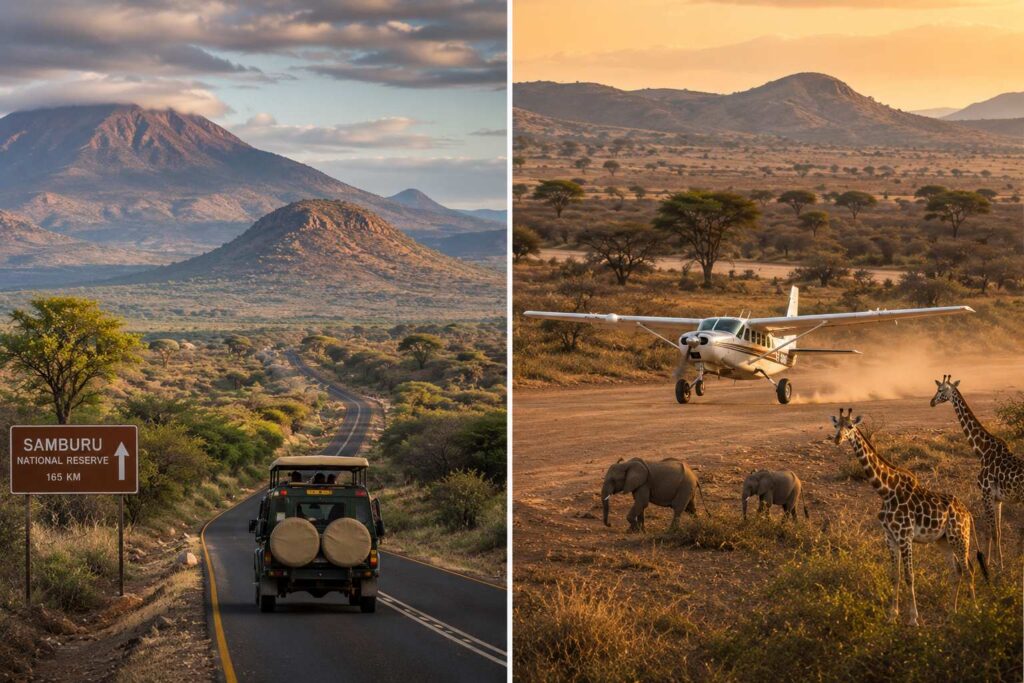
Traveling to Samburu by road
Driving from Nairobi is the most popular option for visitors combining Samburu with other parts of Kenya.
The journey generally takes between five and six hours, depending on traffic, weather, and road conditions.
Most routes follow well-maintained paved highways through Kenya’s central highlands before continuing north toward Isiolo and Archer’s Post, the main gateway to the reserve.
Along the way, travelers pass:
- Coffee plantations
- Tea-growing regions
- Small farming towns
- Scenic mountain landscapes
- Rural communities
- The transition into Kenya’s drier northern savannah
The drive itself offers an interesting introduction to the country’s changing geography.
Is the road suitable for self-driving?
Yes, many visitors choose to self-drive to Samburu.
The main roads from Nairobi are generally in good condition, although the final stretch approaching the reserve may include rougher surfaces depending on current maintenance and seasonal weather.
A standard SUV is usually comfortable for the journey, while travelers planning to explore multiple remote reserves often prefer a four-wheel-drive vehicle.
If you choose to self-drive:
- Start early from Nairobi.
- Avoid driving after dark.
- Keep fuel topped up before reaching northern Kenya.
- Carry offline navigation as mobile coverage can vary.
Many international visitors, however, prefer hiring a driver-guide, allowing them to relax and enjoy the scenery while benefiting from local knowledge.
Joining a guided road safari
One of the easiest ways to reach Samburu is as part of an organized safari.
Many tour operators offer multi-day itineraries departing from Nairobi that combine transportation, accommodation, park fees, meals, and game drives into a single package.
Guided road safaris often include stops at scenic viewpoints, local markets, or cultural attractions during the drive north, turning the transfer itself into part of the travel experience.
This option is especially convenient for first-time visitors unfamiliar with driving in Kenya.
Flying to Samburu
Travelers with limited time often choose to fly.
Several domestic airlines operate scheduled flights from Nairobi’s Wilson Airport to airstrips serving the Samburu region.
Flight time is typically around one hour.
Depending on your accommodation, your lodge or safari operator will arrange a short game-drive transfer from the airstrip to camp. Wildlife sightings frequently begin immediately after landing, making the journey part of the safari itself.
Flying allows visitors to maximize time in the reserve while avoiding a full day on the road.
Which airstrips serve Samburu?
Several airstrips provide access to lodges throughout the reserve and surrounding conservancies.
The exact arrival point depends on where you’re staying, but safari operators coordinate transfers directly with guests and domestic airlines.
Because small aircraft often make multiple stops en route, total travel time may vary slightly depending on your itinerary.
Baggage restrictions are also common on light aircraft, so soft-sided luggage is usually required.
Road vs air: Which is better?
Both options have clear advantages.
Choose the road if you:
- Have more time.
- Want a lower overall travel cost.
- Enjoy scenic road trips.
- Plan to combine Samburu with destinations along the route.
- Prefer flexible travel.
Driving also provides a better appreciation of Kenya’s changing landscapes and rural communities.
Choose a flight if you:
- Have limited vacation time.
- Want to maximize safari activities.
- Prefer comfort and convenience.
- Are combining several fly-in safari destinations.
- Don’t enjoy long road journeys.
Many luxury safari itineraries use flights to reduce travel time between parks.
Can you combine Samburu with other safari destinations?
Absolutely.
Samburu combines particularly well with several of Kenya’s best-known safari regions.
Popular combinations include:
- Samburu and the Masai Mara
- Samburu and Amboseli
- Samburu and Laikipia
- Samburu and Lake Nakuru
- Samburu with the Kenyan coast via Nairobi
Fly-in safaris make these combinations especially efficient, while road itineraries allow travelers to experience more of Kenya’s diverse landscapes.
Best time to travel
Samburu is accessible throughout the year.
During the dry seasons—typically January to March and June to October—roads are generally in excellent condition and wildlife viewing is at its best as animals gather around permanent water sources.
The rainy seasons may occasionally make some smaller roads slower to navigate, but the reserve remains open and continues to offer rewarding safari experiences.
If you’re traveling by road during wetter months, allow additional time for the journey.
Tips for a smooth journey
Whether traveling by road or air, a little preparation makes the trip easier.
Before departure:
- Confirm your lodge’s transfer arrangements.
- Carry plenty of drinking water.
- Pack soft luggage if flying.
- Bring binoculars and your camera in your hand luggage.
- Start road journeys early in the morning.
- Keep passports and travel documents easily accessible.
If you’re flying, remember that luggage weight limits are generally stricter on safari aircraft than on international flights.
Which option suits your travel style?
Choose road travel if you enjoy:
- Independent travel.
- Scenic landscapes.
- Lower travel costs.
- Flexible itineraries.
- Discovering Kenya beyond the safari parks.
Choose air travel if you prefer:
- Luxury safaris.
- Shorter travel times.
- Maximum wildlife viewing.
- Multi-park itineraries.
- Greater comfort.
Neither option is wrong—it simply depends on how you want your safari journey to unfold.
Conclusion
Reaching Samburu National Reserve is straightforward whether you choose to travel by road or air. A road journey offers an opportunity to experience Kenya’s diverse landscapes and communities while keeping travel costs lower. Flying provides speed, comfort, and more time to enjoy one of the country’s most distinctive safari destinations.
Whichever option you choose, the reward is the same: exceptional wildlife, stunning semi-arid scenery, fewer crowds, and the chance to discover a side of Kenya that many visitors overlook.
For more Kenya travel guides, safari planning advice, and destination comparisons, continue exploring the WhySafari blog.
FAQs
The reserve is approximately 310 kilometers (193 miles) north of Nairobi. The drive usually takes five to six hours, while flights take around one hour.
Yes, especially if you have limited time or are combining several safari destinations. Flying maximizes your time in the reserve and reduces travel fatigue.
Yes. Most of the route follows good paved roads, making self-driving a popular option for confident travelers.
Most domestic safari flights to Samburu depart from Wilson Airport rather than Jomo Kenyatta International Airport.
Yes. Most lodges arrange game-drive transfers between the local airstrip and your accommodation as part of your booking.
Absolutely. Many safari itineraries include both destinations, either by domestic flight or via Nairobi.
Not always. Standard SUVs generally handle the main route well, although a 4×4 can be beneficial if you plan to explore more remote areas or travel during the rainy season.