Today, Madikwe Game Reserve is one of South Africa’s premier safari destinations, celebrated for its Big Five wildlife, thriving populations of endangered species, and luxury lodges. Yet only a few decades ago, this remarkable landscape looked very different.
Instead of abundant wildlife, much of the area consisted of degraded farmland where agriculture had struggled for years. Native animals had largely disappeared, ecosystems had been altered, and economic opportunities for surrounding communities were limited.
The transformation of Madikwe is now considered one of Africa’s greatest conservation achievements. Through ambitious wildlife restoration, community partnerships, and sustainable tourism, an unproductive farming region became a world-class protected area that benefits both nature and local people.
Here’s the story of how Madikwe Game Reserve became one of Africa’s most inspiring conservation success stories.
From struggling farmland to protected wilderness
Located in South Africa’s North West Province along the border with Botswana, Madikwe covers approximately 75,000 hectares (185,000 acres), making it one of the country’s largest protected wildlife reserves.
Before becoming a game reserve, much of the land was used for cattle ranching and marginal farming. Poor soils, low rainfall, and recurring droughts made agriculture increasingly unsustainable, leaving large areas economically unproductive.
Recognizing both the environmental and economic potential of the region, the South African government launched an ambitious restoration project during the early 1990s. Rather than continuing to subsidize failing farms, authorities decided to restore the land to its natural state and create a conservation-based economy centered on wildlife tourism.
The decision would reshape the landscape for generations to come.
Operation Phoenix: One of Africa’s largest wildlife relocations
The heart of Madikwe’s transformation was Operation Phoenix, an extraordinary wildlife reintroduction initiative carried out between 1991 and 1997.
Thousands of animals representing more than two dozen species were carefully relocated from parks and reserves across southern Africa into the newly protected ecosystem. The operation included elephants, white rhinos, black rhinos, buffalo, giraffes, zebras, antelope, predators, and numerous smaller mammals.
At the time, it was one of the largest wildlife translocation projects ever attempted on the continent.
Rather than introducing animals randomly, conservationists carefully planned each release to restore balanced ecological relationships. Herbivores were introduced first to establish healthy grazing populations, followed by predators once prey numbers became sustainable.
The project demonstrated that severely altered landscapes could recover when restoration was guided by sound ecological science.
Restoring an entire ecosystem
Wildlife relocation alone could never guarantee long-term success. Conservation teams also focused on restoring natural habitats and allowing ecological processes to recover.
As farming infrastructure was removed, native grasses, shrubs, and trees gradually regenerated. Seasonal rivers and wetlands once again supported a rich diversity of birds, reptiles, insects, and mammals.
Because Madikwe lies within a transition zone between the Kalahari and bushveld ecosystems, it supports an unusually wide range of habitats. Open grasslands, rocky hills, woodland, and riverine vegetation create excellent conditions for diverse wildlife communities.
Today, visitors often encounter multiple species within a single game drive thanks to this ecological variety.
A safe haven for endangered African wild dogs
One of Madikwe’s greatest conservation achievements has been its role in protecting African wild dogs.
These highly social predators are among Africa’s most endangered carnivores, facing habitat loss, human conflict, and disease across much of their historic range.
Madikwe now supports one of South Africa’s healthiest wild dog populations. Careful monitoring by conservation teams helps maintain pack health, genetic diversity, and breeding success.
For safari visitors, Madikwe has become one of the continent’s best places to observe these fascinating animals, whose cooperative hunting behavior and complex family dynamics make them a favorite among wildlife enthusiasts.
The reserve’s success demonstrates how carefully managed protected areas can play an important role in recovering threatened species.
Conservation and tourism working together
Madikwe was designed with sustainable tourism at its core.
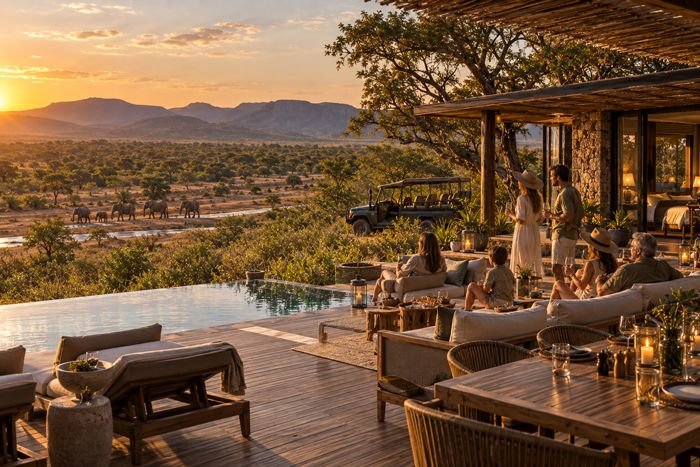
Unlike some larger national parks with heavy visitor traffic, Madikwe limits tourism through privately operated lodges that work under conservation-focused management agreements. This approach helps reduce environmental pressure while providing high-quality safari experiences.
Revenue generated through tourism supports reserve management, anti-poaching operations, habitat protection, wildlife monitoring, and community development initiatives.
Because visitor numbers remain relatively low compared to many other safari destinations, guests often enjoy quieter wildlife sightings and a more exclusive safari experience.
This balance between conservation and tourism has become one of Madikwe’s defining strengths.
Community partnerships at the heart of success
Perhaps the most important aspect of Madikwe’s story is its commitment to benefiting nearby communities.
From the beginning, the reserve was intended to generate employment and economic opportunities in an area where farming had provided limited long-term prosperity.
Today, local residents work as guides, hospitality staff, trackers, conservation personnel, maintenance teams, and lodge employees. Many lodges also support education programs, healthcare initiatives, enterprise development, and skills training within neighboring communities.
By creating economic value through conservation rather than agriculture, Madikwe has helped demonstrate that wildlife can become a sustainable local asset rather than a competing land use.
This community-centered approach has become a model for conservation projects elsewhere in Africa.
Anti-poaching and wildlife protection
Like many African reserves, Madikwe faces ongoing threats from wildlife crime, particularly rhino poaching.
To protect its animals, reserve management invests heavily in anti-poaching strategies that combine trained ranger patrols, surveillance technology, intelligence gathering, and cooperation with law enforcement agencies.
Veterinary teams also monitor wildlife health while researchers collect valuable ecological data that guides future conservation decisions.
Although protecting endangered species remains an ongoing challenge across Africa, Madikwe’s proactive management has contributed to strong wildlife populations and continued ecological recovery.
Why Madikwe is malaria-free
One feature that makes Madikwe particularly attractive to international visitors is its malaria-free status.
Unlike several famous safari destinations in southern Africa, Madikwe lies outside South Africa’s primary malaria-risk zone. This allows many travelers—including families with young children, older adults, and those who prefer to avoid malaria medication—to enjoy a classic Big Five safari with fewer health concerns.
Being malaria-free does not eliminate the need for normal travel health precautions, but it is an important advantage for many visitors planning their first African safari.
Wildlife highlights today
Thanks to decades of careful management, Madikwe now supports an impressive diversity of wildlife.
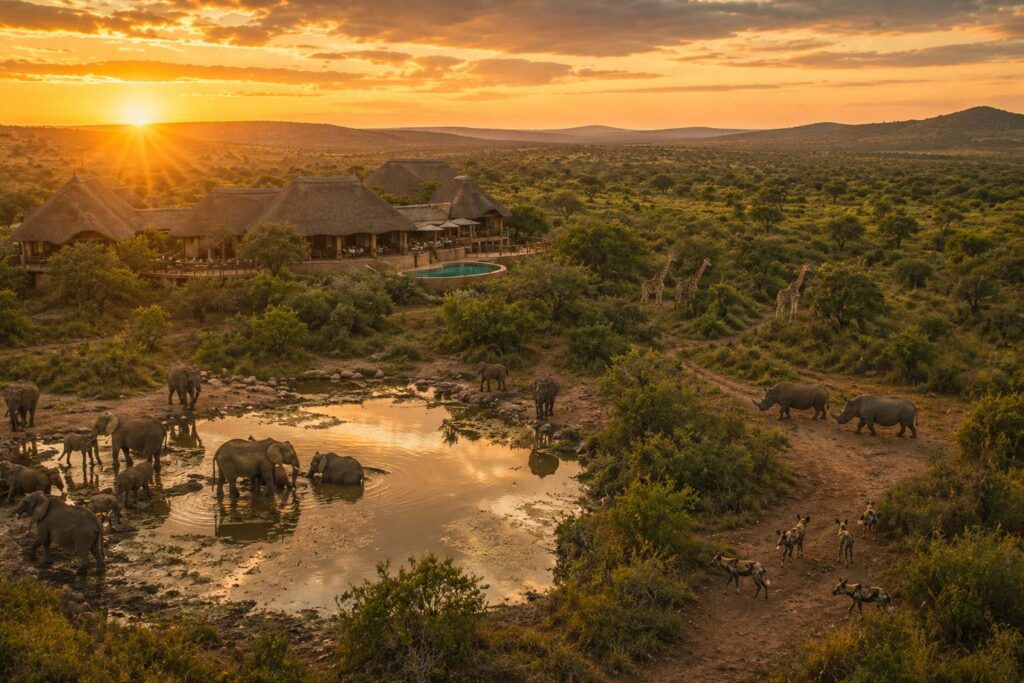
The reserve is home to the Big Five—lion, leopard, elephant, rhino, and buffalo—as well as cheetahs, African wild dogs, spotted hyenas, giraffes, zebras, numerous antelope species, and more than 350 recorded bird species.
Its varied habitats provide outstanding year-round game viewing, while relatively limited visitor numbers create a more intimate safari atmosphere than many larger parks.
Photographers, birdwatchers, families, and first-time safari travelers all benefit from the reserve’s exceptional wildlife diversity.
Lessons from Madikwe’s conservation journey
Madikwe’s story offers important lessons for conservation worldwide.
It shows that degraded landscapes can recover when ecological restoration is supported by long-term planning, scientific management, government commitment, private investment, and local community involvement.
It also demonstrates that wildlife conservation and economic development do not have to compete. When tourism is responsibly managed, healthy ecosystems can generate employment, education, and sustainable livelihoods while protecting biodiversity.
More than three decades after its creation, Madikwe stands as living proof that conservation success is possible through collaboration and patience.
Conclusion
Madikwe Game Reserve has evolved from struggling farmland into one of Africa’s finest conservation success stories. Through Operation Phoenix, ecosystem restoration, endangered species protection, community partnerships, and sustainable tourism, it has become both a thriving wildlife sanctuary and a model for modern conservation.
For travelers, Madikwe offers more than exceptional game viewing. Every safari contributes to a long-term vision where wildlife, people, and tourism support one another. It’s a destination that reminds us conservation isn’t only about protecting nature—it’s about restoring landscapes and creating opportunities for future generations.
For more destination guides, conservation stories, and expert safari planning advice, continue exploring the WhySafari blog.
FAQs
Operation Phoenix was the massive wildlife reintroduction program that relocated thousands of animals into Madikwe between 1991 and 1997, helping restore the reserve’s natural ecosystem.
No. Madikwe Game Reserve is publicly owned and managed through a partnership model involving government authorities, private tourism operators, and local communities.
The reserve supports one of South Africa’s most successful and closely monitored African wild dog populations, making it one of the best places to see this endangered species.
Yes. Excellent wildlife viewing, luxury accommodations, relatively low visitor numbers, and malaria-free status make it an outstanding choice for first-time safari travelers.
Yes. Lions, leopards, elephants, rhinos, and buffalo all occur naturally within the reserve, alongside many other iconic African species.
Safari tourism funds wildlife management, anti-poaching operations, habitat restoration, research, community employment, and local development projects.
Wildlife viewing is excellent throughout the year, although the dry winter months generally offer easier game spotting as animals gather around water sources.