Kruger National Park is one of Africa’s largest and most diverse safari destinations. Stretching nearly 350 kilometers (220 miles) from south to north, the park encompasses a remarkable variety of landscapes, habitats, and wildlife experiences. While many first-time visitors think of Kruger as a single destination, the reality is that each region offers a distinct safari atmosphere.
One of the most common questions travelers ask is whether they should spend their safari in southern Kruger or head north into its quieter wilderness. The answer depends on what kind of safari experience you’re looking for.
Southern Kruger is famous for exceptional Big Five sightings, dense wildlife populations, and easy accessibility. Northern Kruger, meanwhile, rewards visitors with solitude, unique ecosystems, rare species, and a stronger feeling of exploring untouched wilderness.
In this guide, we’ll compare the southern and northern regions of Kruger National Park to help you choose the area that best matches your travel style.
Understanding Kruger’s geography
Kruger National Park covers almost 20,000 square kilometers (7,700 square miles), making it larger than many countries. Rainfall, vegetation, river systems, and elevation all change as you travel north, creating different habitats that support different wildlife communities.
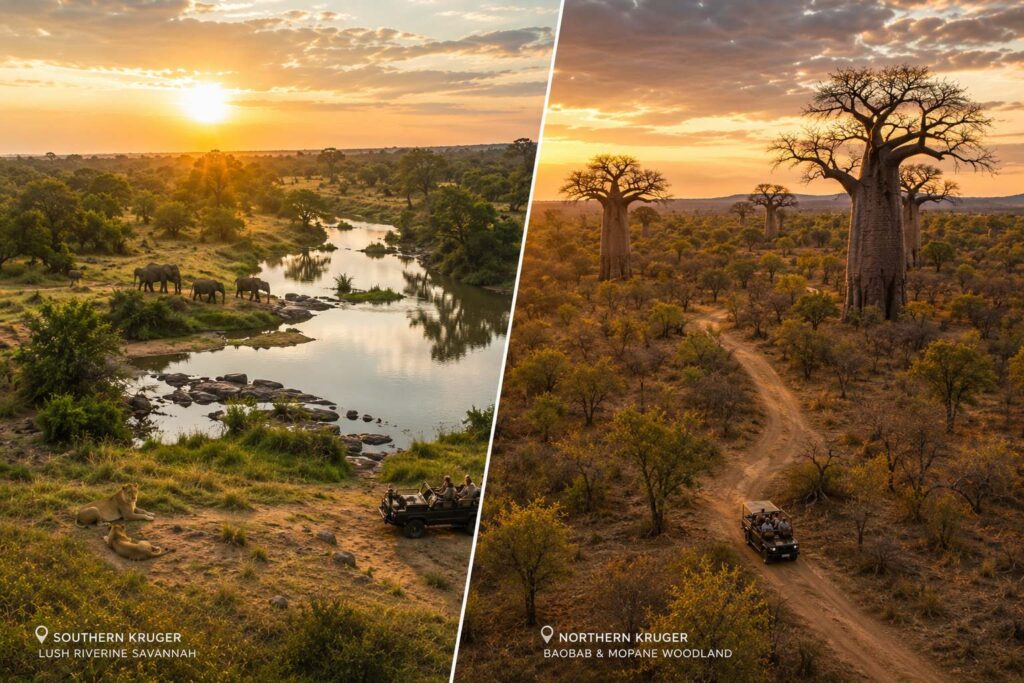
The southern section generally receives higher rainfall, resulting in denser vegetation and abundant grazing areas. Several permanent rivers—including the Sabie and Crocodile Rivers—attract wildlife year-round.
Northern Kruger becomes progressively drier and more open in places, with mopane woodlands, baobab trees, fever tree forests, and seasonal river systems dominating the landscape. These environmental differences shape the safari experience far more than many visitors expect.
Southern Kruger: Wildlife density at its best
For many travelers, southern Kruger delivers the classic African safari.
The area between Crocodile Bridge, Lower Sabie, Skukuza, Berg-en-Dal, and Satara consistently produces some of the park’s highest wildlife densities. Water is plentiful, grazing conditions are excellent, and predator populations thrive alongside large herds of antelope, zebra, buffalo, and elephants.
Game drives often include multiple exciting sightings within a single morning. Lions resting beside the road, elephants crossing rivers, leopards lounging in trees, and large herds of impala are all relatively common.
If your dream safari focuses on maximizing wildlife encounters, southern Kruger is difficult to beat.
Northern Kruger: A wilderness experience
Northern Kruger offers something completely different.
Visitor numbers decline dramatically as you travel farther north, creating a peaceful safari experience where long stretches of road may be shared with only a handful of vehicles.
Instead of constant animal sightings, the focus shifts toward landscapes, birdlife, and the feeling of true wilderness. Ancient baobab trees, vast mopane forests, seasonal floodplains, and remote river valleys create a sense of isolation rarely found in more popular safari destinations.
Wildlife remains abundant, but animals are generally more dispersed across larger habitats, requiring patience and rewarding slower exploration.
For experienced safari travelers, this quieter atmosphere is often the region’s greatest attraction.
Comparing wildlife sightings
Southern Kruger
Southern Kruger generally offers:
- Excellent Big Five opportunities
- High predator density
- Large elephant and buffalo herds
- Frequent leopard sightings
- Reliable game viewing throughout the year
The concentration of permanent water sources supports consistently high wildlife numbers, making this area ideal for first-time safari visitors.
Northern Kruger
Northern Kruger offers a different wildlife profile.
While all of the Big Five occur in the north, sightings may require more time and patience. In return, visitors often encounter species less commonly seen farther south.
Highlights include:
- Large elephant populations
- Excellent birdwatching
- Nyala
- Sharpe’s grysbok
- Pel’s fishing owl (rare)
- Saddle-billed storks
- Numerous raptor species
Wildlife viewing becomes less about quantity and more about discovering unusual species and appreciating natural behaviors in quieter surroundings.
Landscape diversity
One of Kruger’s greatest strengths is its remarkable ecological variety.
Southern Kruger features:
- Rolling grasslands
- Acacia savannah
- Riverine forests
- Granite hills
- Permanent rivers
These landscapes create classic safari scenery with excellent visibility around waterholes and open plains.
Northern Kruger presents a noticeably different character.
Visitors encounter:
- Giant baobab trees
- Extensive mopane woodland
- Fever tree forests
- Sandveld habitats
- Broad river systems such as the Luvuvhu and Limpopo
Photographers often appreciate the north for its dramatic scenery and changing light rather than simply focusing on wildlife.
Birdwatching: A northern advantage
Bird enthusiasts often favor northern Kruger.
The region supports several species that are difficult or impossible to find farther south, particularly around the Luvuvhu River and Pafuri area.
The combination of riverine forest, woodland, and open habitats attracts hundreds of resident and migratory bird species throughout the year.
Southern Kruger is also excellent for birding, but northern habitats provide access to several localized specialties that make the journey worthwhile for serious birdwatchers.
Accessibility and travel logistics
Southern Kruger is considerably easier to reach.
Major airports near Nelspruit (Mbombela), Skukuza, and Kruger Mpumalanga International Airport provide convenient access, while excellent road infrastructure connects the southern entrance gates.
Travel times between camps are generally shorter, making itinerary planning more flexible.
Northern Kruger requires longer driving distances, particularly if entering from southern gates. Travelers should plan additional travel time and consider overnight stops if exploring multiple regions.
Those seeking a relaxed pace often spend several nights in one northern camp rather than attempting to cover large distances each day.
Accommodation choices
Southern Kruger offers the park’s widest selection of accommodations.
Visitors can choose from:
- Large rest camps
- Family-friendly accommodations
- Luxury safari lodges
- Private concessions
- Budget camping facilities
Competition among accommodation providers also creates options for a wide range of budgets.
Northern Kruger has fewer camps, resulting in a quieter and more intimate experience. While luxury options exist, many travelers appreciate the region’s peaceful atmosphere and smaller visitor numbers rather than extensive resort-style facilities.
Which region is better for first-time safari visitors?
For most first-time visitors, southern Kruger is the better choice.
The combination of excellent roads, frequent wildlife sightings, diverse accommodation, and easy accessibility makes it easier to experience the excitement of an African safari without extensive planning.
Visitors hoping to see the Big Five within a relatively short stay will generally enjoy greater success in the south.
Who should choose northern Kruger?
Northern Kruger is ideal for travelers who value immersion over checklist wildlife viewing.
You may prefer the north if you:
- Have already visited Kruger before.
- Enjoy birdwatching.
- Love landscape photography.
- Prefer quiet roads and fewer vehicles.
- Appreciate slower-paced safaris.
- Want to explore remote wilderness.
For many experienced safari enthusiasts, northern Kruger represents the park at its most authentic.
Can you combine both regions?
Absolutely.
Travelers with a week or more can enjoy the best of both worlds by combining southern and northern Kruger into one itinerary.
Begin with several nights in the south to maximize wildlife sightings before continuing north to experience quieter landscapes and different ecosystems.
This combination highlights just how diverse Kruger National Park truly is and offers a richer understanding of South Africa’s largest protected area.
Conclusion
Southern and northern Kruger each deliver exceptional safari experiences, but they appeal to different travel styles.
Southern Kruger is the ideal destination for first-time visitors, families, photographers seeking frequent wildlife encounters, and anyone hoping to maximize Big Five sightings. Northern Kruger offers something more contemplative: remote wilderness, spectacular landscapes, outstanding birdlife, and a slower safari rhythm that rewards patience.
Ultimately, neither region is objectively better—they simply offer different ways to experience one of Africa’s greatest national parks. If time allows, combining both regions creates the most complete Kruger adventure.
For more destination comparisons, safari planning advice, and insider travel guides, continue exploring the WhySafari blog.
FAQs
Yes. Southern Kruger generally attracts more visitors due to its accessibility and consistently excellent wildlife viewing, particularly around popular camps such as Skukuza and Lower Sabie.
Yes. All Big Five species occur in northern Kruger, although sightings are generally less frequent because wildlife is more widely dispersed.
It depends on your interests. Southern Kruger excels for dramatic wildlife encounters, while northern Kruger offers striking landscapes, unique trees, and exceptional bird photography.
If combining both, consider four to five days in southern Kruger and three to four days in the north for a balanced itinerary.
Yes. Roads are well maintained, although distances between camps are greater and services are less frequent than in the south.
Northern Kruger is generally considered one of the park’s premier birding destinations due to its diverse habitats and several localized specialty species.
Private reserves in Greater Kruger often provide off-road game drives and luxury lodges, while Kruger National Park offers excellent self-drive opportunities and greater flexibility. The best choice depends on your budget and preferred safari style.