For many safari travelers, seeing Africa from the comfort of a game vehicle is unforgettable. But for those looking to experience the bush in a deeper, more immersive way, few adventures compare to a multi-day walking safari in Zambia’s South Luangwa.
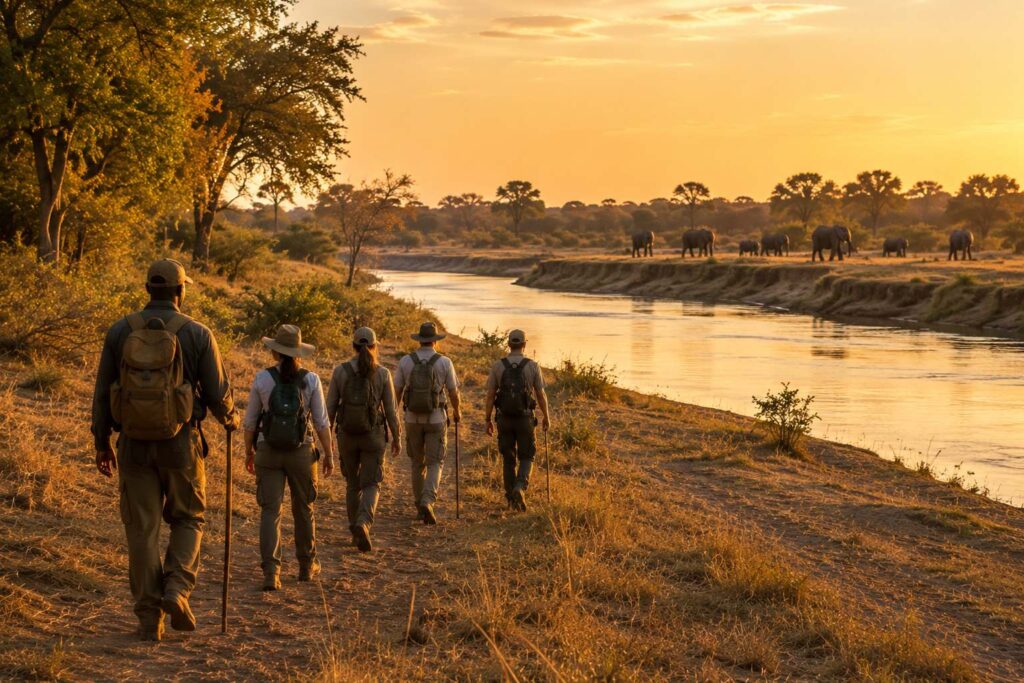
Widely regarded as the birthplace of the modern walking safari, South Luangwa National Park offers an experience that shifts your perspective completely. Instead of covering long distances by vehicle, you explore the wilderness on foot, moving quietly through landscapes shared with elephants, giraffes, antelope, buffalo, and predators. Every track, bird call, and broken branch becomes part of the story.
A multi-day bush walk isn’t about hiking long distances or chasing the Big Five. It’s about slowing down, learning to observe the finer details of nature, and discovering the rhythm of one of Africa’s wildest ecosystems.
Here’s what it’s really like to spend several days walking through South Luangwa.
Why South Luangwa is famous for walking safaris
South Luangwa National Park, in eastern Zambia, has earned a global reputation as one of the finest walking safari destinations in Africa.
The park’s history is closely linked to pioneering guides who developed the concept of professionally guided walking safaris decades ago. Rather than simply viewing wildlife from vehicles, they believed guests could gain a far richer understanding of the bush by exploring it on foot.
Today, that philosophy remains at the heart of the South Luangwa experience.
Highly trained walking guides combine deep ecological knowledge with exceptional wildlife awareness, allowing visitors to experience the park safely while learning how every part of the ecosystem is connected.
A different pace from traditional safaris
One of the first things you’ll notice is how much slower everything feels.
Game drives often cover dozens of kilometers in search of wildlife. On a walking safari, you may cover only a few miles over several hours.
Instead of constantly looking for large animals, your guide encourages you to notice details that are easy to overlook from a vehicle.
You might stop to examine fresh leopard tracks pressed into soft sand, learn how termites shape the landscape, identify medicinal plants used by local communities, or listen to alarm calls that reveal hidden predators nearby.
The journey itself becomes the destination.
What a typical day looks like
Although every itinerary varies, most multi-day bush walks follow a similar rhythm.
The day begins before sunrise with coffee or tea around the campfire. After a light breakfast, the group sets out while temperatures are still cool and wildlife is active.
Morning walks generally last three to four hours, with regular stops to observe tracks, birds, insects, and mammals. The pace is unhurried, giving everyone time to absorb their surroundings.
Around midday, guests arrive at the next remote bush camp or return for lunch, followed by a well-earned rest during the hottest part of the day.
Late afternoon often includes another shorter walk or a relaxed game drive before dinner beneath the stars.
Each evening ends around the campfire, where guides share stories, answer questions, and prepare guests for the following day’s adventure.
The wildlife encounters are surprisingly intimate
Walking through big game country naturally raises questions about safety, but experienced guides carefully manage every encounter.
Rather than seeking close approaches, guides constantly read animal behavior, wind direction, terrain, and escape routes.
Most wildlife prefers to avoid humans. Elephants may quietly feed in the distance, giraffes watch curiously before moving away, and antelope often detect your presence long before you notice them.
Predator encounters are less common than many first-time visitors imagine, but when they happen, they are unforgettable. Watching lions from a respectful distance while standing silently beside your guide creates a level of connection that feels entirely different from viewing them through a vehicle window.
The emphasis is always on observing without disturbing.
Learning to read the bush
Perhaps the greatest reward of a walking safari is learning how to interpret the landscape.
Guides teach guests to recognize fresh tracks, animal droppings, feeding signs, nesting sites, bird calls, and subtle changes in vegetation.
Soon, the bush begins to reveal its hidden stories.
A line of footprints might show where elephants crossed during the night. Fresh scratches on a tree may indicate a leopard’s territory. Alarm calls from monkeys can signal the presence of a predator long before it’s visible.
By the end of several days, many travelers find themselves noticing details they would never have recognized at the beginning of the trip.
Staying in remote bush camps
A multi-day walking safari usually involves moving between small seasonal bush camps.
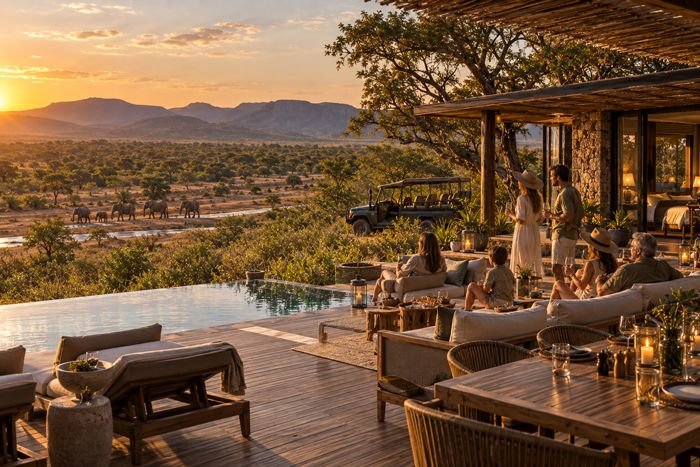
These camps are intentionally simple, allowing guests to remain immersed in nature while still enjoying comfortable beds, excellent meals, and warm hospitality.
Electricity is often limited, Wi-Fi is rare or nonexistent, and evenings are illuminated by lanterns and campfires rather than bright lights.
Far from feeling like a sacrifice, this simplicity becomes one of the experience’s greatest luxuries. Without constant digital distractions, it’s easier to focus on the sounds of hyenas calling in the distance or hippos grazing nearby after dark.
Safety is always the priority
Walking in a national park filled with large mammals may sound intimidating, but safety underpins every aspect of the experience.
Before each walk, guides provide a thorough safety briefing covering walking formation, communication, and appropriate behavior around wildlife.
Groups remain small, usually between four and six guests, allowing guides to maintain close supervision.
Participants are expected to walk quietly, follow instructions immediately, and remain calm during wildlife encounters.
Professional walking guides undergo extensive training in animal behavior, navigation, first aid, and emergency procedures. Their experience is the foundation that allows guests to enjoy the wilderness with confidence.
Do you need to be very fit?
Most people are pleasantly surprised by the physical demands.
Walking safaris focus on observation rather than speed. Distances are moderate, and the pace is relaxed with frequent stops for interpretation and wildlife viewing.
That said, participants should be comfortable walking on uneven ground for several hours while carrying a small daypack.
The combination of warm temperatures, sandy paths, and natural terrain can be tiring, so a reasonable level of mobility is important.
You don’t need to be an experienced hiker—just prepared to enjoy walking outdoors at a steady pace.
Who will enjoy a multi-day bush walk?
This style of safari appeals to travelers looking for something beyond a traditional wildlife checklist.
You’ll especially enjoy it if you:
- Love nature beyond the Big Five.
- Enjoy learning from expert guides.
- Appreciate slower, immersive travel.
- Like birdwatching or photography.
- Value wilderness and solitude.
- Want to disconnect from everyday life.
If your priority is seeing as many large animals as possible in the shortest time, a vehicle-based safari may suit you better. But if you want to understand how an African ecosystem truly functions, few experiences are more rewarding.
What to pack
Packing for a walking safari is straightforward.
Choose lightweight, neutral-colored clothing with long sleeves and trousers to protect against sun and insects. Comfortable, well-worn walking boots or sturdy hiking shoes are essential.
Bring a wide-brimmed hat, sunscreen, insect repellent, refillable water bottle, binoculars, and a lightweight jacket for cool mornings.
Keep luggage compact, particularly if your itinerary includes light aircraft transfers between camps.
Why many travelers call it their best safari experience
Ask experienced safari-goers about their favorite trip, and many will mention a walking safari in South Luangwa.
The memories often aren’t of dramatic predator sightings alone. They’re of quiet mornings following fresh lion tracks, sharing stories around a campfire, hearing elephants feed beyond the tents at night, or realizing how interconnected every part of the ecosystem truly is.
Walking transforms the safari from a sightseeing trip into an active participation in the wilderness.
Instead of simply observing Africa, you begin to feel part of it.
Conclusion
A multi-day bush walk in South Luangwa is unlike any other safari experience. It replaces speed with patience, distance with intimacy, and wildlife checklists with genuine understanding. Guided by some of Africa’s most experienced walking experts, you’ll discover not only remarkable animals but also the smaller details that make the African bush so endlessly fascinating.
If you’re seeking a safari that is immersive, educational, and deeply rewarding, South Luangwa’s walking safaris deserve a place at the top of your travel list.
For more safari inspiration, destination guides, and practical planning advice, continue exploring the WhySafari blog.
FAQs
Most itineraries range from three to five days, although shorter overnight walks and longer expeditions are also available depending on the safari operator.
Yes. Professional walking safaris are led by highly trained guides who follow strict safety protocols, keep groups small, and carefully manage wildlife encounters.
You may see several members of the Big Five, but walking safaris focus on the overall ecosystem rather than maximizing sightings of specific animals.
Age requirements vary by operator, but many multi-day walking safaris require participants to be at least 16 years old.
Absolutely. You don’t need previous safari or hiking experience, although a reasonable level of fitness and mobility is recommended.
South Luangwa is considered the birthplace of the modern walking safari and is renowned for its highly qualified guides, remote bush camps, and exceptional opportunities to learn about the ecosystem on foot.
The dry season, generally from June to October, offers comfortable walking conditions and excellent wildlife viewing as animals gather near permanent water sources.