Botswana is widely regarded as one of Africa’s finest safari destinations, but many first-time visitors face the same dilemma: should you visit the Okavango Delta or Chobe National Park?
Both offer exceptional wildlife viewing, breathtaking landscapes, and unforgettable safari experiences, yet they are remarkably different. The Okavango Delta is famous for its exclusive camps, water-based safaris, and tranquil wilderness, while Chobe National Park is renowned for massive elephant herds, classic game drives, and easier accessibility.
Neither destination is objectively better. The right choice depends on your budget, travel style, wildlife priorities, and the type of safari experience you hope to enjoy.
This guide compares the Okavango Delta and Chobe National Park across wildlife, activities, costs, logistics, and overall atmosphere to help you choose the perfect Botswana safari.
Understanding the two destinations
Although both are located in northern Botswana, the Okavango Delta and Chobe National Park are very different ecosystems.
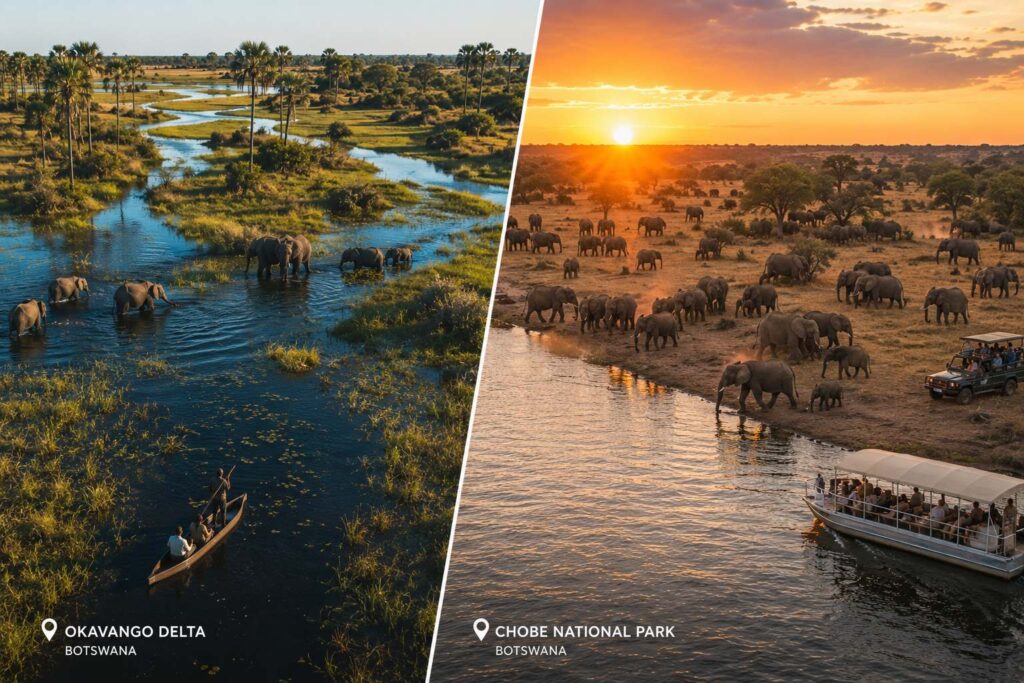
The Okavango Delta is the world’s largest inland delta, where seasonal floodwaters spread across vast wetlands, lagoons, islands, and papyrus-lined channels. Instead of flowing into the sea, the Okavango River disappears into the Kalahari Desert, creating one of Africa’s most extraordinary wildlife habitats.
Chobe National Park, by contrast, is centered around the Chobe River and extends across floodplains, woodland, grasslands, and dry interior habitats. The park is especially famous for the Chobe Riverfront, one of the best places in Africa to watch large concentrations of wildlife.
These contrasting landscapes create two distinct safari experiences.
Wildlife: What can you expect?
Both destinations support incredible biodiversity, but the wildlife encounters differ in style.
Okavango Delta
The Delta offers exceptional sightings of:
- Lions
- Leopards
- African wild dogs
- Elephants
- Buffalo
- Hippos
- Crocodiles
- Red lechwe
- Sitatunga
- Hundreds of bird species
Because camps are often located in private concessions, game viewing tends to feel more exclusive, with fewer vehicles at sightings.
Predator viewing can be outstanding, particularly during the dry season when wildlife concentrates around permanent water.
Chobe National Park
Chobe is best known for:
- One of Africa’s largest elephant populations
- Huge buffalo herds
- Lions
- Leopards
- Hippos
- Crocodiles
- Giraffes
- Numerous antelope species
- Exceptional birdlife
The Chobe Riverfront is particularly famous for dramatic wildlife gatherings, especially during the dry season when animals congregate along the river.
If seeing large numbers of elephants is your priority, Chobe is difficult to surpass.
Safari activities
One of the biggest differences lies in how you experience the wildlife.
Okavango Delta
The Delta offers a variety of safari activities, including:
- Mokoro (traditional canoe) excursions
- Boat safaris
- Walking safaris
- Game drives
- Scenic helicopter flights (optional)
Gliding silently through narrow water channels in a mokoro is one of Africa’s most iconic safari experiences. Instead of chasing wildlife, you become immersed in the Delta’s peaceful rhythm, observing birds, frogs, hippos, and elephants from water level.
Chobe National Park
Chobe focuses primarily on:
- Game drives
- Boat safaris along the Chobe River
- Photography cruises
- Birdwatching
Boat safaris are one of Chobe’s greatest highlights. Watching elephants swim across the river or families of hippos surfacing beside the boat offers perspectives impossible to achieve on land.
Landscape and atmosphere
The landscapes shape the entire safari experience.
The Okavango Delta feels secluded, intimate, and peaceful. Water channels weave between islands, palm trees reflect in still lagoons, and wildlife often appears unexpectedly through reeds or woodland.
Many camps accommodate relatively few guests, creating an atmosphere of exclusivity and tranquility.
Chobe feels more dynamic and dramatic. The riverfront attracts enormous concentrations of animals, particularly in the dry season, resulting in spectacular wildlife scenes that can include hundreds of elephants visible at once.
The experience is more energetic, especially near popular game-viewing areas.
Accessibility
Chobe National Park is significantly easier to reach.
Most visitors fly into Kasane, located immediately beside the park. International connections through Victoria Falls (Zimbabwe), Livingstone (Zambia), and Johannesburg make Chobe convenient even for shorter itineraries.
Road transfers are straightforward, allowing travelers to maximize safari time.
The Okavango Delta is more remote.
Most luxury camps are accessed by light aircraft from Maun or Kasane, followed by short game-drive transfers to camp.
While these scenic flights are unforgettable, they also increase overall travel costs.
Cost comparison
Budget is one of the biggest differences between the two destinations.
Okavango Delta
The Delta is generally Botswana’s most expensive safari destination.
Costs reflect:
- Fly-in logistics
- Remote camp operations
- Small guest numbers
- Luxury accommodations
- Highly personalized service
Many camps operate on an all-inclusive basis, covering accommodation, meals, drinks, game activities, and internal transfers.
Chobe National Park
Chobe offers far greater flexibility.
Visitors can choose from:
- Luxury lodges
- Mid-range safari camps
- Budget accommodations
- Day trips from Kasane
- Multi-country itineraries
Because road access is easier, overall travel expenses are usually lower than in the Delta.
For travelers on tighter budgets, Chobe represents excellent value.
Which destination is better for first-time safari visitors?
If this is your first safari in Africa, Chobe National Park is often the easier introduction.
The high density of wildlife, excellent infrastructure, shorter travel times, and wide range of accommodation options make planning relatively straightforward.
Game viewing is consistently rewarding, especially around the Chobe Riverfront.
Who should choose the Okavango Delta?
The Delta is ideal for travelers seeking a deeper wilderness experience.
You may prefer the Okavango if you:
- Want a luxury safari.
- Enjoy quieter wildlife viewing.
- Love photography.
- Appreciate birdwatching.
- Want to experience mokoro safaris.
- Prefer exclusive camps with fewer visitors.
Many experienced safari travelers consider the Delta one of Africa’s most magical destinations because of its serenity and ecological richness.
Can you combine both?
Absolutely—and many visitors do.
Because Chobe and the Okavango Delta complement each other so well, combining them creates one of Africa’s classic safari itineraries.
A typical Botswana journey includes:
- Three nights in Chobe for elephant herds and river safaris.
- Three or four nights in the Okavango Delta for water-based activities and intimate wildlife encounters.
The contrasting ecosystems provide a much broader understanding of Botswana’s extraordinary biodiversity.
If time and budget allow, combining both destinations offers the best overall safari experience.
Which safari suits your travel style?
Choose Chobe National Park if you:
- Want to see huge elephant herds.
- Are visiting Botswana for the first time.
- Prefer lower travel costs.
- Have limited vacation time.
- Enjoy classic game drives and boat cruises.
Choose the Okavango Delta if you:
- Want a luxury safari.
- Value exclusivity.
- Love peaceful wilderness.
- Want unique water-based safari activities.
- Enjoy slower, immersive wildlife experiences.
Conclusion
The Okavango Delta and Chobe National Park showcase two very different sides of Botswana.
Chobe impresses with its enormous elephant populations, spectacular riverfront wildlife, and easy accessibility, making it an excellent choice for first-time visitors and travelers seeking outstanding value. The Okavango Delta offers a quieter, more exclusive safari where water, wildlife, and wilderness combine to create one of Africa’s most extraordinary natural experiences.
Fortunately, choosing between them isn’t always necessary. Together, they form one of the finest safari combinations anywhere in the world, allowing visitors to experience Botswana’s incredible diversity from both land and water.
For more safari comparisons, destination guides, and expert travel planning advice, continue exploring the WhySafari blog.
FAQs
Chobe National Park is famous for supporting one of the largest elephant populations in Africa, particularly along the Chobe River.
Yes. Most Delta camps are intimate, fly-in lodges offering all-inclusive luxury experiences in remote wilderness settings.
Yes. Chobe offers motorboat safaris on the river, while the Okavango Delta offers both motorboat excursions (where permitted) and traditional mokoro canoe safaris in many areas.
Both are excellent. Chobe provides dramatic wildlife concentrations, while the Okavango Delta offers beautiful reflections, intimate wildlife encounters, and stunning landscapes.
Three to four nights in each destination provides enough time to experience their unique activities and wildlife.
Generally, yes. Chobe offers a wider range of accommodation and easier access, making it suitable for more budgets.
The dry season, from roughly May to October, is excellent for both destinations, with outstanding wildlife viewing and comfortable safari conditions.