One of the most common questions travelers ask when planning a Botswana safari is: When is the best time to visit the Okavango Delta?
The honest answer is that there’s no single “best” month. The Delta changes dramatically throughout the year, and each season offers something different. Seasonal floodwaters transform the landscape, wildlife movements shift, birdlife evolves, and safari activities vary depending on water levels.
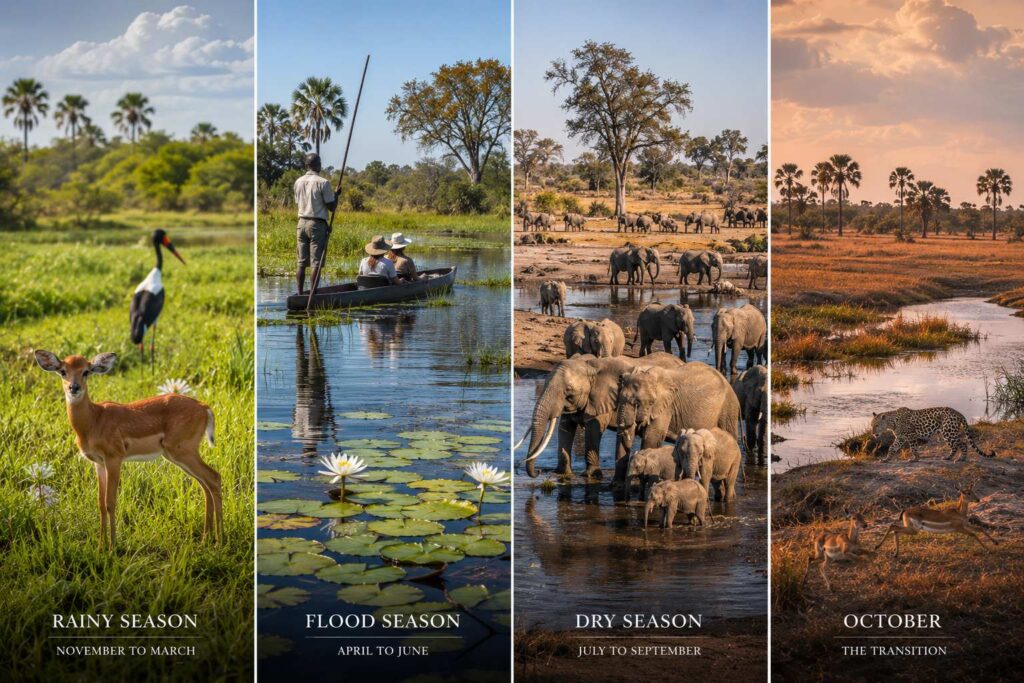
Unlike many African safari destinations where wildlife follows predictable rainfall patterns, the Okavango Delta is shaped by two overlapping natural cycles: Botswana’s rainy season and the annual floodwaters that arrive months later from the highlands of Angola.
Understanding how these cycles interact will help you choose the perfect time for your safari.
Here’s what wildlife viewing is like month by month in the Okavango Delta.
January: Green landscapes and newborn wildlife
January falls during Botswana’s rainy season.
The Delta is lush, vibrant, and full of life. Afternoon thunderstorms are common, but they rarely last all day.
Many antelope species give birth during this period, creating excellent opportunities to observe young animals and the predators that follow them.
Birdwatching is exceptional as migratory species arrive in large numbers and breeding plumage reaches its peak.
Best for:
- Birdwatching
- Baby animals
- Green landscapes
- Photography
February: The emerald season continues
February remains beautifully green, with dramatic skies providing spectacular photographic conditions.
Wildlife is slightly more dispersed because food and water are abundant, but game viewing is still rewarding.
The combination of fresh vegetation and colorful birdlife makes this one of the Delta’s most scenic months.
Visitor numbers are generally lower than during peak safari season.
Best for:
- Landscapes
- Bird photography
- Fewer crowds
- Excellent safari value
March: Wildlife activity begins to increase
Rainfall gradually decreases during March.
Vegetation remains lush, but improving road conditions make game drives easier in many areas.
Predator activity often becomes more noticeable as young animals continue to mature.
Birdlife remains outstanding, and temperatures become slightly more comfortable.
Best for:
- Balanced wildlife viewing
- Photography
- Birding
- Shoulder-season travel
April: One of Botswana’s hidden gems
April is often overlooked, yet many experienced safari travelers consider it one of the Delta’s finest months.
The rains have largely ended, temperatures are pleasant, and landscapes remain beautifully green.
Wildlife viewing steadily improves while visitor numbers remain relatively low.
The first floodwaters may begin entering parts of the Delta toward the end of the month, depending on annual conditions.
Best for:
- Comfortable weather
- Excellent photography
- Quiet safari camps
- Mixed activities
May: The Delta begins to transform
May marks the transition toward the dry safari season.
Floodwaters spread farther across the Delta, gradually filling lagoons and channels.
This creates ideal conditions for mokoro excursions and boat safaris in many areas.
As surrounding landscapes begin drying out, wildlife slowly concentrates around permanent water.
Best for:
- Water-based safaris
- Pleasant temperatures
- Increasing wildlife density
- Walking safaris
June: Peak flood season begins
Although Botswana receives little rainfall during June, this is when floodwaters continue arriving from Angola.
The contrast is remarkable: dry weather combined with expanding wetlands.
Wildlife becomes increasingly concentrated on islands and along floodplain edges.
Elephants, buffalo, hippos, crocodiles, and predators are commonly encountered.
June also marks the beginning of Botswana’s peak safari season.
Best for:
- Mokoro safaris
- Boat trips
- Excellent game viewing
- Comfortable weather
July: Classic Botswana safari conditions
July offers some of the year’s finest safari conditions.
Cool mornings, warm afternoons, clear skies, and high wildlife densities create exceptional game viewing.
Water channels are extensive, making Delta landscapes especially beautiful.
Walking safaris become increasingly popular thanks to cooler temperatures.
Expect premium prices and strong demand for accommodation.
Best for:
- Big game viewing
- Luxury safaris
- Walking safaris
- Photography
August: Outstanding wildlife viewing
August is considered one of the Delta’s premier safari months.
Water remains widespread while surrounding habitats become progressively drier.
Animals gather around permanent water sources, creating excellent opportunities to observe predator-prey interactions.
Elephant numbers are particularly impressive.
Advance booking is essential because this is one of the busiest months of the year.
Best for:
- Elephants
- Predator sightings
- Water safaris
- First-time safari visitors
September: Peak wildlife concentrations
September combines warm temperatures with exceptional wildlife viewing.
As conditions become drier, many species depend increasingly on the Delta’s permanent water.
Predators remain highly active, and game drives often produce multiple memorable sightings.
Photographers benefit from beautiful golden light and excellent visibility.
Best for:
- Big Five safaris
- Photography
- Predator encounters
- General wildlife viewing
October: Dramatic safari experiences
October is Botswana’s hottest month before the rains return.
The intense heat encourages wildlife to remain close to water throughout the day.
Although temperatures can be challenging, animal concentrations often reach their highest levels.
Large elephant herds are especially impressive during this period.
Visitors should prepare for hot afternoons but rewarding wildlife encounters.
Best for:
- Elephant viewing
- Predator activity
- Serious wildlife enthusiasts
November: The first rains arrive
November signals the beginning of Botswana’s rainy season.
The first storms bring welcome relief after the dry months, transforming the landscape remarkably quickly.
Wildlife viewing remains excellent early in the month before animals gradually disperse as temporary water becomes available.
Bird activity increases dramatically.
Best for:
- Transitional landscapes
- Birdwatching
- Mixed safari experiences
December: Green season returns
December completes the annual cycle.
Fresh vegetation spreads rapidly across the Delta, newborn animals begin appearing once again, and migratory birds are widespread.
The scenery becomes lush and vibrant.
Although wildlife is more dispersed than during the dry season, the combination of dramatic skies, colorful landscapes, and fewer visitors appeals to many photographers and repeat safari travelers.
Best for:
- Photography
- Families
- Birdwatching
- Lower visitor numbers
Choosing the best month for your travel style
Your ideal travel month depends on your priorities.
Choose June to October if you want:
- Outstanding wildlife viewing
- Big game concentrations
- Classic safari conditions
- Walking safaris
- Mokoro excursions
Choose January to April if you prefer:
- Lush scenery
- Birdwatching
- Baby animals
- Lower prices
- Fewer tourists
Choose May or November if you want:
- Shoulder-season value
- Pleasant weather
- Good wildlife
- Fewer crowds than peak season
Is there really a bad time to visit?
Not really.
Unlike some safari destinations that depend heavily on seasonal migrations, the Okavango Delta supports resident wildlife throughout the year.
Every month offers rewarding safari experiences, although the emphasis changes with the seasons.
Some travelers prioritize predator sightings, others birdlife, photography, walking safaris, or peaceful camps. The Delta caters to all of these interests—it simply does so at different times of the year.
Conclusion
The Okavango Delta is a year-round safari destination, with each month revealing a different side of one of Africa’s greatest wilderness areas. From the emerald landscapes and newborn wildlife of the rainy season to the spectacular floodwaters and exceptional game viewing of the dry months, every visit offers its own unique rewards.
Rather than searching for the single “best” time to visit, focus on the experience you want most. Whether you’re dreaming of gliding through flooded channels in a mokoro, photographing elephants along the water’s edge, or watching migratory birds in brilliant breeding plumage, there’s a perfect season waiting for you in the Delta.
For more Botswana safari guides, destination comparisons, and expert travel planning advice, continue exploring the WhySafari blog.
FAQs
July through September are widely considered the best months for classic wildlife viewing, although every season offers unique advantages.
Floodwaters usually begin reaching the Delta around April or May, peaking during the middle of the dry season between June and August, although timing varies slightly each year.
Not at all. The green season offers beautiful landscapes, excellent birdwatching, newborn animals, fewer visitors, and outstanding photography.
Mokoro excursions are generally at their best from June through August when floodwaters are widespread across much of the Delta.
Birdwatching is exceptional from November through April as migratory species arrive and many birds display colorful breeding plumage.
October is typically the hottest month, with high temperatures encouraging wildlife to gather around permanent water sources.
Peak prices generally occur between June and October, especially during July and August, when demand for Botswana safaris is at its highest.