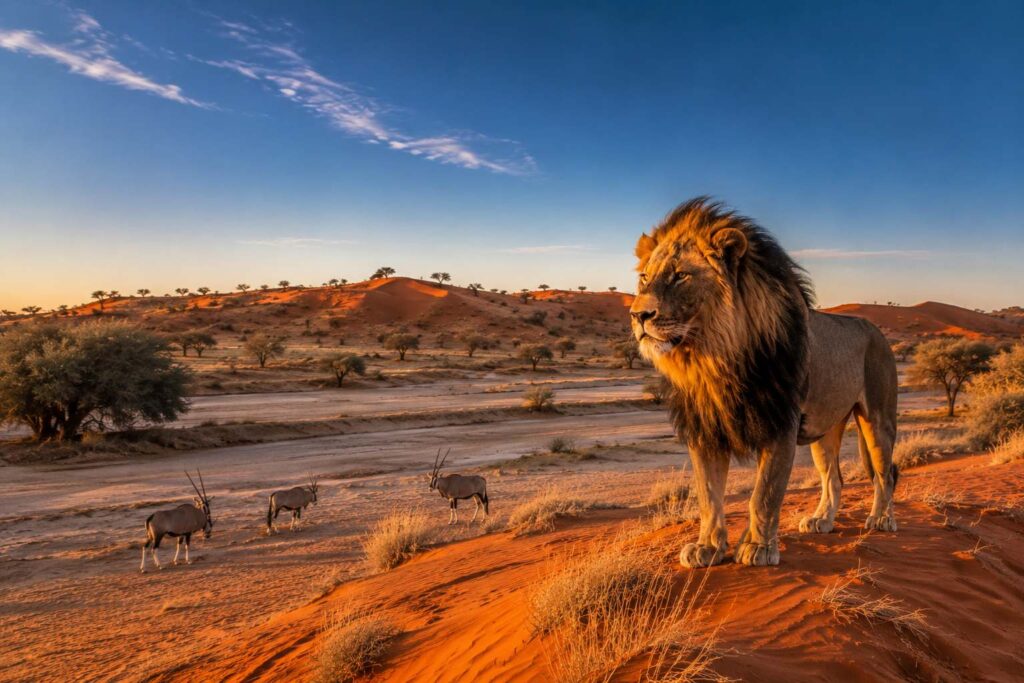
Kgalagadi Transfrontier Park is unlike any other safari destination in South Africa. Instead of lush bushveld and permanent rivers, you’ll find sweeping red sand dunes, dry riverbeds, endless skies, and wildlife perfectly adapted to life in the Kalahari Desert.
One of the park’s greatest advantages is that it offers rewarding wildlife viewing throughout the year. However, each season brings its own character—from cool winter mornings with exceptional predator sightings to dramatic summer thunderstorms that transform the desert into a surprisingly green landscape.
So, when is the best time to visit Kgalagadi?
The answer depends on what you hope to experience. Whether you’re chasing black-maned lions, photographing birds of prey, or simply looking for comfortable driving conditions, understanding the seasons will help you plan the perfect desert safari.
Understanding Kgalagadi’s climate
Kgalagadi has a semi-arid desert climate characterized by:
- Hot summers
- Cool to cold winters
- Very low annual rainfall
- Large differences between daytime and nighttime temperatures
- Abundant sunshine throughout the year
Unlike many safari destinations, the park doesn’t experience prolonged rainy seasons. Instead, rainfall tends to arrive in short but sometimes dramatic thunderstorms during the summer months.
These seasonal changes influence both wildlife behavior and the appearance of the landscape.
Winter (May to September)
For many travelers, winter is the best time to visit Kgalagadi.
Daytime temperatures are pleasant, while mornings and evenings can be surprisingly cold.
Typical conditions include:
- Sunny days
- Clear skies
- Minimal rainfall
- Comfortable game drives
- Excellent visibility
Because water is scarce, wildlife concentrates around permanent waterholes and the fossil river valleys, making animals easier to locate.
Wildlife highlights
Winter is especially rewarding for predator enthusiasts.
Expect excellent chances of seeing:
- Black-maned Kalahari lions
- Cheetahs
- Leopards
- Brown hyenas
- Spotted hyenas
Large herbivores such as gemsbok, springbok, blue wildebeest, and eland are also commonly seen near water sources.
Photography
Winter offers outstanding photography conditions thanks to:
- Crisp morning light
- Clear air
- Deep blue skies
- Warm golden sunsets
Cold mornings may require gloves or a warm jacket during early game drives, but the comfortable daytime temperatures make long hours in the vehicle very enjoyable.
Spring (September to November)
As winter ends, temperatures begin rising rapidly.
Spring is a fascinating transitional season.
The landscape remains dry, but wildlife activity continues to be excellent.
Visitors can enjoy:
- Active predators
- Beautiful golden grass
- Dramatic desert scenery
- Fewer visitors than peak winter in some weeks
However, daytime temperatures may climb above 35°C (95°F), particularly by late October.
Planning early morning and late afternoon drives becomes increasingly important.
Summer (December to March)
Summer transforms Kgalagadi in surprising ways.
Although temperatures are often extremely high, occasional thunderstorms bring life back to the desert.
After rainfall, visitors may see:
- Fresh green vegetation
- Wildflowers
- Young antelope
- Migratory birds
- Dramatic cloud formations
The contrast between red dunes, green grasses, and stormy skies creates spectacular scenery.
Birdwatching
Summer is arguably the best season for bird enthusiasts.
Migratory species arrive, and breeding activity increases throughout the park.
Birdwatchers may enjoy:
- Raptors
- Bee-eaters
- Larks
- Coursers
- Falcons
- Owls
Combined with dramatic weather, this makes summer highly rewarding despite the heat.
Heat considerations
Temperatures frequently exceed 40°C (104°F).
Visitors should:
- Carry plenty of drinking water.
- Wear lightweight clothing.
- Use sunscreen.
- Limit activity during midday.
- Begin drives at sunrise whenever possible.
Most wildlife remains active during the cooler hours of the day.
Autumn (April)
April offers one of the most pleasant combinations of weather and wildlife.
The intense summer heat begins easing while some greenery remains after seasonal rains.
Advantages include:
- Comfortable temperatures
- Good wildlife viewing
- Attractive landscapes
- Smaller crowds
Many experienced visitors consider April one of Kgalagadi’s hidden gems.
Wildlife throughout the year
Unlike destinations dependent on seasonal migrations, Kgalagadi offers consistently good wildlife viewing.
Resident species include:
- Lions
- Cheetahs
- Leopards
- Brown hyenas
- Gemsbok
- Springbok
- Blue wildebeest
- Meerkats
- Bat-eared foxes
Seasonal weather influences where animals concentrate, but the overall quality of wildlife viewing remains excellent year-round.
Which season is best for photographers?
Every season offers something unique.
Winter
Ideal for:
- Predator photography
- Clean backgrounds
- Golden light
- Clear skies
Summer
Perfect for:
- Storm photography
- Dramatic landscapes
- Green vegetation
- Birdlife
- Atmospheric skies
Landscape photographers often appreciate summer’s changing weather, while wildlife photographers frequently prefer winter’s predictable conditions.
Which season has the fewest visitors?
Visitor numbers peak during:
- South African winter holidays
- June
- July
- August
If you prefer quieter roads and easier accommodation availability, consider:
- April
- Early May
- September
- November (outside school holidays)
Booking well in advance remains advisable throughout the year, particularly for wilderness camps.
When should first-time visitors go?
For most first-time visitors, the winter months between May and September provide the easiest introduction.
Advantages include:
- Comfortable temperatures
- Reliable wildlife viewing
- Excellent road conditions
- Beautiful photography light
- Pleasant self-drive conditions
These months make exploring the park both enjoyable and relatively straightforward.
Seasonal packing tips
Winter
Bring:
- Warm jacket
- Fleece
- Gloves for early mornings
- Hat
- Sunscreen
Summer
Pack:
- Lightweight clothing
- Wide-brimmed hat
- Sunglasses
- High-SPF sunscreen
- Plenty of reusable water bottles
Regardless of season, binoculars and a camera are essential.
Is there really a bad time to visit?
Not really.
Unlike many safari destinations where heavy rainfall limits access, Kgalagadi remains rewarding throughout the year.
Every season offers different experiences.
Winter emphasizes predators and comfortable travel.
Summer delivers dramatic scenery and exceptional birdlife.
Autumn and spring provide excellent balance.
Rather than asking which season is objectively best, consider which experiences matter most to you.
Conclusion
Kgalagadi Transfrontier Park is a year-round safari destination, but the best time to visit depends on your interests. Winter offers comfortable temperatures, superb predator sightings, and ideal self-drive conditions, making it the most popular season for first-time visitors. Summer, meanwhile, transforms the desert with dramatic storms, migratory birds, and vibrant landscapes that appeal to photographers and birdwatchers alike.
Whichever season you choose, Kgalagadi rewards travelers with extraordinary wildlife, breathtaking scenery, and a sense of wilderness that’s difficult to find anywhere else in southern Africa.
For more South Africa safari guides, seasonal travel advice, and destination inspiration, continue exploring the WhySafari blog.
FAQs
June, July, and August are among the most popular months thanks to pleasant weather and excellent wildlife viewing, although April and May are also outstanding choices.
Summer temperatures can exceed 40°C (104°F), but early morning and late afternoon game drives remain productive. Proper hydration and sun protection are essential.
Winter generally offers the easiest predator viewing as wildlife gathers around permanent water sources and visibility is excellent.
Yes. Birdwatching is excellent year-round, with summer bringing migratory species and increased breeding activity.
Absolutely. Rainfall usually comes as short thunderstorms rather than prolonged wet periods, and the landscape becomes beautifully green afterward.
Outside South African school holidays, months such as April, May, September, and November often offer a quieter experience.
Three to five days is ideal, giving you enough time to explore both the Auob and Nossob river valleys while maximizing wildlife viewing opportunities.