The Serengeti is one of the world’s most iconic safari destinations, but many first-time visitors don’t realize just how vast it is. Covering nearly 15,000 square kilometers (5,700 square miles), Serengeti National Park is divided into several distinct regions, each offering a different safari experience.
Two of the most popular are the Central Serengeti and the Northern Serengeti.
Both deliver exceptional wildlife viewing, luxurious safari camps, and unforgettable landscapes. However, they differ significantly in terms of scenery, visitor numbers, wildlife patterns, and the time of year they’re at their best.
So, which area should you choose?
The answer depends on your priorities, travel dates, and the type of safari experience you’re looking for.
Central and Northern Serengeti are only two parts of a much larger ecosystem. For an overview of all the main regions, wildlife, and accommodation options, start with our complete Serengeti National Park safari guide.
Understanding the Serengeti’s regions
Although the Serengeti functions as one continuous ecosystem, each area has unique characteristics.
The two regions compared here are:
- Central Serengeti (Seronera Valley) – the wildlife-rich heart of the park with excellent year-round game viewing.
- Northern Serengeti – a quieter, more remote region famous for dramatic river crossings during the Great Migration.
Neither is objectively “better.” Instead, they offer different experiences that suit different travelers.
Central Serengeti: The classic safari experience
The Central Serengeti is often considered the park’s wildlife capital.
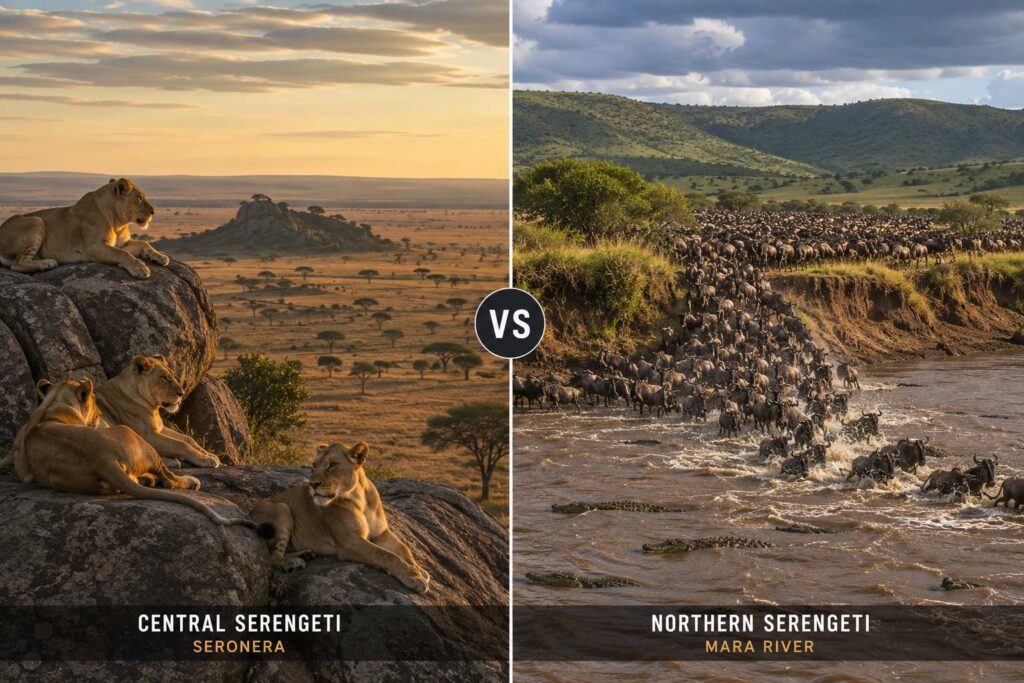
Centered around the Seronera River Valley, this region combines permanent water, open plains, rocky kopjes, and acacia woodlands that support abundant wildlife throughout the year.
Unlike areas that rely heavily on the seasonal migration, Central Serengeti always has impressive resident animal populations.
This makes it an excellent choice regardless of when you visit.
Wildlife in Central Serengeti
Game viewing here is consistently outstanding.
You can expect excellent opportunities to see:
- Lions
- Leopards
- Cheetahs
- Elephants
- Buffalo
- Giraffes
- Hippos
- Hyenas
- Large herds of antelope
The Seronera area is particularly famous for its resident leopard population, making it one of the best places in Africa to search for these elusive cats.
Predator sightings are frequent thanks to the abundance of prey throughout the year.
Why many first-time visitors choose Central Serengeti
Central Serengeti offers remarkable consistency.
Advantages include:
- Reliable year-round wildlife
- Shorter transfer times from nearby airstrips
- Excellent road network
- Wide range of accommodations
- Superb Big Cat sightings
If this is your first safari in Tanzania, it’s difficult to go wrong with Seronera.
Northern Serengeti: Remote and spectacular
The Northern Serengeti feels very different.
Located near the Kenyan border, this region is more remote, less developed, and receives significantly fewer visitors than Central Serengeti.
Its rolling hills, riverine forests, and open grasslands create a beautiful contrast with the flatter plains farther south.
The area is best known for one extraordinary event: the Great Migration river crossings.
The famous Mara River crossings
Between approximately July and October, hundreds of thousands of wildebeest and zebras move through the Northern Serengeti toward Kenya’s Masai Mara.
To continue their migration, many must cross the Mara River.
These crossings have become one of Africa’s most dramatic wildlife spectacles.
Visitors may witness:
- Massive wildebeest herds.
- Crocodiles waiting below.
- Lions and hyenas nearby.
- Chaotic movement.
- Incredible photography opportunities.
It’s important to remember that crossings are unpredictable.
Even during peak migration season, nature follows its own schedule.
Patience is essential.
Wildlife in Northern Serengeti
Although migration season attracts most attention, Northern Serengeti offers rewarding wildlife throughout the year.
Resident species include:
- Lions
- Leopards
- Elephants
- Buffalo
- Giraffes
- Hippos
- Crocodiles
- Hyenas
Because visitor numbers remain relatively low, sightings often feel peaceful and exclusive.
Which area has better predator sightings?
Both regions excel.
Central Serengeti
Better for:
- Leopards
- Resident lions
- Cheetahs
- Year-round predator activity
Northern Serengeti
Excellent for:
- Lions following migrating herds
- Crocodiles during river crossings
- Opportunistic predator behavior
- Seasonal migration drama
If your visit falls outside migration season, Central Serengeti generally offers more consistent predator viewing.
Landscapes compared
Central Serengeti
Expect:
- Open plains
- Granite kopjes
- Acacia woodland
- River valleys
This is the landscape many people picture when imagining the Serengeti.
Northern Serengeti
You’ll find:
- Rolling hills
- Riverine forests
- Wooded valleys
- The Mara River
- Vast open grasslands
Many photographers appreciate the greater variety of scenery in the north.
Crowds and atmosphere
This is one of the biggest differences.
Central Serengeti
Because wildlife is consistently excellent, it naturally attracts more safari vehicles.
Popular sightings may include several vehicles, especially during peak season.
Northern Serengeti
The northern region feels quieter and more exclusive.
Even during migration season, visitor density is generally lower than many travelers expect.
If solitude is important to you, Northern Serengeti has a clear advantage.
Which region is best for the Great Migration?
The answer depends entirely on timing.
Choose Northern Serengeti if you’re visiting roughly between July and October and hope to witness Mara River crossings.
Choose Central Serengeti if:
- You’re traveling outside river crossing season.
- You want reliable wildlife year-round.
- You’re less focused on migration timing.
Both regions may host migration herds at different points of the year, but the dramatic river crossings belong primarily to the north.
Accommodation options
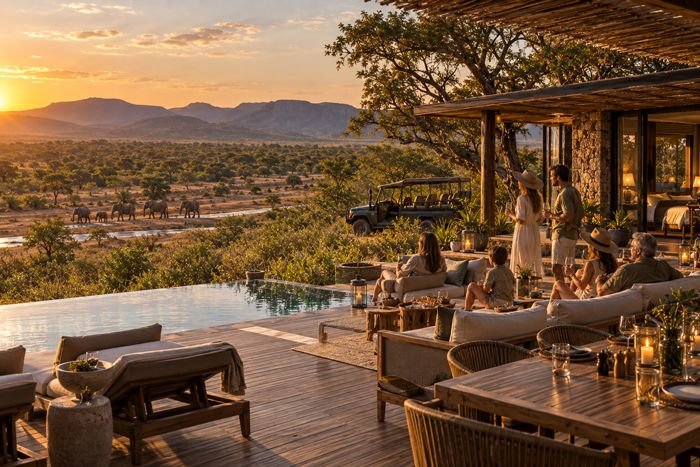
Both regions offer excellent safari camps and lodges.
Central Serengeti
Features:
- Wide choice of camps
- Luxury lodges
- Mid-range accommodation
- Permanent tented camps
Northern Serengeti
Accommodation tends to be:
- Smaller
- More exclusive
- Luxury-focused
- Seasonal mobile camps following the migration
Because supply is lower in the north, early booking is particularly important during migration season.
Which area suits your travel style?
Choose Central Serengeti if you:
- Are visiting Tanzania for the first time.
- Want dependable wildlife.
- Love Big Cats.
- Have a shorter itinerary.
- Prefer easier logistics.
Choose Northern Serengeti if you:
- Dream of Mara River crossings.
- Prefer fewer crowds.
- Enjoy remote wilderness.
- Are visiting between July and October.
- Want a more exclusive safari atmosphere.
Can you combine both?
Absolutely—and many safari itineraries do.
Spending several nights in Central Serengeti before flying or driving north provides an excellent combination of:
- Resident wildlife
- Big Cats
- Diverse landscapes
- Migration experiences
- River crossings (season permitting)
If your budget allows, combining both regions offers one of Africa’s finest safari experiences.
Conclusion
Central and Northern Serengeti are both exceptional safari destinations, but they shine in different ways. Central Serengeti offers reliable wildlife viewing, outstanding Big Cat sightings, and excellent year-round game drives, making it the ideal choice for many first-time visitors. Northern Serengeti, meanwhile, rewards travelers with quieter landscapes, a greater sense of wilderness, and the unforgettable spectacle of the Mara River crossings during the Great Migration.
Rather than asking which region is better, consider what matters most to you: consistent wildlife, dramatic migration events, fewer crowds, or a combination of all three. Whichever you choose, the Serengeti promises one of the greatest wildlife experiences on Earth.
For more Serengeti travel guides, safari comparisons, and Tanzania planning advice, continue exploring the WhySafari blog.
FAQs
Central Serengeti is usually the best choice thanks to its excellent year-round wildlife, reliable Big Cat sightings, and convenient logistics.
Northern Serengeti is at its most famous between July and October, when many Great Migration herds reach the Mara River.
Yes, depending on the season. Migration herds pass through Central Serengeti during parts of the year, although the famous Mara River crossings occur farther north.
Northern Serengeti generally feels quieter and more remote than the busier Central Serengeti.
Often yes. Accommodation tends to focus on smaller luxury camps, particularly during migration season, when demand is highest.
Both are excellent. Central Serengeti offers outstanding predator photography, while Northern Serengeti provides dramatic river crossings and diverse landscapes.
If your itinerary and budget allow, combining Central and Northern Serengeti offers the most comprehensive safari experience, especially during migration season.