Every unforgettable safari has its stars. Sometimes it’s a leopard resting in a marula tree, a pack of African wild dogs on the hunt, or a family of elephants crossing the road at sunset. But behind nearly every memorable wildlife encounter is someone whose knowledge, patience, and passion make those moments possible: the ranger.
In Madikwe Game Reserve, rangers are much more than drivers or wildlife spotters. They are naturalists, storytellers, conservationists, educators, and ambassadors for one of South Africa’s greatest conservation success stories.
While every ranger has their own personality and areas of expertise, they all share a deep connection with the bush and an ability to reveal details that most visitors would never notice on their own.
Here’s a closer look at what Madikwe’s rangers do, the skills they bring to every safari, and why spending time with them often becomes one of the highlights of a visit.
More than a safari guide
The word “ranger” means different things across Africa.
In Madikwe’s private lodges, guests are typically accompanied by professional field guides—often referred to as rangers—who lead game drives, walking safaris where permitted, and interpret the reserve’s ecosystems.
Their role goes far beyond finding animals.
A ranger helps guests understand:
- Animal behavior
- Bird identification
- Plant ecology
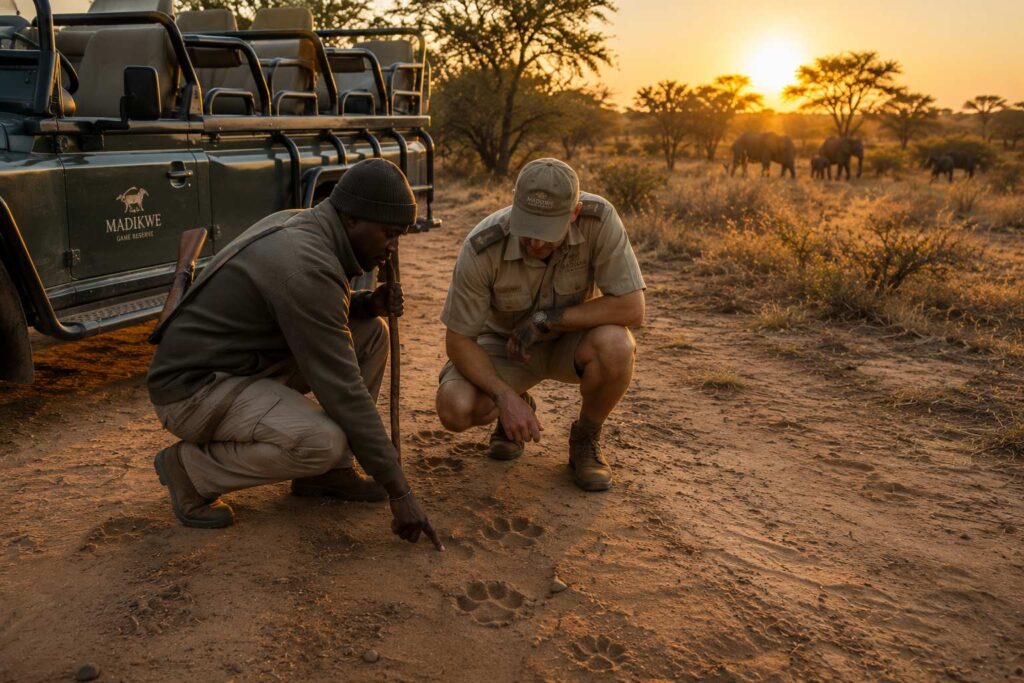
- Animal tracks
- Conservation challenges
- Seasonal changes
- The interconnectedness of the ecosystem
Rather than simply showing wildlife, they explain why animals behave the way they do.
Every drive tells a different story
One of the first lessons many visitors learn is that a safari is not a checklist.
Experienced rangers don’t simply drive from one famous species to another. Instead, they read the landscape like a living book.
Fresh elephant tracks crossing a sandy road, alarm calls from impalas, vultures circling overhead, or even the silence of certain birds can all provide clues about what’s happening nearby.
Some mornings begin by following lion tracks left overnight.
Others become fascinating lessons about termites, medicinal plants, or the remarkable engineering of a weaver bird’s nest.
The destination often matters less than the story unfolding along the way.
Reading the bush
One of the ranger’s greatest skills is observation.
Long before guests notice anything unusual, experienced guides may have already spotted:
- A broken branch.
- Fresh leopard tracks.
- Dust rising in the distance.
- Oxpeckers following buffalo.
- A distant eagle.
- Tiny movements in thick grass.
Years spent in the bush allow them to recognize subtle patterns invisible to most visitors.
This ability transforms seemingly empty landscapes into places full of life and hidden activity.
Working as a team
In many Madikwe lodges, game drives are led by both a ranger and a tracker.
While the ranger focuses on driving, interpreting wildlife, and communicating with guests, the tracker often sits on a specially designed front seat, scanning the ground for tracks and searching dense vegetation for animals.
The partnership between guide and tracker is one of the defining features of southern African safaris.
Together, they combine scientific knowledge, field experience, and extraordinary observation skills to locate wildlife while minimizing disturbance.
Memorable wildlife encounters
Ask experienced rangers about their favorite sightings, and the answers are rarely predictable.
Many recall moments such as:
- Wild dog pups emerging from a den.
- A leopard teaching cubs to hunt.
- Elephants helping a calf cross muddy ground.
- Lions roaring beneath a full moon.
- A rare aardwolf appearing after dark.
- A cheetah sprint across open grassland.
What makes these encounters special isn’t simply the species involved, but the behavior witnessed.
Sharing those stories with guests is part of what makes every safari unique.
Conservation in action
Madikwe’s rangers also play an important role in conservation.
Although guests may only see the tourism side of their work, guides contribute to the long-term management of the reserve by reporting unusual wildlife observations and supporting ecological monitoring.
Depending on the lodge and reserve operations, they may assist with:
- Wildlife monitoring
- Species identification
- Recording animal sightings
- Habitat observations
- Guest education
- Responsible tourism practices
Every game drive becomes an opportunity to build appreciation for conservation and the importance of protecting wild places.
Sharing local knowledge
Many Madikwe guides have spent years, or even decades, working in the reserve.
Some grew up in nearby communities, while others developed their careers through South Africa’s respected field-guiding programs.
Over time, they build an intimate understanding of the reserve’s changing seasons, individual animal territories, and local history.
Guests benefit not only from technical expertise but also from personal stories about life in the bush.
These conversations often become some of the most memorable parts of a safari.
Why patience matters
Visitors sometimes imagine that guides simply know where every animal is waiting.
In reality, successful safaris depend on patience.
Even experienced rangers cannot guarantee sightings of specific species.
Instead, they rely on:
- Animal behavior.
- Tracks.
- Bird alarm calls.
- Radio communication where permitted.
- Weather conditions.
- Years of field experience.
This uncertainty is part of what makes every sighting feel genuinely earned.
Helping photographers succeed
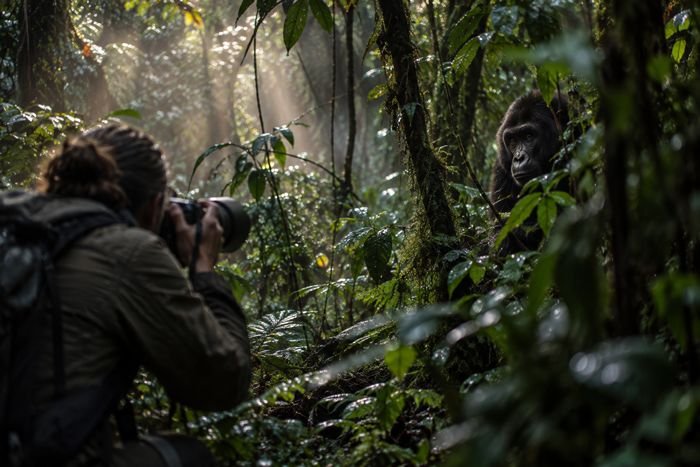
Many Madikwe rangers are skilled wildlife photographers themselves.
They understand how to position vehicles for:
- Better lighting.
- Cleaner backgrounds.
- Eye-level compositions.
- Minimal disturbance.
- Interesting animal behavior.
Rather than rushing between sightings, they often allow photographers time to wait for the perfect moment.
Simple adjustments in vehicle position or patience can dramatically improve wildlife images.
Building connections with guests
One reason visitors remember their ranger long after returning home is the personal connection that develops over several days.
Sharing early mornings, sunset game drives, meals around the campfire, and countless wildlife encounters creates conversations that extend well beyond safari.
Many guests leave feeling they have gained not only a guide but also a teacher and friend who helped them see the African bush through different eyes.
What visitors can learn from a ranger
A safari becomes far richer when you ask questions.
Topics rangers love discussing include:
- Animal behavior
- Conservation
- Bird identification
- Tracking
- Plants
- Local history
- Astronomy
- Photography
The more curious you are, the more rewarding the experience becomes.
No two game drives are ever exactly alike because every conversation shapes the day differently.
Why rangers are at the heart of the Madikwe experience
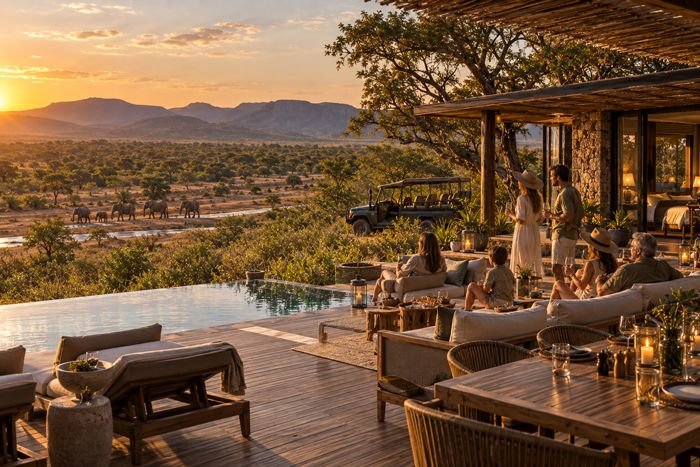
Luxury accommodation, excellent food, and remarkable wildlife all contribute to a memorable safari.
But it’s often the ranger who ties everything together.
Their ability to interpret the bush, explain complex ecological relationships, and create meaningful experiences transforms wildlife sightings into lasting memories.
Long after visitors forget the thread count of the sheets or the details of dinner, they often remember the ranger who taught them how to read animal tracks or quietly waited an extra ten minutes until a leopard emerged from the grass.
Conclusion
Madikwe’s rangers are much more than safari guides. They are storytellers, conservation ambassadors, educators, and passionate custodians of one of South Africa’s finest wildlife reserves. Through their knowledge, patience, and enthusiasm, they help visitors experience the bush in ways that extend far beyond simply spotting animals.
Whether they’re interpreting fresh tracks, explaining elephant behavior, or sharing personal stories from years spent in the wilderness, these remarkable professionals turn every game drive into a richer, more meaningful adventure.
For more Madikwe travel guides, conservation stories, and South Africa safari inspiration, continue exploring the WhySafari blog.
FAQs
The ranger usually drives the vehicle, interprets wildlife, and leads the safari, while the tracker specializes in finding animals by reading tracks, signs, and subtle clues in the environment. Many lodges use both professionals together.
Yes. Guided game drives at luxury lodges are led by qualified field guides or rangers, although guiding styles and areas of expertise vary between lodges.
Many have years of experience in wildlife guiding and have completed professional field-guide training. Some have worked in Madikwe for decades, building exceptional knowledge of the reserve.
Usually yes. While wildlife sightings can never be guaranteed, guides will often tailor drives to your interests, whether that’s photography, birds, predators, or the Big Five.
In many private reserves, guides may use radio communication responsibly to share significant sightings while carefully managing the number of vehicles at each encounter.
Some lodges offer guided bush walks where permitted, allowing rangers to interpret smaller aspects of the ecosystem such as plants, insects, and animal tracks.
Tipping is customary at many safari lodges if you’ve received excellent service. Recommended amounts vary by lodge and country, so it’s worth checking local guidelines before your trip.