If there is one destination that perfectly represents Botswana’s reputation as one of Africa’s greatest safari countries, it is Chobe National Park. Renowned for its enormous elephant population, diverse habitats, and exceptional game viewing, Chobe delivers a safari experience unlike anywhere else on the continent.
Located in Botswana’s far north, the park combines classic game drives with something few safari destinations can match: unforgettable boat safaris along the Chobe River. Watching elephants swim between islands, buffalo gather on riverbanks, and hippos emerge at sunset creates memories that stay with travelers long after the journey ends.
Whether you’re planning your first African safari or adding Chobe to a longer Botswana itinerary, this guide covers everything you need to know about where to go, what to see, and when to visit.
Where is Chobe National Park?
Chobe National Park lies in northeastern Botswana, close to the borders of Namibia, Zambia, and Zimbabwe.
Its strategic location makes it one of southern Africa’s easiest safari destinations to combine with:
- Victoria Falls
- The Okavango Delta
- Hwange National Park
- Caprivi (Zambezi Region) in Namibia
The nearest town, Kasane, serves as the main gateway to the park and offers a wide range of accommodation, restaurants, and transport connections.
Why is Chobe so famous?
Chobe is internationally known for one remarkable statistic—it supports one of the largest elephant populations on Earth.
Estimates suggest the greater Chobe ecosystem is home to well over 100,000 elephants, although these numbers fluctuate seasonally as herds move across northern Botswana.
But elephants are only part of the story.
The park also offers:
- Outstanding predator sightings
- River safaris
- Excellent birdwatching
- Diverse landscapes
- Year-round wildlife viewing
Together, these features make Chobe one of Africa’s most complete safari destinations.
The four regions of Chobe
One of Chobe’s greatest strengths is the diversity of its habitats.
The park is divided into four distinct areas, each offering a different safari experience.
Chobe Riverfront
This is the park’s most visited region.
Highlights include:
- Huge elephant herds
- Buffalo concentrations
- Boat safaris
- Excellent lion sightings
- Easy access from Kasane
For first-time visitors, this is usually the best place to begin.
Savuti
Savuti is legendary among safari enthusiasts.
It’s famous for:
- Lions
- Spotted hyenas
- Leopards
- African wild dogs
- Dramatic predator interactions
The area’s changing water availability creates constantly shifting wildlife patterns, making every visit unique.
Linyanti
Linyanti offers a quieter, more exclusive safari.
Expect:
- Fewer visitors
- Exceptional birdlife
- Wetland habitats
- Elephants
- Predators
Many luxury lodges operate in this remote section of the ecosystem.
Nogatsaa
The least-visited part of Chobe provides a genuine wilderness experience.
Wildlife can be excellent, but infrastructure is more limited, making it best suited to experienced self-drive travelers and adventurous safari enthusiasts.
Wildlife: What can you expect to see?
Chobe offers extraordinary wildlife diversity.
Regular sightings include:
- Elephants
- Buffalo
- Lions
- Leopards
- Cheetahs
- African wild dogs
- Giraffes
- Zebras
- Hippos
- Crocodiles
- Sable antelope
- Roan antelope
- Warthogs
While rhinos are largely absent, Chobe remains one of southern Africa’s premier destinations for observing large mammals.
Why the elephants are so special
Elephants are the undisputed stars of Chobe.
Visitors regularly witness:
- Massive family herds
- River crossings
- Swimming elephants
- Playful calves
- Bulls interacting during musth
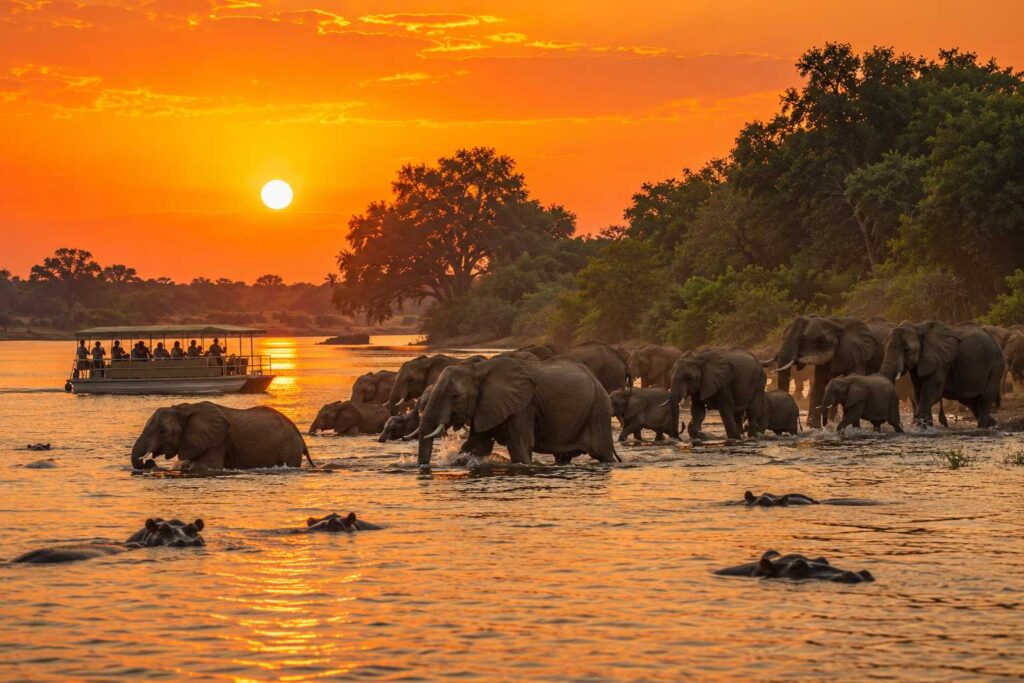
During the dry season, hundreds of elephants may gather along the Chobe River simultaneously.
Watching entire herds enter the water before swimming confidently between islands is one of Botswana’s most iconic wildlife spectacles.
Boat safaris: Chobe’s signature experience
Few national parks offer wildlife viewing from both land and water.
Boat safaris allow visitors to observe animals from an entirely different perspective.
Common sightings include:
- Drinking elephants
- Hippos
- Crocodiles
- Buffalo
- Fish eagles
- Kingfishers
Because boats approach quietly, wildlife often behaves more naturally than it does around vehicles.
Sunset cruises are especially popular thanks to the spectacular evening light reflected across the river.
Game drives
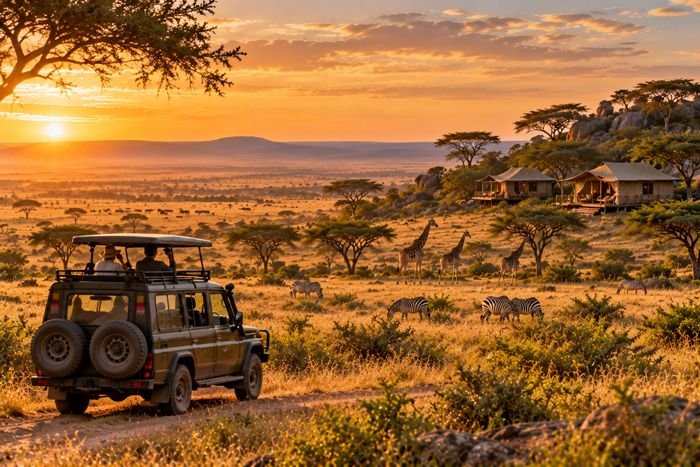
Traditional game drives remain an essential part of any Chobe safari.
Morning drives are ideal for:
- Predator activity
- Cooler temperatures
- Birdwatching
Afternoon drives often feature:
- Elephant herds moving toward the river
- Beautiful golden-hour photography
- Active herbivores
- Stunning sunsets
Combining both game drives and boat safaris provides the most complete experience.
Birdwatching
With more than 450 recorded bird species, Chobe is one of Botswana’s finest birding destinations.
Notable species include:
- African fish eagle
- Saddle-billed stork
- Southern carmine bee-eater
- Pel’s fishing owl
- Kingfishers
- Herons
- Egrets
The green season is particularly rewarding for bird enthusiasts as migratory species arrive.
When is the best time to visit?
Chobe is a year-round safari destination, but each season offers different advantages.
Dry season (May to October)
Expect:
- Outstanding wildlife viewing
- Large elephant concentrations
- Cooler temperatures
- Sparse vegetation
- Excellent photography
This is the park’s busiest safari season.
Green season (November to April)
Visitors enjoy:
- Lush landscapes
- Migratory birds
- Baby animals
- Fewer tourists
- Dramatic skies
Wildlife becomes more dispersed, but the scenery is spectacular.
Where to stay
Accommodation ranges from comfortable riverside lodges to some of Botswana’s finest luxury safari camps.
Popular choices include:
- Lodges in Kasane
- Luxury riverfront camps
- Exclusive safari lodges
- Remote camps in Savuti
- Linyanti wilderness camps
Many properties include game drives, boat safaris, meals, and transfers as part of all-inclusive packages.
How many days should you spend?
Most travelers spend:
- 2 nights for a quick introduction.
- 3 nights for a balanced safari.
- 4–5 nights to explore multiple regions.
If you plan to visit both the Chobe Riverfront and Savuti, allowing at least four nights is highly recommended.
Combining Chobe with other destinations
Chobe is easily combined with several iconic southern African destinations.
Popular itineraries include:
- Victoria Falls
- Okavango Delta
- Moremi Game Reserve
- Hwange National Park
- Namibia’s Zambezi Region
Many travelers begin or end their Botswana safari with a stay in Chobe due to its excellent transport connections.
Who should visit Chobe?
Chobe is ideal for travelers who:
- Love elephants.
- Want excellent wildlife viewing.
- Enjoy boat safaris.
- Are visiting Victoria Falls.
- Appreciate photography.
- Want a first Botswana safari.
Its accessibility and incredible diversity make it suitable for both first-time visitors and seasoned safari enthusiasts.
Conclusion
Chobe National Park has earned its reputation as Botswana’s elephant paradise through an extraordinary combination of wildlife, landscapes, and unforgettable safari experiences. From enormous elephant herds gathering along the Chobe River to thrilling predator encounters in Savuti and peaceful sunset cruises surrounded by hippos and crocodiles, the park offers something for every nature lover.
Whether you’re planning a standalone safari or combining Chobe with the Okavango Delta or Victoria Falls, you’ll discover one of Africa’s richest and most rewarding wildlife destinations.
For more Botswana safari guides, wildlife comparisons, and African travel inspiration, continue exploring the WhySafari blog.
FAQs
Chobe is best known for having one of the world’s largest elephant populations, as well as exceptional boat safaris and outstanding wildlife viewing.
Visitors commonly see elephants, lions, leopards, buffalo, hippos, crocodiles, giraffes, zebras, African wild dogs, and hundreds of bird species.
Absolutely. Boat safaris are one of Chobe’s signature experiences and provide unique views of elephants, hippos, crocodiles, and birdlife along the river.
The dry season from May to October offers the easiest wildlife viewing, while the green season provides lush scenery, migratory birds, and fewer visitors.
Three nights is ideal for most travelers, although four or five nights allow time to explore both the Chobe Riverfront and Savuti.
Yes. Kasane is only about a 90-minute drive from Victoria Falls, making the two destinations one of southern Africa’s most popular safari combinations.
Yes. Its excellent wildlife, accessible location, and wide range of accommodation make it one of the best parks in Africa for a first safari.