Most visitors experience Kruger National Park during daylight hours, when elephants gather at waterholes, giraffes browse acacia trees, and lions lounge in the shade. But as the sun sets and the gates close, the bush transforms into an entirely different world.
A night drive offers the chance to discover this hidden side of Kruger. Nocturnal predators begin to hunt, elusive mammals emerge from cover, and the sounds of the African bush take on a completely different character.
If you’re wondering whether a night drive is worth adding to your itinerary, the answer is almost always yes. It isn’t simply another game drive after dark—it offers access to wildlife and behaviors that daytime visitors rarely experience.
This guide explains how night drives work, how they differ from regular safaris, what animals you might see, and the best practices for making the most of the experience.
Can you drive through Kruger at night?
This is one of the most common questions among first-time visitors.
The answer is no.
Visitors on a self-drive safari cannot drive through Kruger after gate closing times. Once the park gates close, only officially authorized guided night drives operated by SANParks or licensed private reserves are permitted.
This rule protects both visitors and wildlife by reducing accidents and minimizing disturbance during the animals’ most active hours.
If you want to experience Kruger after dark, you’ll need to join an organized night drive.
How official night drives work
Most SANParks rest camps offer scheduled night drives led by experienced guides.
A typical experience includes:
- Departure shortly after sunset
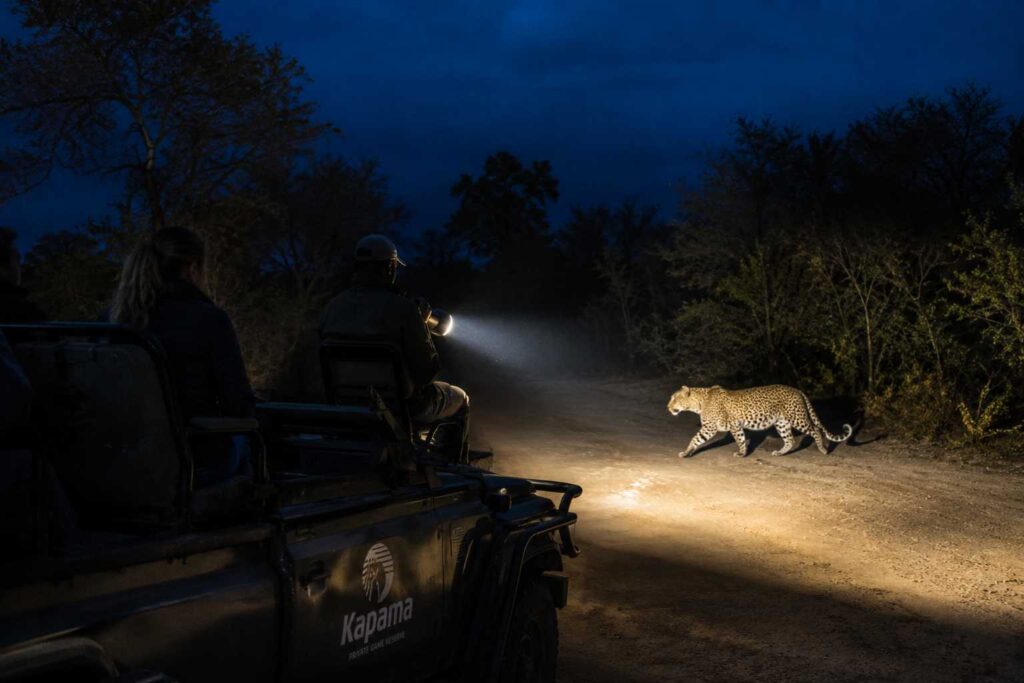
- Open safari vehicle
- Professional guide
- Powerful handheld spotlight
- Drive lasting around two to three hours
Guides use spotlights responsibly to search for nocturnal wildlife while avoiding prolonged illumination that could stress animals.
The pace is generally slower than during daytime drives, allowing guides to listen for sounds and carefully scan the bush.
How night drives differ from daytime safaris
Although the route may pass through familiar areas, the experience feels completely different.
Wildlife behavior changes
Many animals become active only after dark.
Others that spend the day resting begin:
- Hunting
- Feeding
- Patrolling territories
- Interacting socially
Predators often move greater distances during the cooler evening temperatures.
Your senses become more important
At night, you’re not relying only on sight.
You’ll also notice:
- Lion roars echoing across the bush
- Hyena calls
- Crickets and frogs
- Rustling vegetation
- The smell of fresh rain or dry earth
The experience becomes far more immersive.
Which animals can you see?
No two drives are the same, but night safaris provide opportunities to encounter species rarely seen during the day.
Possible sightings include:
- Leopards
- Lions on the move
- Spotted hyenas
- Civets
- Genets
- Bush babies
- Porcupines
- Honey badgers
- White-tailed mongooses
- African wild cats
Hippos often leave rivers to graze after sunset, while elephants and buffalo may continue feeding throughout the night.
Even familiar daytime animals behave differently under cover of darkness.
Are night drives good for leopard sightings?
Yes.
Leopards are naturally nocturnal and often become much more active after sunset.
Although sightings are never guaranteed, night drives significantly increase the chances of observing:
- Territorial patrols
- Hunting behavior
- Tree climbing
- Movement between resting areas
Kruger’s experienced guides are highly skilled at identifying subtle signs that may lead to leopard encounters.
What about private reserves?
Many private reserves within the Greater Kruger ecosystem also offer night drives.
These often differ from SANParks drives in several ways:
- Smaller guest numbers
- Off-road driving (where permitted)
- Longer wildlife observations
- Greater flexibility
Because guides can leave established roads in some private reserves, they may be able to follow certain sightings for longer while maintaining safe and responsible viewing distances.
This often creates particularly memorable predator encounters.
Best time of year for night drives
Night drives are worthwhile throughout the year, but each season offers unique advantages.
Dry season (May to September)
Expect:
- Cooler evenings
- Sparse vegetation
- Easier wildlife viewing
- Increased predator activity near water sources
Many visitors consider this the best overall period.
Green season (October to April)
Benefits include:
- Warm evenings
- Active insects and amphibians
- Migratory birds roosting
- Dramatic thunderstorms on some evenings
- Newborn mammals
Although vegetation is thicker, the bush comes alive in different ways.
Photography during night drives
Night photography presents unique challenges.
Because animals are often moving and lighting is limited:
- Fast lenses perform best.
- Higher ISO settings are usually necessary.
- Flash photography is often discouraged or prohibited.
- Following your guide’s instructions is essential.
Many photographers choose to focus on enjoying the experience rather than trying to capture every sighting.
Safety during night drives
Night drives are extremely safe when conducted by qualified operators.
Guests should always:
- Remain seated.
- Keep hands inside the vehicle.
- Avoid sudden movements.
- Stay quiet during wildlife encounters.
- Never use personal spotlights unless invited by the guide.
Professional guides are trained to assess animal behavior and position vehicles responsibly.
Etiquette on a night drive
A few simple habits improve the experience for everyone.
Remember to:
- Speak quietly.
- Silence mobile phones.
- Avoid shining flashlights into the bush.
- Listen to your guide.
- Respect wildlife at all times.
Darkness naturally amplifies sounds, so even whispered conversations can carry surprisingly far.
Is a night drive worth the extra cost?
For most visitors, absolutely.
A daytime safari and a night drive complement each other rather than compete.
During daylight, you’ll likely enjoy:
- Elephants
- Giraffes
- Zebras
- Buffalo
- Resting lions
After dark, the atmosphere changes completely as nocturnal species emerge and predators become more active.
Many travelers consider their night drive one of the highlights of their Kruger visit because it reveals a side of the park few people fully experience.
Tips for your first night drive
To stay comfortable and maximize your experience:
- Bring a warm jacket, even in summer.
- Pack binoculars if you have them.
- Avoid wearing bright clothing.
- Keep your camera ready but don’t let it distract you.
- Be patient—some of the best sightings happen unexpectedly.
Remember that the excitement often comes not only from what you see, but from the mystery of searching the bush after dark.
Conclusion
A night drive in Kruger National Park offers a completely different perspective on one of Africa’s greatest wildlife destinations. As daylight fades, familiar landscapes transform into a world where leopards patrol silently, hyenas call across the plains, and countless nocturnal creatures emerge from hiding. It’s an experience built as much on atmosphere as on wildlife sightings.
Whether you stay in a SANParks rest camp or a private reserve in Greater Kruger, adding at least one guided night drive to your itinerary is one of the best ways to appreciate the park’s incredible biodiversity. It completes the safari experience by revealing the hidden rhythms of the African bush after sunset.
For more Kruger travel guides, safari planning tips, and wildlife insights, continue exploring the WhySafari blog.
FAQs
No. Visitors must leave the roads by gate closing time. Night driving is only permitted on official guided safaris operated by SANParks or authorized private reserves.
Most guided night drives last between two and three hours, depending on the operator and wildlife activity.
Leopards, spotted hyenas, civets, genets, bush babies, porcupines, and hippos are among the species most commonly encountered after dark.
Yes. Guided night drives are led by experienced professionals who follow strict safety procedures and understand wildlife behavior.
Many operators welcome children, although minimum age requirements may vary. It’s worth checking with your lodge or SANParks camp before booking.
Yes, but low-light conditions make photography more challenging. Flash photography may be restricted to avoid disturbing wildlife.
Not usually. At SANParks camps, they are typically booked separately, while many private lodges include them as part of an all-inclusive safari package.