Planning a safari in northern Tanzania often means choosing between some of Africa’s most extraordinary wildlife destinations. But if you’re considering Serengeti National Park and Tarangire National Park, there’s good news: you can easily combine both into one unforgettable safari adventure.
These two parks offer remarkably different experiences. The Serengeti is famous for its endless plains, exceptional big-cat sightings, and the Great Migration. Tarangire, meanwhile, is known for its enormous elephant herds, ancient baobab trees, and quieter safari atmosphere.
Combining Serengeti and Tarangire gives travelers the opportunity to explore contrasting landscapes and encounter a wider variety of wildlife without needing separate trips.
The key is planning your route carefully and allowing enough time in each destination. For most first-time visitors, a 6 to 7-day Serengeti and Tarangire safari, with two nights in Tarangire and three nights in the Serengeti, offers an excellent balance.
This guide explains how to divide your time, which park to visit first, and how to create an itinerary that maximizes wildlife viewing while minimizing unnecessary travel.
Why combine Serengeti and Tarangire on one safari?
Although both parks belong to Tanzania’s Northern Safari Circuit, their wildlife experiences are surprisingly different.
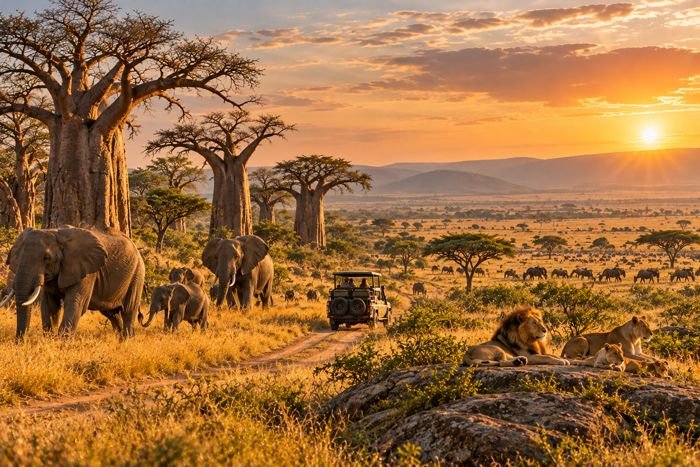
Tarangire National Park is characterized by rolling savannas, seasonal swamps, river valleys, and enormous baobab trees. During the dry season, elephants and other animals gather around the Tarangire River, creating exceptional wildlife-viewing opportunities.
Serengeti National Park offers a more expansive landscape, with vast grasslands, rocky kopjes, woodland, and river systems supporting a remarkable diversity of animals.
The Serengeti is particularly famous for its predators, including lions, leopards, and cheetahs, as well as the migrating herds of wildebeest and zebras.
Visiting both destinations allows you to experience:
- Large elephant herds and iconic baobab landscapes in Tarangire.
- Excellent predator sightings across the Serengeti plains.
- Different habitats, from riverine woodland to open grassland.
- Potential Great Migration encounters, depending on the season.
- A combination of popular safari areas and quieter wilderness settings.
Rather than offering two similar safaris, the parks complement each other beautifully.
How many days should you spend in Serengeti and Tarangire?
The ideal duration depends on your wildlife priorities, travel budget, and whether you’re including additional destinations.
For most travelers, the Serengeti deserves more time because of its enormous size and the distances between wildlife-viewing regions.
Tarangire is more manageable geographically, making it easier to enjoy meaningful wildlife encounters during a shorter stay.
| Total safari duration | Tarangire | Serengeti | Best for |
|---|---|---|---|
| 5 days | 1 night | 2 nights | Short trips with substantial driving |
| 6 days | 2 nights | 3 nights | First-time safari travelers |
| 7 days | 2 nights | 3 nights | Travelers wanting a relaxed return journey |
| 8–9 days | 2 nights | 4–5 nights | Migration enthusiasts and photographers |
These allocations assume a safari beginning in Arusha. The remaining travel time includes transfers and, for longer road itineraries, potentially an overnight stop near Ngorongoro.
Is one day enough for Tarangire?
A single day in Tarangire can be rewarding, especially if you arrive early from Arusha.
However, two nights allow you to enjoy different game-drive periods and explore beyond the most accessible areas.
This is particularly worthwhile during the dry season, when wildlife concentrations around the Tarangire River can be spectacular.
How many days do you need in the Serengeti?
Three nights is a strong starting point for Central Serengeti.
This provides time for multiple game drives around the Seronera Valley, known for its resident predators.
If your goal is witnessing the Great Migration in Northern Serengeti, consider four or more nights. The additional time helps accommodate longer transfers and unpredictable herd movements.
Recommended 7-day Serengeti and Tarangire safari itinerary
For travelers looking to combine both parks comfortably, the following road-based itinerary offers a practical introduction to northern Tanzania.
Day 1: Arusha to Tarangire National Park
Begin your safari with a drive from Arusha to Tarangire, typically taking around two to three hours to reach the park entrance.
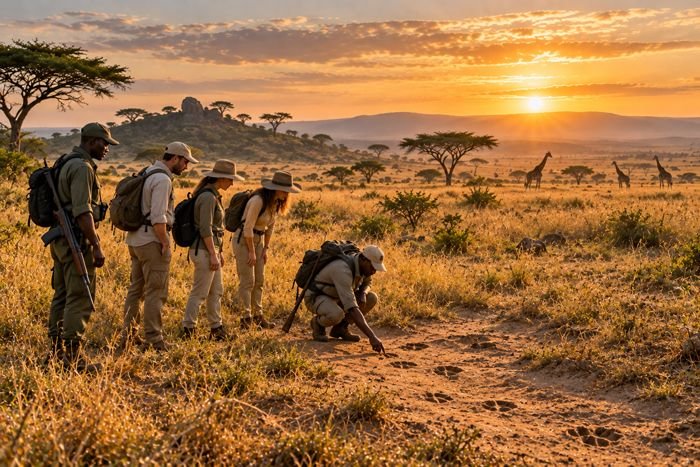
Spend the afternoon exploring the park’s baobab-dotted landscapes, searching for elephants, giraffes, zebras, and lions.
Overnight at a lodge or tented camp in or near Tarangire.
Day 2: Full-day safari in Tarangire
Enjoy a full day of wildlife viewing, exploring different areas according to seasonal conditions.
During the dry season, the Tarangire River attracts animals searching for water. Watching elephant families interact along the riverbanks can be a memorable highlight.
The park is also excellent for birdwatching, with hundreds of recorded species.
Day 3: Tarangire to Central Serengeti
Depart early and travel toward the Serengeti via the Ngorongoro Conservation Area.
This is a long transfer day, often requiring seven to nine hours or more from the Tarangire area to Central Serengeti, depending on your accommodation and road conditions.
The landscape changes dramatically as you travel through the highlands and descend toward the plains.
Arrive at your Serengeti camp for dinner and overnight.
Day 4: Full-day safari in Central Serengeti
Spend the day exploring the Seronera region, one of the Serengeti’s most productive wildlife habitats.
Look for lions resting on kopjes, leopards in riverine trees, and cheetahs scanning the grasslands.
Morning and afternoon game drives offer different wildlife encounters and photographic conditions.
Day 5: Another full day in the Serengeti
Dedicate a second full day to discovering the Serengeti’s wildlife.
Your guide can adapt the route according to recent sightings, seasonal migration movements, and your interests.
Having two complete days here increases your opportunities to observe natural animal behavior rather than rushing from one sighting to another.
Day 6: Serengeti to the Ngorongoro highlands
Enjoy a final morning game drive before beginning the return journey toward the Ngorongoro Conservation Area.
Depending on your arrangements, spend the night around Karatu or near the crater rim.
This breaks up the lengthy journey back to Arusha and allows time to appreciate the changing scenery.
Day 7: Return to Arusha
After breakfast, continue to Arusha, normally taking approximately three to four hours from the Karatu area, depending on traffic and stops.
If your schedule and budget allow, this day can alternatively include an early Ngorongoro Crater game drive before returning to Arusha in the evening.
Should you visit Tarangire or Serengeti first?
For most road-based safaris starting in Arusha, visiting Tarangire first is the most practical option.
Tarangire is relatively close to Arusha, making it an excellent introduction to the safari experience without spending your first day on a particularly long drive.
After exploring Tarangire, you can continue toward the Serengeti through the Ngorongoro highlands.
However, the reverse route can also work well.
Travelers who fly directly into the Serengeti may prefer starting there before returning overland through Ngorongoro and finishing in Tarangire.
The ideal sequence depends on flight connections, accommodation availability, and whether you’re adding other national parks.
Best time to combine Serengeti and Tarangire
Both destinations offer year-round wildlife viewing, but their seasonal highlights differ.
June to October: Excellent for both parks
The dry season is generally the strongest period for combining Serengeti and Tarangire.
In Tarangire, diminishing water supplies encourage elephants, zebras, buffaloes, and other animals to gather around permanent water sources.
In the Serengeti, thinner vegetation often makes wildlife easier to spot.
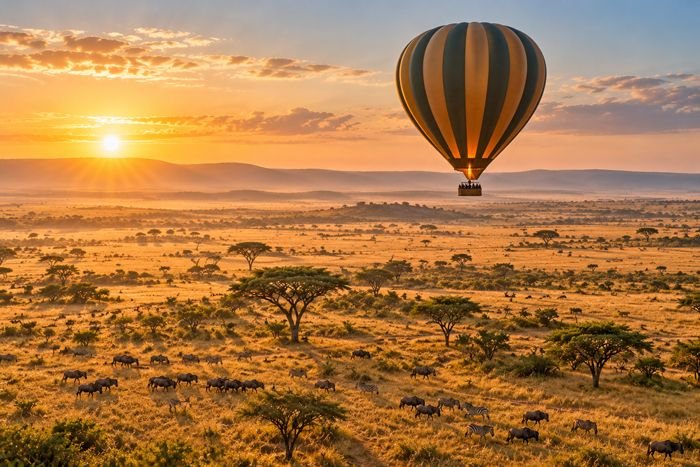
Between approximately July and October, migrating herds may gather in Northern Serengeti around the Mara River.
However, travelers specifically interested in river crossings should allow extra days to reach the northern region.
November to May: Green landscapes and rewarding wildlife
The wetter months offer a different but equally appealing atmosphere.
Tarangire becomes greener, and many animals disperse across the broader ecosystem, making large concentrations less predictable.
In the Serengeti ecosystem, migrating wildebeest often gather on the southern plains during the calving season, generally between January and March.
For photographers, the green season provides dramatic skies, fresh vegetation, and beautiful landscapes.
How to travel between Serengeti and Tarangire
Most travelers combine these destinations on a guided road safari using a 4×4 vehicle.
The usual route passes through the Ngorongoro Conservation Area, connecting Tarangire with the Serengeti.
It’s important to understand that these parks aren’t immediately adjacent. Traveling between them requires a substantial journey, particularly if your Serengeti accommodation is far from Seronera.
An alternative is a fly-in safari using regional airstrips, subject to flight schedules and route availability.
Flying can reduce driving time, but it generally increases costs.
When comparing packages, confirm whether transfers are private or shared, how long each journey takes, and whether travel days include meaningful game-drive opportunities.
Should you add Ngorongoro Crater to the itinerary?
Ngorongoro Crater fits naturally into many Serengeti and Tarangire itineraries because the usual overland route passes through the surrounding conservation area.
The crater offers a distinctive wildlife experience, with animals living within an enormous volcanic caldera.
It’s also one of Tanzania’s better locations for attempting to spot the endangered black rhino.
However, adding a proper crater game drive requires additional time and entrance fees.
For a comfortable three-destination itinerary, consider extending your safari to seven or eight days rather than reducing your time in the Serengeti.
Where should you stay during a combined safari?
In Tarangire, accommodations near the northern park entrance and river corridor can provide convenient access to popular game-viewing areas.
More remote camps may offer a quieter atmosphere but require additional travel.
In the Serengeti, Central Seronera is a practical base for year-round wildlife viewing.
Seasonal camps in the northern or southern ecosystem may be better choices for migration-focused safaris.
When selecting accommodation, consider location, travel times, meal arrangements, and park access rather than focusing exclusively on luxury.
Common mistakes when planning a Serengeti and Tarangire safari
One of the biggest mistakes is underestimating the travel time between destinations.
An itinerary that looks manageable on a map may involve several hours on uneven roads.
Another common mistake is spending too little time in the Serengeti. Its enormous size means that two nights may not be enough to explore more than one region.
Travelers should also avoid assuming that wildlife viewing follows a fixed schedule. Seasonal rainfall affects animal movements, and even experienced guides cannot guarantee particular sightings.
Finally, check exactly what’s included in your safari package. Park fees, accommodation, meals, transportation, and optional activities can significantly affect the total cost.
Final thoughts: The best way to combine Serengeti and Tarangire
A Serengeti and Tarangire safari offers an exceptional combination of wildlife, landscapes, and unforgettable experiences.
Tarangire introduces you to towering baobabs, impressive elephant herds, and a more intimate safari atmosphere. The Serengeti expands the adventure with endless plains, abundant predators, and the possibility of witnessing the Great Migration.
For most first-time travelers, spending two nights in Tarangire and three nights in the Serengeti provides an excellent balance, with additional travel time allocated according to your route.
If you have more days available, adding Ngorongoro Crater creates an even richer northern Tanzania safari.
For more destination comparisons, wildlife guides, and carefully planned itinerary ideas, explore the WhySafari blog and start designing your next African adventure.
Frequently asked questions about Serengeti and Tarangire safaris
It’s possible with carefully arranged domestic flights, but four days is very limited for a road safari. You’ll spend considerable time transferring between destinations. At least five or six days is recommended for a more enjoyable experience.
Both parks are family-friendly when visited with a suitable operator. Tarangire’s shorter distance from Arusha can be convenient for families with younger children, while Serengeti offers a broader range of wildlife experiences. A private vehicle provides additional flexibility.
Both parks support lions, leopards, elephants, and buffaloes. Black rhinos are extremely rare in these destinations and are unlikely to be encountered on a typical game drive. Adding Ngorongoro Crater improves your chances of seeing one.
Tarangire can feel quieter than popular parts of Central Serengeti, particularly away from its main northern game-drive routes. However, visitor numbers fluctuate by season, and popular wildlife sightings can attract several vehicles in either park.
Private safaris provide greater flexibility for photography, departure times, and wildlife interests. Group safaris are generally more affordable but operate on shared schedules. Both can offer excellent experiences with experienced guides.
Yes. Many travelers finish their wildlife safari with several days on Zanzibar’s beaches. Domestic flights make this combination convenient, although schedules should be confirmed before finalizing your itinerary.
Booking four to six months ahead is advisable for popular travel periods. For premium camps during peak migration season, booking six to twelve months in advance can provide better accommodation choices.
Balloon safaris are available in selected areas of both Serengeti and Tarangire, subject to seasonal operations and operator availability. These experiences usually require separate reservations and an additional fee.