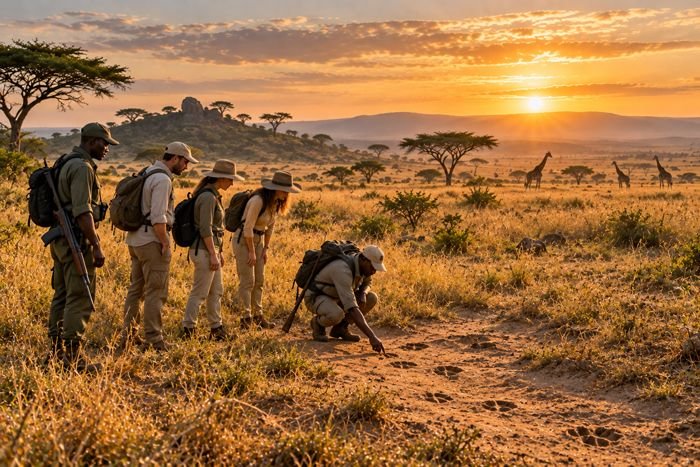
Planning a safari in Tanzania often involves choosing between two extraordinary destinations: Serengeti National Park and the Ngorongoro Crater. The good news is that you don’t have to choose. With the right itinerary, you can experience both on the same trip.
The Serengeti offers endless savannas, exceptional predator sightings, and the possibility of witnessing the Great Migration. Ngorongoro, meanwhile, delivers a completely different safari experience, with an extraordinary concentration of wildlife inside an ancient volcanic caldera.
But how many days should you spend in each destination? Which should you visit first? And how can you combine them without spending most of your vacation driving?
For most travelers, a 5-day Serengeti and Ngorongoro itinerary offers an excellent balance, allowing approximately three days in the Serengeti and one day exploring the Ngorongoro Crater, with additional time for transfers.
This guide explains how to organize your route, distribute your days, and make the most of these two iconic Tanzanian safari destinations.
Why combine Serengeti and Ngorongoro on one safari?
The Serengeti and Ngorongoro are part of Tanzania’s famous Northern Safari Circuit. Although geographically connected, they offer remarkably different landscapes and wildlife experiences.
Serengeti National Park covers approximately 14,750 square kilometers of grasslands, woodland, and river valleys. Its vastness creates opportunities to observe lions, cheetahs, leopards, elephants, and migrating herbivores in an expansive natural environment.
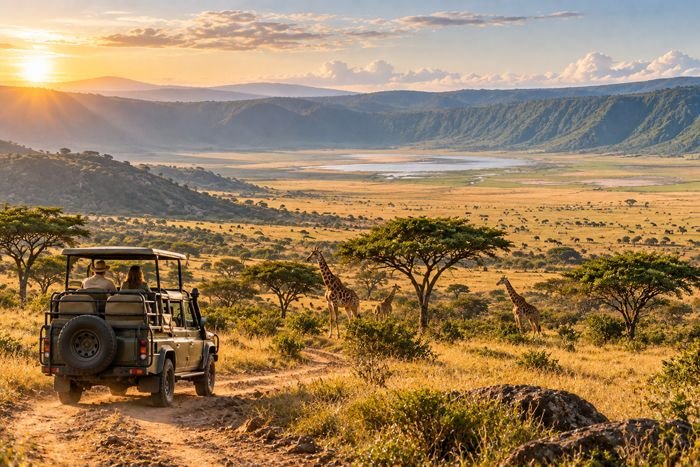
Ngorongoro Crater, located within the Ngorongoro Conservation Area, is much more compact. Its floor covers approximately 260 square kilometers and supports substantial resident wildlife populations.
It’s one of Tanzania’s best places to search for the endangered black rhino, although sightings are never guaranteed.
Combining these destinations gives you two complementary experiences: the Serengeti’s open wilderness and Ngorongoro’s concentrated wildlife viewing.
For first-time visitors, this combination is particularly rewarding because it showcases different sides of Tanzania’s remarkable biodiversity.
How many days do you need for Serengeti and Ngorongoro?
The ideal duration depends on your available time, travel style, and wildlife interests.
While ambitious travelers can visit both destinations in four days, five or six days generally provide a more enjoyable experience.
| Safari duration | Recommended allocation | Best for |
|---|---|---|
| 4 days | 2 nights Serengeti + 1 night Ngorongoro area | Travelers with limited time |
| 5 days | 3 nights Serengeti + 1 night Ngorongoro area | First-time visitors |
| 6 days | 4 nights Serengeti + 1 night Ngorongoro area | Wildlife enthusiasts and photographers |
| 7 days | 5 nights Serengeti + 1 night Ngorongoro area | Travelers seeking a relaxed, immersive safari |
These examples assume a road-based safari beginning and ending in Arusha, with Ngorongoro accommodation potentially located on the crater rim or in nearby Karatu.
How many days should you spend in the Serengeti?
Ideally, dedicate at least three nights to the Serengeti.
The park is enormous, and wildlife sightings depend on animal movements, weather conditions, and your chosen region.
Three nights provide time for multiple game drives without constantly changing accommodation.
If you’re planning to visit both Central and Northern Serengeti during migration season, consider extending your stay to four or five nights.
How much time do you need at Ngorongoro Crater?
For most travelers, one dedicated crater game drive is sufficient.
A typical visit involves descending into the caldera early in the morning and spending approximately five to six hours exploring its habitats, subject to current access rules.
You can stay overnight near the crater before your visit, then continue toward Arusha afterward.
Additional nights may be worthwhile if you’d like to explore other parts of the Ngorongoro Conservation Area, but they’re not essential for a standard crater safari.
Recommended 5-day Serengeti and Ngorongoro itinerary
This itinerary offers a practical balance between wildlife viewing and travel time. It assumes you arrive in Arusha before the safari begins.
DAY 1: Arusha to Serengeti National Park
Depart Arusha early and travel through the Ngorongoro highlands toward the Serengeti. The journey generally takes six to eight hours or more, depending on conditions and stops. Enjoy wildlife sightings as you enter the park and head to your camp in the Seronera area.
DAY 2: Full-day safari in Central Serengeti
Explore the Seronera Valley, known for its resident big cats and diverse wildlife. Morning and afternoon game drives offer opportunities to observe lions, leopards, cheetahs, elephants, and grazing herds.
DAY 3: Another day exploring the Serengeti
Spend a second full day discovering different habitats. Your guide can adapt the route to recent wildlife movements. Depending on the season, you may encounter migrating wildebeest and zebras or focus on resident predators.
DAY 4: Serengeti to Ngorongoro Conservation Area
Enjoy a morning game drive before traveling toward the crater highlands. Allow roughly four to six hours or longer from the central Serengeti to your accommodation, including stops. Overnight near the crater rim or in Karatu.
DAY 5: Ngorongoro Crater safari and return to Arusha
Descend into the crater early for a game drive across grasslands, wetlands, and woodland. Search for lions, elephants, buffaloes, hippos, and black rhinos. After your visit, ascend the crater wall and return to Arusha in the late afternoon or evening.
This route keeps transfers manageable while providing two full days of Serengeti game viewing.
Should you visit Serengeti or Ngorongoro first?
Both routes work well, and the best order depends largely on your transport arrangements.
Serengeti first, Ngorongoro second
This is a practical option for road-based safaris that begin and end in Arusha.
You travel directly to the Serengeti, spend several days exploring the plains, and visit Ngorongoro on the return journey.
Finishing with a crater game drive makes for an exciting conclusion before heading back to Arusha.
Ngorongoro first, Serengeti second
Alternatively, you can explore Ngorongoro before continuing into the Serengeti.
This approach is especially useful if you plan to finish your safari with a domestic flight from a Serengeti airstrip.
It also allows you to experience the crater’s concentrated wildlife before discovering the vast Serengeti plains.
Neither sequence is inherently better for wildlife sightings. Prioritize efficient transfers, accommodation availability, and your departure arrangements.
How to travel between Serengeti and Ngorongoro
Most combined safaris use a private or shared 4×4 vehicle with an experienced driver-guide.
The route between Central Serengeti and Ngorongoro passes through the Naabi Hill area, connecting the park with the Ngorongoro Conservation Area.
Travel times vary with road conditions and your lodge’s location. Expect several hours rather than a short transfer.
For travelers with a larger budget, flying into or out of Serengeti airstrips can reduce road travel significantly.
However, Ngorongoro Crater visits still generally require ground transportation.
When comparing itineraries, ask operators how much time is allocated to actual game drives versus transfers.
Best time for a Serengeti and Ngorongoro safari
Both destinations offer rewarding wildlife viewing throughout the year, but the Serengeti’s seasonal changes are especially important.
From June to October, the dry season generally provides favorable viewing conditions. Wildlife becomes easier to spot in thinner vegetation, while migrating herds may move toward the northern Serengeti.
If Mara River crossings are your priority, you’ll need additional time to reach the north.
Between approximately January and March, the southern Serengeti ecosystem and Ndutu area become important for wildebeest calving activity. These areas can fit particularly well into a combined Ngorongoro itinerary because of their geographical proximity.
Ngorongoro Crater offers relatively consistent resident wildlife viewing throughout the year.
The wetter months bring greener scenery and occasional challenging road conditions, but they can also offer attractive photographic opportunities.
Where to stay on a combined safari
Accommodation location can significantly influence how much time you spend exploring.
In the Serengeti, Central Seronera is a convenient base for year-round game viewing. Seasonal camps elsewhere may be preferable if you’re specifically targeting migration activity.
For Ngorongoro, crater-rim lodges provide impressive views and convenient access to the descent roads.
However, these properties are often expensive.
Accommodation around Karatu can offer better value, although it requires additional driving before reaching the crater.
Choosing well-positioned camps is often more important than selecting the most luxurious property.
Common mistakes when combining Serengeti and Ngorongoro
One mistake is trying to include too many destinations in too few days. Adding Tarangire, Lake Manyara, Serengeti, and Ngorongoro to a very short itinerary can turn your vacation into a series of long transfers.
Another is overlooking seasonal wildlife movements. A Central Serengeti itinerary won’t necessarily place you near Mara River crossings during migration season.
Travelers should also account for park and conservation fees, which may be charged separately and can vary according to nationality, age, season, and itinerary.
Finally, avoid scheduling a tight international flight connection immediately after a long safari transfer. Road conditions and travel delays can be unpredictable.
Final thoughts: The ideal Serengeti and Ngorongoro combination
Combining Serengeti National Park and Ngorongoro Crater is one of the best ways to experience Tanzania’s extraordinary wildlife diversity.
For most first-time visitors, a five-day itinerary with three nights in the Serengeti and one night near Ngorongoro provides a satisfying balance of game drives, scenery, and travel time.
If your schedule allows, adding another day or two creates more flexibility and opportunities for unexpected wildlife encounters.
Whether you’re watching lions across the Serengeti plains or searching for black rhinos inside Ngorongoro Crater, these destinations complement each other beautifully.
For more itinerary ideas, wildlife guides, and practical safari planning advice, explore the WhySafari blog and discover how to make your next African adventure unforgettable.
Frequently asked questions about Serengeti and Ngorongoro itineraries
It’s technically possible with carefully arranged transfers, but the itinerary would be extremely rushed. Four days is a more practical minimum, while five or six days allows a better balance of game drives and travel.
Yes. Both destinations are excellent for families, particularly those traveling with older children. A private safari vehicle allows more flexibility for breaks, shorter game drives, and changes to the daily schedule.
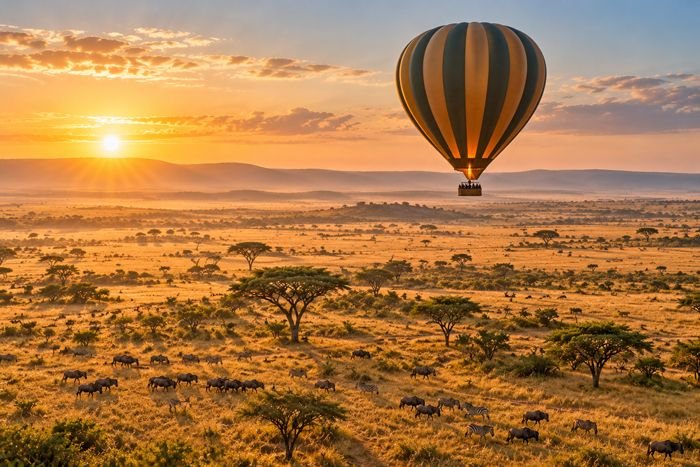
Yes. Balloon safaris are available in selected Serengeti locations and can be added to an itinerary with sufficient time. Flights typically depart around sunrise and must be booked separately. Availability depends on the season and operating area.
Most guided safaris use specially adapted 4×4 vehicles, commonly Toyota Land Cruisers, with pop-up roofs for wildlife viewing. These are designed for rough roads and usually provide individual window seats.
Absolutely. Many travelers add three to five days in Zanzibar after their wildlife safari. Domestic flights connect mainland Tanzania with Zanzibar, making it possible to combine game drives with a beach holiday.
Advance booking is strongly recommended, especially during peak travel periods from June to October and around the holiday season. Well-positioned camps and experienced private guides can sell out months ahead.
Vehicle-based safaris may be suitable for some travelers with limited mobility, but access varies between vehicles and accommodations. Discuss transfer assistance, vehicle modifications, and room accessibility with the operator before booking.
Most established safari lodges and camps can accommodate vegetarian, vegan, and other dietary requirements when notified in advance. Communicate allergies and specific needs before departure, especially when staying in remote camps.