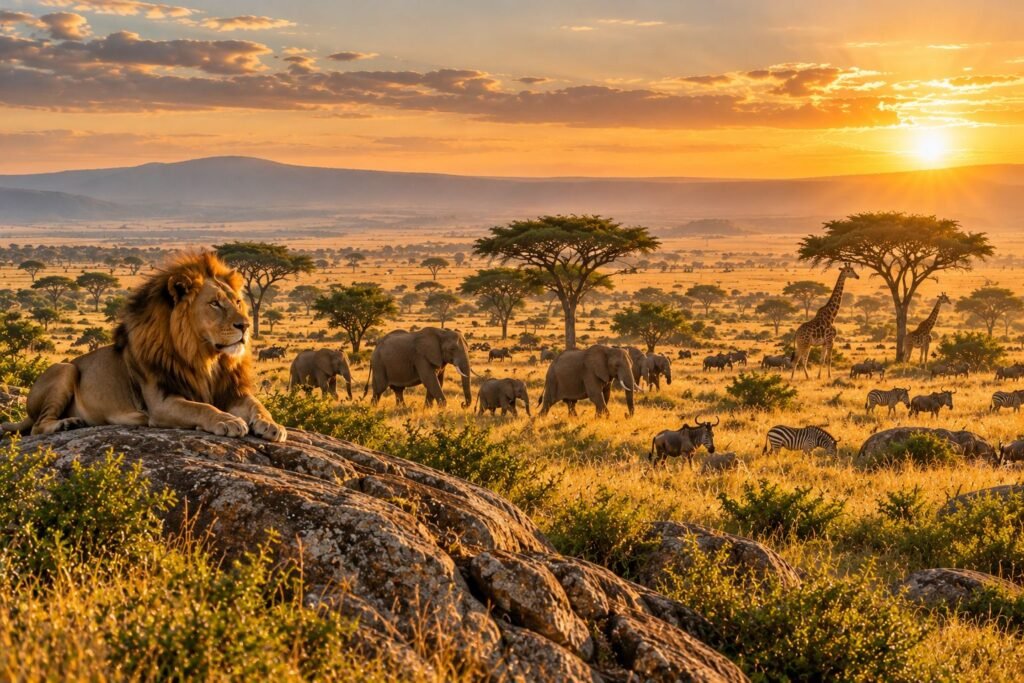
Few places on Earth offer wildlife encounters quite like Tanzania’s Serengeti National Park. Imagine watching a pride of lions resting on sun-warmed rocks, elephants wandering across golden grasslands, or thousands of wildebeest moving together beneath an endless African sky.
The Serengeti is famous for the Great Migration, but its wildlife extends far beyond the migrating herds. The park supports an extraordinary diversity of mammals, birds, reptiles, and predators, making it one of Africa’s most rewarding safari destinations.
But what animals can you see in the Serengeti? From the legendary Big Five to cheetahs, giraffes, hippos, and colorful birds, there is something remarkable to discover around almost every corner.
This Serengeti wildlife guide introduces the animals you’re most likely to encounter, explains where to find them, and helps you understand which sightings are common, seasonal, or particularly rare.
What wildlife lives in the Serengeti?
Serengeti National Park covers approximately 14,750 square kilometers of grasslands, woodland, rocky outcrops, and riverine habitats.
This variety of environments supports more than 70 species of large mammals and over 500 recorded bird species.
The park’s wildlife can be grouped into several main categories:
- Big Five: Lions, leopards, elephants, African buffaloes, and black rhinos.
- Big cats and predators: Cheetahs, spotted hyenas, jackals, and smaller wild cats.
- Grazing herbivores: Wildebeest, zebras, gazelles, and numerous antelope species.
- Other iconic mammals: Giraffes, hippos, warthogs, and various primates.
- Birdlife: Ostriches, secretarybirds, vultures, eagles, and colorful smaller species.
- Reptiles: Nile crocodiles, monitor lizards, snakes, and tortoises.
Many animals remain in the Serengeti throughout the year, while migrating herds move seasonally across the broader Serengeti-Mara ecosystem.
The Big Five animals of the Serengeti
The Serengeti is home to all five members of Africa’s famous Big Five. However, some are considerably easier to encounter than others.
Lions: The Serengeti’s iconic predators
Lions are among the Serengeti’s most recognizable residents.
The park supports a substantial population of these social predators, often seen resting together in prides or watching grazing animals from elevated positions.
Central Serengeti, particularly the Seronera Valley, offers excellent opportunities for lion sightings throughout the year.
Early mornings and late afternoons are particularly rewarding, as lions may become more active when temperatures are cooler.
Leopards: Elusive hunters of the woodland
Leopards are more difficult to spot than lions because of their solitary behavior and exceptional camouflage.
They often rest in trees along river valleys, where the branches provide shelter and an elevated view of their surroundings.
The Seronera region is particularly well known for leopard encounters.
Look carefully into large trees, especially where branches extend horizontally above the ground.
African elephants: Giants of the savanna
Elephants are found across several Serengeti habitats, particularly around woodland, rivers, and permanent water sources.
Family groups may include calves, young elephants, and experienced matriarchs leading the herd.
Watching elephants interact provides fascinating insights into their complex social behavior.
Although Tarangire is especially famous for large elephant concentrations, the Serengeti offers memorable sightings against expansive plains and dramatic landscapes.
African buffaloes: Powerful herd animals
African buffaloes are relatively common in the Serengeti.
They often form substantial herds and favor grasslands with access to water.
Their impressive curved horns and powerful build make them easy to recognize.
Buffaloes may appear calm while grazing, but they are formidable wild animals, especially when threatened or protecting their young.
Black rhinos: The rarest Big Five encounter
The eastern black rhinoceros is one of the Serengeti’s most elusive animals.
Although conservation efforts have helped protect this endangered species, sightings remain uncommon.
Black rhinos occur in limited areas and are not typically encountered during standard game drives.
Travelers especially interested in seeing rhinos may improve their chances by combining Serengeti with Ngorongoro Crater.
Big cats and other Serengeti predators
The Serengeti is famous for its predators, but lions and leopards aren’t the only carnivores worth watching.
Cheetahs
Cheetahs prefer open grassland habitats where they can use their extraordinary speed to hunt.
The southeastern plains and parts of Central Serengeti offer rewarding opportunities for sightings.
Unlike lions, cheetahs are often active during daylight hours, making them particularly interesting for photographers.
Spotted hyenas
Spotted hyenas are among the Serengeti’s most successful predators.
Although frequently portrayed as scavengers, they are highly capable hunters with sophisticated social structures.
They may be seen patrolling grasslands, resting near dens, or competing with lions over food.
Smaller predators
The Serengeti also supports black-backed jackals, bat-eared foxes, servals, and smaller wild cats.
African wild dogs are exceptionally rare visitors to some parts of the ecosystem.
Spotting these less-famous predators requires patience, but their behavior can be just as fascinating as that of the larger carnivores.
Wildebeest, zebras, and the Great Migration
The Great Migration is one of the Serengeti’s defining wildlife experiences.
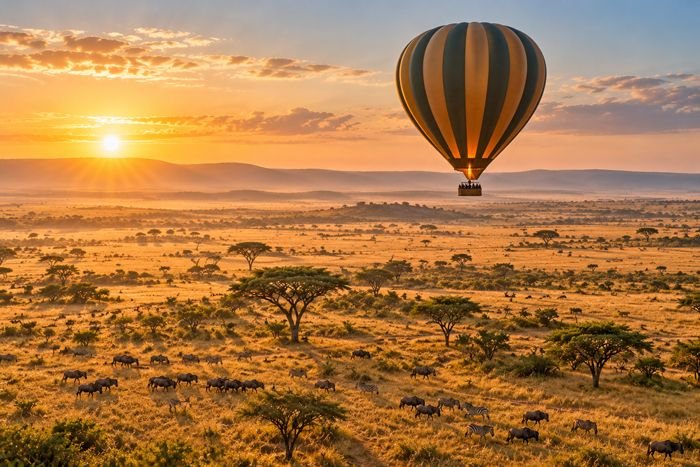
Every year, enormous herds of wildebeest, accompanied by zebras and gazelles, move through the Serengeti-Mara ecosystem in search of fresh grazing and water.
Their movements depend heavily on seasonal rainfall.
During approximately January and February, large numbers gather in the southern Serengeti ecosystem and Ndutu region for the calving season.
Between May and June, many herds move toward the Western Corridor.
From approximately July through October, migrating animals may gather around Northern Serengeti’s Mara River, where dramatic crossings sometimes occur.
By November and December, the herds generally begin returning south.
These movements are approximate, and no particular wildlife event can be guaranteed on an exact date.
Even outside the migration season, zebras, resident wildebeest, and various antelope species can be encountered throughout the park.
Giraffes, hippos, and other memorable mammals
Some of the Serengeti’s most enjoyable encounters involve animals that don’t belong to the Big Five.
Giraffes are frequently seen browsing acacia trees and moving gracefully through woodland and open savanna.
Hippos spend much of the day submerged in rivers and pools, sometimes gathering in large groups. Watching them emerge from the water or interact with one another can be fascinating.
Warthogs are common across grassland habitats, often trotting with their tails raised.
You’ll also encounter an impressive variety of antelopes, including impalas, topis, elands, hartebeests, Thomson’s gazelles, and Grant’s gazelles.
Along rivers and rocky habitats, look for baboons, vervet monkeys, and rock hyraxes.
These smaller encounters add richness to a safari and reveal how different species share the Serengeti ecosystem.
Birds of the Serengeti: More than just mammals
With over 500 recorded bird species, the Serengeti is also an excellent destination for birdwatching.
The secretarybird is particularly memorable, walking through open grassland while searching for snakes and other small prey.
Ostriches are commonly encountered on the plains, while kori bustards impress visitors with their substantial size.
Colorful species such as lilac-breasted rollers, Fischer’s lovebirds, and superb starlings provide beautiful photographic opportunities.
Birds of prey, including eagles, vultures, and hawks, are frequently observed soaring above the savanna or resting in trees.
Birdwatching is rewarding throughout the year, although the wetter months can be especially interesting as migratory species arrive.
Where to see the best wildlife in Serengeti National Park
The region you choose can significantly influence your wildlife encounters.
| Serengeti region | Wildlife highlights | Ideal visiting period |
|---|---|---|
| Central Serengeti (Seronera) | Lions, leopards, cheetahs, elephants, giraffes | Year-round |
| Southern Serengeti and Ndutu | Wildebeest calves, cheetahs, hyenas, lions | January–March |
| Western Corridor | Migrating herds, crocodiles, hippos | May–July |
| Northern Serengeti | Migrating wildebeest, zebras, lions, elephants | July–October |
| Eastern Serengeti | Cheetahs, gazelles, open-plains wildlife | Varies seasonally |
Central Serengeti is generally the most versatile option for first-time visitors because of its resident wildlife.
However, travelers interested in a particular migration event should select their safari region according to the season.
It’s also important to remember that Ndutu lies largely within the Ngorongoro Conservation Area, adjoining the southern Serengeti ecosystem.
Best time to visit the Serengeti for wildlife viewing
The Serengeti offers excellent wildlife opportunities throughout the year.
The dry season, generally June through October, provides thinner vegetation and often makes animals easier to locate around water sources.
January and February are particularly appealing for calving activity and predator encounters on the southern plains.
The wetter months bring beautiful green landscapes, rewarding birdwatching, and opportunities to observe resident wildlife with fewer visitors in certain areas.
If your main goal is seeing a wide range of animals rather than one specific migration event, spending several days around Central Serengeti is often a reliable choice.
Tips for spotting more animals on your Serengeti safari
Wildlife sightings depend on nature, but a few practical choices can improve your experience.
Start game drives early, when temperatures are cooler and predators may be more active.
Choose an experienced local guide who understands animal behavior, habitats, and seasonal movements.
Bring binoculars so you can appreciate distant wildlife without disturbing it.
Most importantly, avoid focusing exclusively on the Big Five.
A leopard resting in a tree may be spectacular, but watching a family of mongoose, a hunting secretarybird, or a giraffe with its calf can be equally memorable.
Allow enough time for unhurried observations, and remember that patience is one of the most valuable skills on safari.
Final thoughts: Discovering the extraordinary wildlife of the Serengeti
The Serengeti is far more than a destination for checking famous animals off a list.
Its remarkable ecosystem supports everything from powerful lions and elusive leopards to enormous migrating herds, colorful birds, and fascinating smaller mammals.
While certain species are easier to encounter than others, every safari offers opportunities to observe wildlife behaving naturally.
Choose the right region for your interests, allow enough time for game drives, and embrace the unpredictability of the wilderness.
For more Serengeti wildlife insights, seasonal safari guides, and expert tips for planning your African adventure, explore the WhySafari blog.
Frequently asked questions about Serengeti wildlife
Zebras, wildebeest, gazelles, and other grazing herbivores are frequently encountered, although their abundance varies by season and location. Warthogs, giraffes, and buffaloes are also relatively common on game drives.
African wild dogs occur in the wider Serengeti ecosystem, but sightings are exceptionally rare. Travelers specifically interested in this endangered predator may have better opportunities in other African wildlife destinations.
Yes. Nile crocodiles inhabit rivers, including the Mara and Grumeti. They are particularly famous for their interactions with migrating wildebeest during seasonal river crossings.
No. Gorillas do not live in the Serengeti, and chimpanzees aren’t part of its typical wildlife. Travelers interested in chimpanzee trekking in Tanzania should consider destinations such as Gombe Stream or Mahale Mountains National Park.
Some nocturnal species occasionally appear around dawn or dusk, but conventional game drives within Serengeti National Park generally take place during daylight hours. Night drives may be available in certain neighboring private wildlife areas.
Sometimes. Wildlife may cross roads or move close to stationary vehicles without showing much interest in them. Visitors should remain inside their vehicles, avoid sudden movements, and never encourage animals to approach.
Yes. The ecosystem supports various snake species, including pythons and venomous snakes. However, sightings during ordinary vehicle-based safaris are relatively uncommon.
There’s no fixed number. Some drives reveal numerous species in a short period, while others require patience. The season, habitat, weather, and guide’s experience all influence sightings.