Picture your children spotting their first wild elephant, watching giraffes wander across the savanna, or listening to lions roar in the distance. A family safari in the Serengeti can turn the wildlife documentaries they’ve watched at home into an unforgettable real-world adventure.
But traveling to Tanzania with children requires different planning from a traditional adult safari. Long game drives, early mornings, remote accommodations, and encounters with wild animals all raise important questions for parents.
Is the Serengeti safe for children? What’s the best age to take kids on safari? And how can you create an itinerary that keeps everyone comfortable and entertained?
The good news is that a Serengeti safari with kids can be a wonderful family experience, particularly for school-age children and teenagers. The key is choosing family-friendly accommodation, limiting long travel days, and adjusting wildlife activities to your children’s ages.
This guide covers everything families should know before visiting the Serengeti, from safety and age restrictions to accommodation, wildlife viewing, and practical travel tips.
Is the Serengeti suitable for children?
Yes, Serengeti National Park can be an excellent destination for families. Its open landscapes, abundant wildlife, and experienced safari guides provide exciting opportunities for children to discover the natural world.
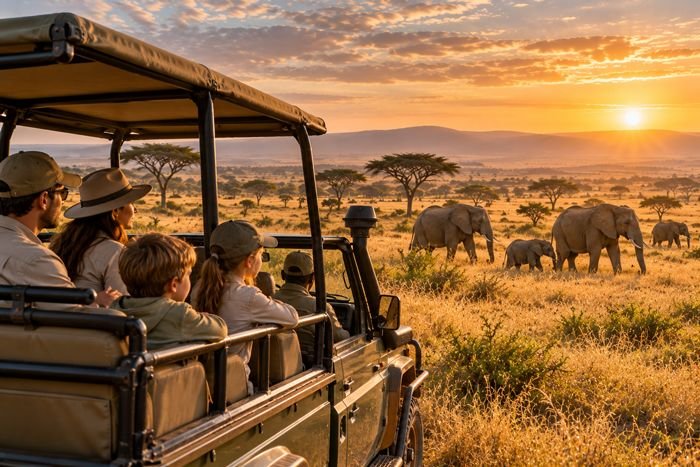
Seeing lions, zebras, elephants, and giraffes in their natural habitats can be both entertaining and educational.
However, the Serengeti isn’t a conventional family vacation destination. Wildlife moves freely, many camps are unfenced, and game drives often involve several hours on uneven roads.
Success depends on adapting the experience to your children’s needs rather than expecting them to follow an adult safari schedule.
A private safari vehicle, suitable accommodation, and flexible daily activities can make an enormous difference.
What is the best age for a Serengeti family safari?
There’s no single perfect age for a family safari. Much depends on your child’s personality, attention span, and ability to follow instructions.
Babies and toddlers under 5
Taking very young children to the Serengeti is possible, but the logistics can be challenging.
Many camps have minimum-age requirements, and long drives can be uncomfortable for toddlers.
Parents must also consider naps, meals, medical needs, and the availability of suitable child restraints.
For families with babies or toddlers, choosing accommodation that explicitly welcomes young children is essential.
Children aged 6 to 11
School-age children are often particularly well suited to a Serengeti safari.
They’re generally old enough to recognize wildlife, understand basic safety rules, and enjoy explanations from knowledgeable guides.
Animal spotting can become an exciting game, while learning about predator behavior, migration, and conservation adds an educational dimension.
Shorter game drives and regular breaks remain important, especially for younger children.
Teenagers aged 12 and older
Teenagers can often participate comfortably in longer game drives and appreciate more detailed wildlife experiences.
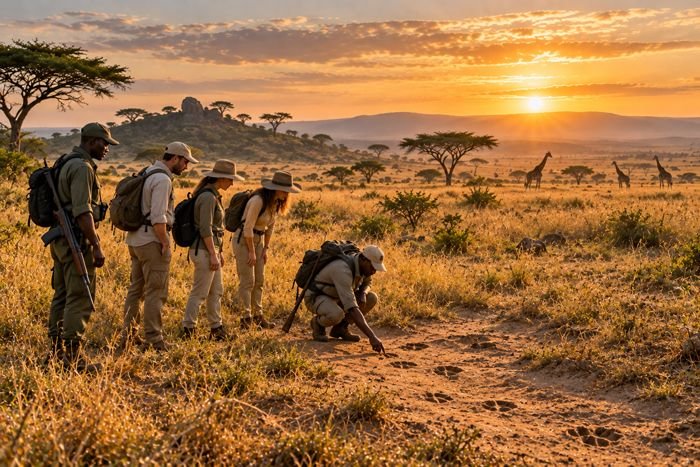
Photography, birdwatching, and learning about animal tracking can help keep them engaged.
Some specialized activities may also become available as they get older, although age restrictions differ between operators.
Is a Serengeti safari safe for kids?
Safety is one of the most important considerations when planning a family safari.
Organized game drives with qualified guides follow established wildlife-viewing procedures, but the Serengeti remains a wilderness area where animals behave unpredictably.
Children should understand several essential rules:
- Remain inside the safari vehicle unless the guide explicitly permits getting out.
- Never feed, touch, or attempt to attract wildlife.
- Avoid shouting or sudden movements near animals.
- Follow guides’ and camp staff’s instructions immediately.
- Never wander around an unfenced camp without appropriate supervision.
Parents should explain these rules before arriving in Tanzania.
Safety around safari camps
Many tented camps have no perimeter fencing, allowing animals to move through the surrounding area.
This creates an immersive safari atmosphere but requires additional vigilance when traveling with children.
Choose accommodation with clear child-safety policies and appropriate supervision arrangements.
Some camps provide staff escorts after dark, while selected family-focused properties offer more enclosed facilities.
Choosing family-friendly Serengeti accommodation
Not every safari lodge or tented camp is equally suitable for children.
Some properties accept families of all ages, while others impose minimum ages or require private vehicles for younger guests.
When comparing accommodations, look for family rooms, interconnected tents, flexible meal arrangements, and welcoming common areas.
A swimming pool can be particularly useful for relaxing between game drives, provided children are supervised and the facilities are appropriate.
Certain lodges also organize junior ranger activities, nature education, or child-focused wildlife programs.
Location matters too. Staying in Central Serengeti, particularly around Seronera, provides access to excellent resident wildlife without requiring long daily journeys between distant regions.
For younger families, remaining at one lodge for several nights is often more enjoyable than changing accommodation repeatedly.
How to plan game drives with children
Wildlife viewing is the highlight of any Serengeti safari, but long hours in a vehicle can test younger travelers’ patience.
Book a private safari vehicle
A private vehicle is one of the most valuable upgrades for families.
It allows you to adjust departure times, take breaks, and return to camp when children become tired.
Your guide can also adapt the experience to your children’s interests, spending more time observing their favorite animals.
Keep game drives manageable
Rather than scheduling full-day drives every day, consider shorter morning and afternoon outings.
For younger children, approximately two to three hours at a time may be more suitable than extended sessions.
Build in time for lunch, relaxation, and other supervised activities.
Make wildlife viewing interactive
Encourage children to keep a wildlife checklist, photograph different animals, or learn how guides identify tracks and animal calls.
Smaller encounters can be just as exciting as the Big Five.
Watching a dung beetle, spotting colorful birds, or observing playful young baboons can turn a quiet moment into a memorable discovery.
Best time to visit the Serengeti with kids
The dry season, generally June through October, is often convenient for family safaris.
Rainfall is usually lower, road conditions are generally more manageable, and thinner vegetation makes wildlife easier to spot.
However, early mornings can be chilly, so warm layers are important.
January and February are also appealing because of the wildebeest calving season in the southern Serengeti ecosystem.
Families may enjoy seeing young animals, although predator activity can sometimes involve graphic hunting scenes.
If your children are sensitive to such encounters, discuss preferences with your guide beforehand.
April and May typically bring heavier rainfall, which may complicate travel on some roads.
Whatever season you choose, prioritize a well-paced itinerary over attempting to follow migration herds across long distances.
How many days should you spend in the Serengeti with children?
For most families, three nights in the Serengeti provide a good starting point.
This gives you time for several game drives without creating an exhausting schedule.
Consider the following family-friendly itinerary:
| Day | Suggested activity |
|---|---|
| Day 1 | Arrive in Central Serengeti, settle into camp, optional short game drive |
| Day 2 | Morning wildlife viewing, afternoon rest and family activities |
| Day 3 | Flexible game drives, wildlife photography, relaxed afternoon |
| Day 4 | Breakfast and onward transfer or flight |
Families with younger children may prefer arriving by domestic flight instead of spending an entire day driving from Arusha.
Alternatively, break the journey with overnight stops around Ngorongoro or Karatu.
Avoid combining too many parks in a short trip, particularly when children aren’t accustomed to lengthy road transfers.
Health preparations for a family safari in Tanzania
Consult a qualified travel-health professional well before departure.
The Serengeti is in a malaria-risk region, and children need individualized advice about preventive medication, insect protection, and suitable vaccinations.
Pack child-appropriate insect repellent, sunscreen, prescribed medicines, and basic first-aid supplies.
Drinking safe water is essential, particularly in remote areas.
Travel insurance should include emergency medical treatment and evacuation because advanced healthcare facilities can be far from safari camps.
If a child has allergies, ongoing medical needs, or specific dietary requirements, communicate them to your safari operator and accommodation before traveling.
What to pack for a Serengeti safari with kids
Packing thoughtfully can make family travel considerably easier.
Choose breathable clothes in neutral colors, along with warmer layers for chilly mornings.
Comfortable closed-toe shoes, sun hats, sunglasses, and reusable water bottles are essential.
A few additional items can help keep children happy during transfers and quiet moments:
- Child-sized binoculars and a simple African wildlife guidebook.
- A notebook for drawing animals or recording sightings.
- Favorite snacks and any necessary medications.
- Quiet entertainment for long journeys.
- Spare clothes and a lightweight jacket.
- Camera or age-appropriate photography equipment.
If traveling with infants, bring sufficient nappies, formula, and other supplies. These may be difficult to purchase in remote safari areas.
Common mistakes to avoid on a family safari
One frequent mistake is planning too many activities.
Children may become tired even when wildlife sightings are spectacular. Include downtime rather than filling every hour with game drives.
Another mistake is choosing accommodation based entirely on price or luxury level without confirming child policies.
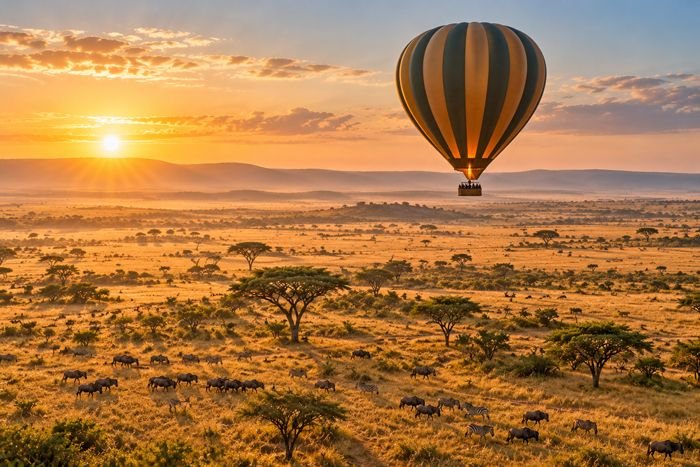
Parents should also avoid assuming every safari activity welcomes younger guests. Walking safaris and hot air balloon rides may have minimum-age or height restrictions.
Finally, remember that wildlife sightings are unpredictable.
Help children understand that the experience is about discovering nature, not guaranteeing encounters with every famous African animal.
Final thoughts: Is a Serengeti safari with kids worth it?
A Serengeti safari can be one of the most meaningful travel experiences families share.
Beyond seeing lions, elephants, and giraffes, children gain a deeper appreciation of wildlife, conservation, and the natural world.
The most successful family safaris aren’t necessarily the longest or most luxurious. They’re the ones designed around children’s ages, interests, and comfort.
Choose experienced guides, stay in welcoming accommodations, and allow plenty of flexibility.
With thoughtful preparation, the Serengeti can offer an unforgettable adventure for both parents and children.
For more family travel inspiration, Tanzania safari itineraries, and practical planning advice, explore the WhySafari blog and discover your next African adventure together.
Frequently asked questions about Serengeti safaris with kids
Yes, reduced park fees are available for certain age groups, and young children may qualify for free entry. Lodges and safari operators can also offer child rates, but their policies vary. Always request a detailed family quotation.
Some operators can arrange child safety seats, but they aren’t automatically supplied. Confirm seat compatibility, suitable restraints, and availability before booking, particularly for toddlers and younger children.
Selected family-oriented lodges offer babysitting or supervised children’s activities. However, these services aren’t universal and may require advance reservations or additional fees.
Designated picnic sites, visitor facilities, and accommodations provide toilets, but facilities can be widely spaced. Plan bathroom stops with your guide before departure, especially when traveling with younger children.
Some operators accept children who meet minimum age and height requirements, often around seven years or older. These restrictions vary by provider, so check eligibility and safety policies before booking.
Many established lodges can accommodate dietary restrictions with advance notice. Inform your operator of allergies, discuss cross-contamination precautions, and bring any prescribed emergency medication.
Flying can reduce lengthy transfers and may be more comfortable for young children. Road safaris generally offer greater luggage flexibility and opportunities to visit multiple parks, although journey times can be substantial.
Yes. Zanzibar is a popular addition to a Tanzania family safari. Spending several days at a family-friendly beach resort allows children to relax after early mornings and busy wildlife-viewing days.